

Death toll from Pakistan building collapse rises to 18 as rescuers search for survivors

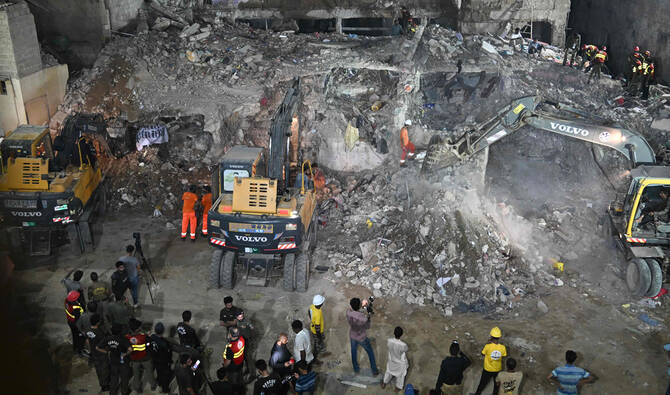
Rescue workers search for victims amidst the debris of a collapsed residential building in Karachi on July 4, 2025. (AFP)
Short Url
Updated 05 July 2025
Follow

Death toll from Pakistan building collapse rises to 18 as rescuers search for survivors

  • Friday’s incident was the latest in a string of deadly building collapses in Karachi
  • It laid bare the issue of unsafe housing in the city, home to over 20 million people

KARACHI: The death toll from a five-storey building collapse in the southern Pakistani city of Karachi rose to 18 on Saturday, officials said, after rescuers pulled more bodies from the rubble.

The Fotan Mansion residential building, where several families were said to be living, crumbled around 10am on Friday in the impoverished Lyari neighborhood of the city.

Rescue workers, along with residents of the area, worked through the night to find survivors and bodies after the incident, which has once again laid bare the issue of unsafe housing in Karachi.

“With two more bodies recovered from the debris, the death toll from the building collapse has risen to 18,” Dr. Summayia Syed, the Karachi police surgeon, told Arab News on Saturday evening.

“The victims have been identified as Rohit, 30, and his wife, Geeta, 24.”
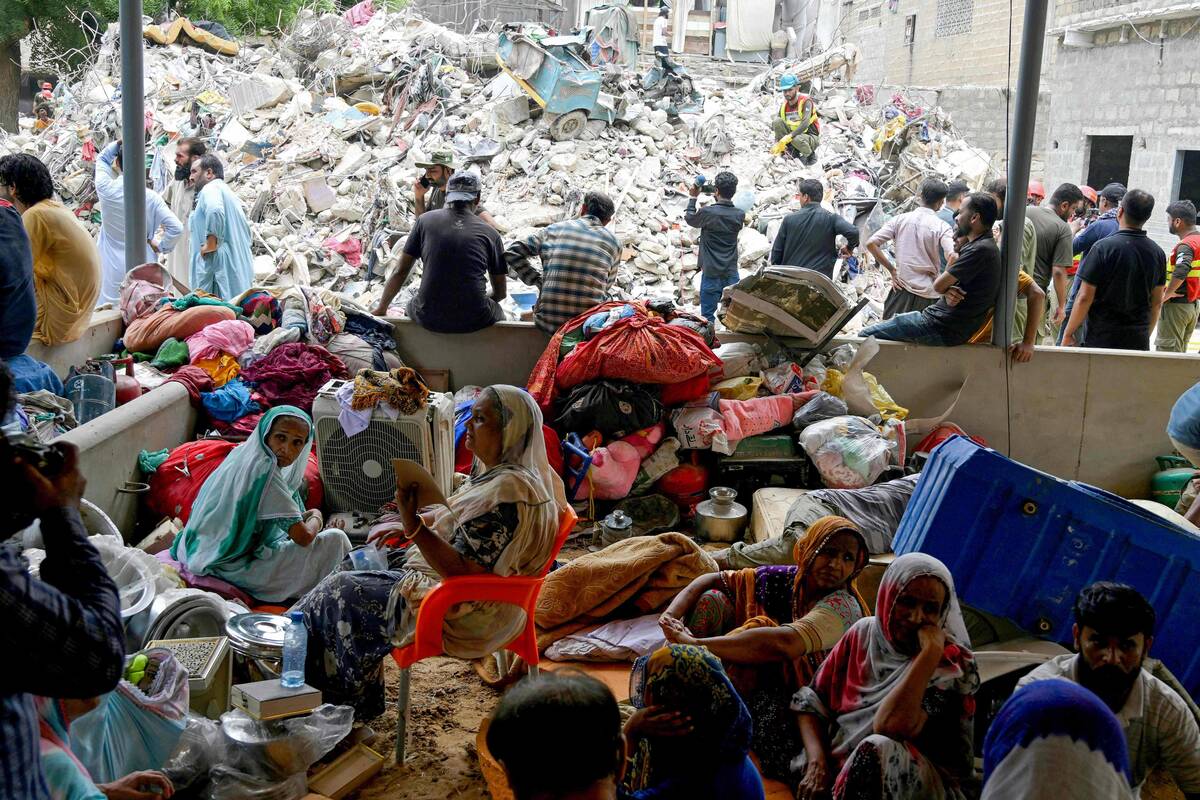


Families wait amidst the debris of a collapsed building in Karachi on July 5, 2025. (AFP)

Karachi Mayor Murtaza Wahab said the rescue operation was still ongoing at the site of the collapse.

Many of the occupants were members of the low-income Hindu minority community and residents estimated that around 40 people were inside when the building collapsed.

According to the Sindh Building Control Authority (SBCA), Fotan Mansion had been declared unsafe three years ago.

“This building was declared dangerous by the SBCA in 2022 and had been served multiple notices over the years,” SBCA spokesperson Shakeel Dogar told Arab News.


A neighbour narrates what he witnessed whilst a building collapsed in Karachi on July 5, 2025. (AFP)

“Before the recent rains, public announcements were also made in the area, but unfortunately, no one was willing to vacate.”

Friday’s incident is the latest in a string of deadly building collapses in Karachi.

In February 2020, a five-storey building collapsed in Rizvia Society, killing at least 27 people. The following month, another residential structure came down in Gulbahar, claiming 16 lives. In June 2021, a three-storey building in Malir collapsed, killing four. And just last year, in August, a building collapse in Qur’angi led to at least three deaths.


Dev Raj waits for recovery of his daughter who is stuck under the rubble of a collapsed building in Karachi on July 5, 2025. (AFP)

Mayor Wahab said on Friday evening that rescue efforts remained their top priority, with accountability and investigation to follow.

“Once we’re done with the rescue aspect, we will focus on who was responsible for this negligence or omission,” he added.
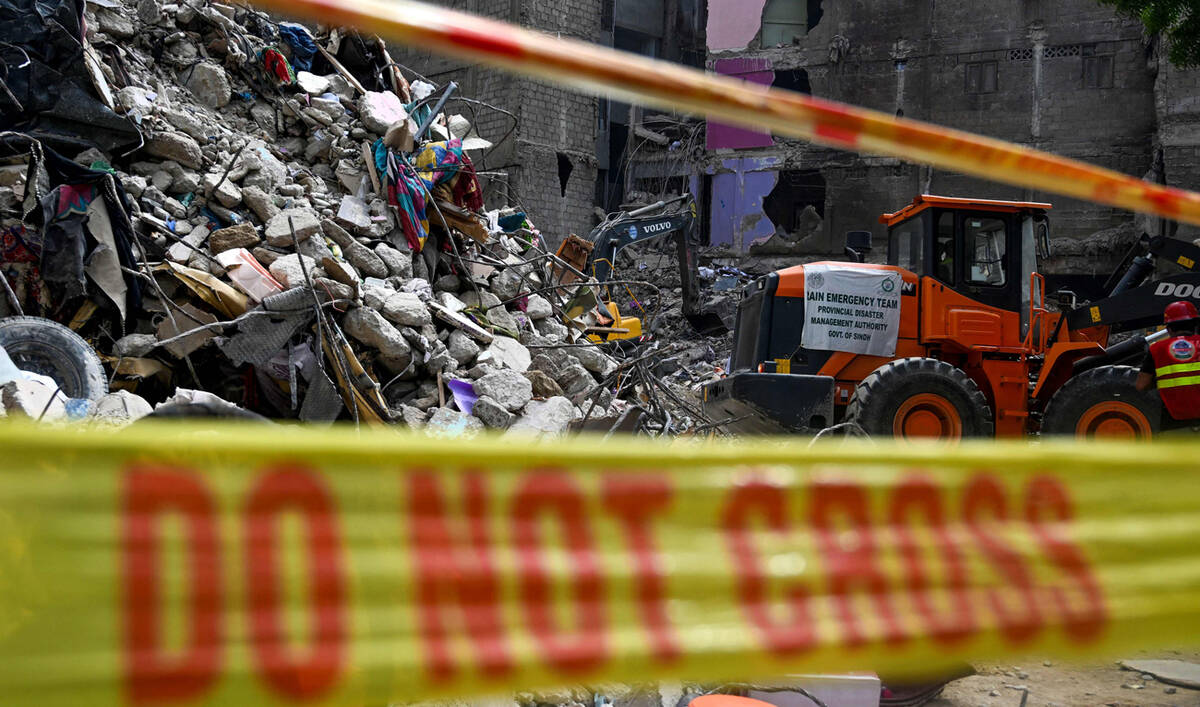


A rescue worker is pictured during a search operation amidst the debris of a collapsed building in Karachi on July 5, 2025. (AFP)


Pakistan sees retail payments surge to $592 billion in first quarter of FY26— report

Updated 6 sec ago
Follow

Pakistan sees retail payments surge to $592 billion in first quarter of FY26— report

  • Retail payment volumes rose to 2.8 billion transactions during the quarter, marking 10% increase
  • Expansion primarily driven by continued rise in mobile app-based banking, says Pakistan’s central bank

KARACHI: Pakistan saw retail payments surge to Rs166 trillion [$592 billion] during the first quarter of the current fiscal year, a report by the central bank said on Tuesday, registering an increase of six percent compared to the last quarter. 

In its quarterly report on payment systems, the State Bank of Pakistan (SBP) said retail payment volumes rose to 2.8 billion transactions to mark a 10% quarterly growth. It said the value of the payments surged to $592 billion during the same period. 

“This expansion was primarily driven by the continued rise in mobile app-based banking,” the SBP report said. 

The report further said digital payment channels accounted for 2.5 billion transactions, representing 90% of total retail payments compared to 87% in the same quarter last year. 

The central bank said mobile app-based payments dominated the digital landscape, with 2 billion transactions carried out through apps offered by banks, branchless banking (BB) providers and EMIs [electronic money institutions]. 

“These transactions constituted 81% of all digital payments and amounted to PKR 33.7 trillion [$120.3 billion] in value,” the SBP report said.

Internet banking also saw a “steady expansion,” with the report stating that an increasing number of users conducted transactions through digital channels. Payment cards in circulation increased to 61.3 million, the SBP said, of which 90% are debit cards and four percent are credit cards.

The report also said that a network of 20,527 ATMs facilitated 267 million transactions across the country during the quarter that amounted to Rs4.5 trillion [$16.1 billion]. 

“These developments collectively reflect continued progress toward a more inclusive, efficient, and digitally enabled payments ecosystem in Pakistan,” the SBP said.