

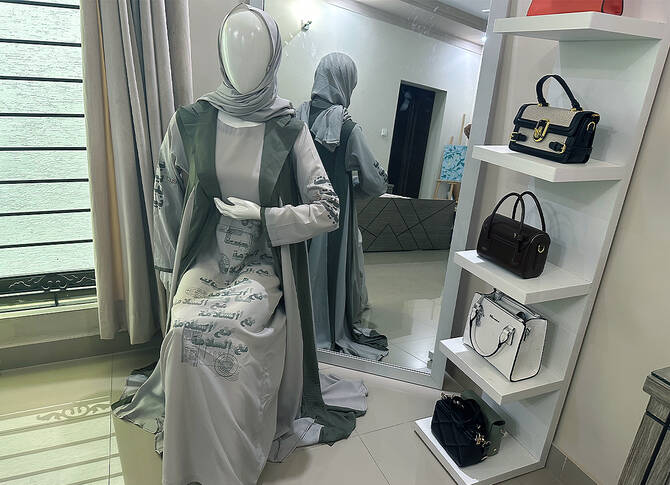

ISLAMABAD: In Pakistan, the abaya is undergoing a quiet but striking transformation. Long associated with uniform modesty and religious conservatism, this traditional black cloak worn by many Muslim women is now being reimagined by a new generation — one that blends cultural heritage with bold personal expression, often inspired by the glitz and fluidity of Gulf fashion capitals.
Originally worn across the Arabian Peninsula, the abaya has deep roots in Bedouin dress and later became a symbol of modesty under Islamic influence. In Pakistan, it gained prominence in the 1980s and 1990s, a period marked by rising religiosity, increased migration to Gulf countries, and the influence of satellite television beaming in images of Arab fashion.
For decades, black reigned supreme: functional, symbolic, and widely accepted.
But today, the abaya has become more than a religious garment. It is now a medium of fashion, expression and cultural exchange.
“The Middle East has turned abayas into a fashion trend,” said Nimra Saleem, a designer who is preparing to launch a dedicated abaya brand.
“The Gulf states introduce new cuts, designs, colors, and fabrics every year. So, the cuts of my abayas, the inspiration was taken from Saudi Arabia itself, and I made such cuts that are not available in Pakistan yet.”
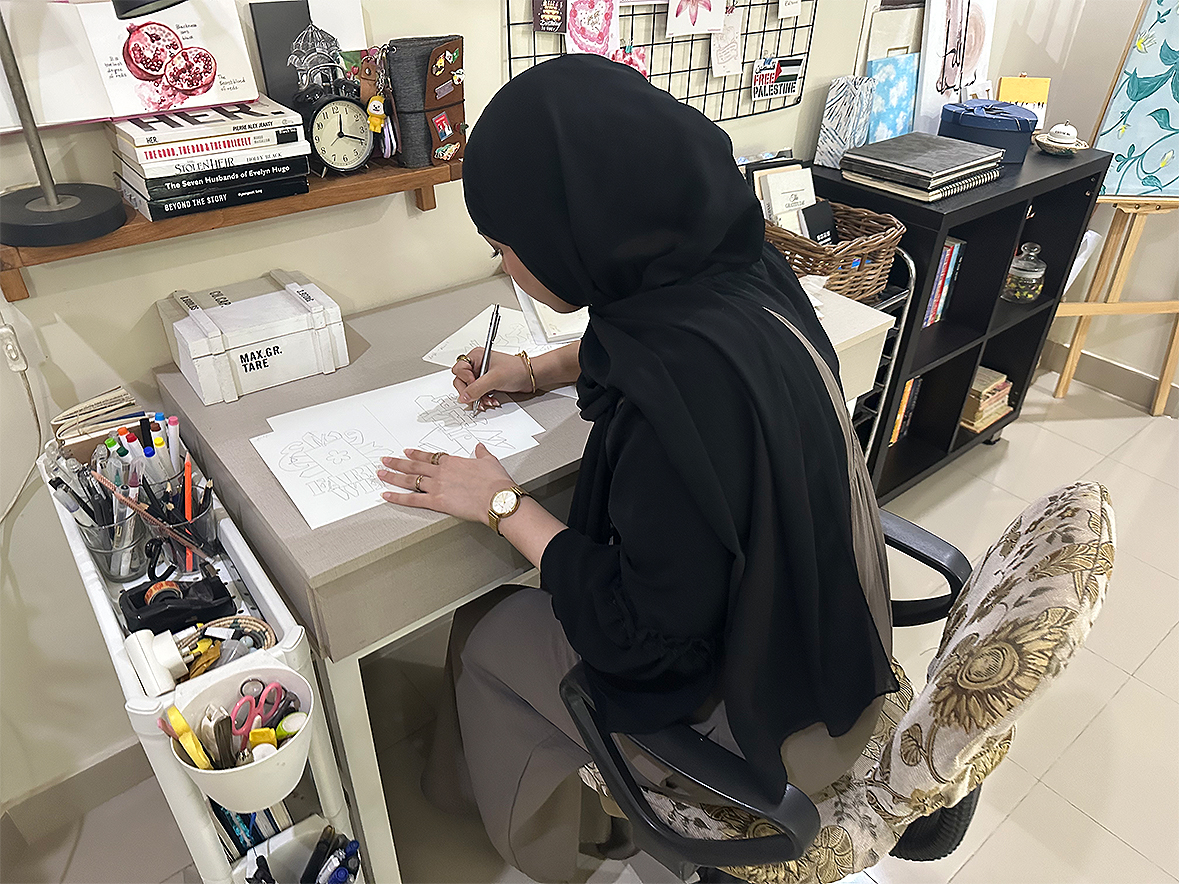
Nimra Saleem, a designer, is making sketches in Islamabad, Pakistan, on June 26, 2025. (AN Photo)
Saleem grew up in Saudi Arabia and returned to Pakistan six years ago to pursue a degree in textile design at the National College of Arts in Rawalpindi. Her thesis focused on women migrating from the Gulf, and she explored how Arabic aesthetics could merge with Pakistani tastes. Now, the abaya brand she plans to launch will reflect this evolving sensibility, she hopes.
“Initially, abayas here were limited to plain black, but now people are using them as a form of self-expression, wearing them in vibrant colors, pairing them with colorful hijabs, and choosing fabrics like georgette and silk. Printed abayas are also becoming more popular.”
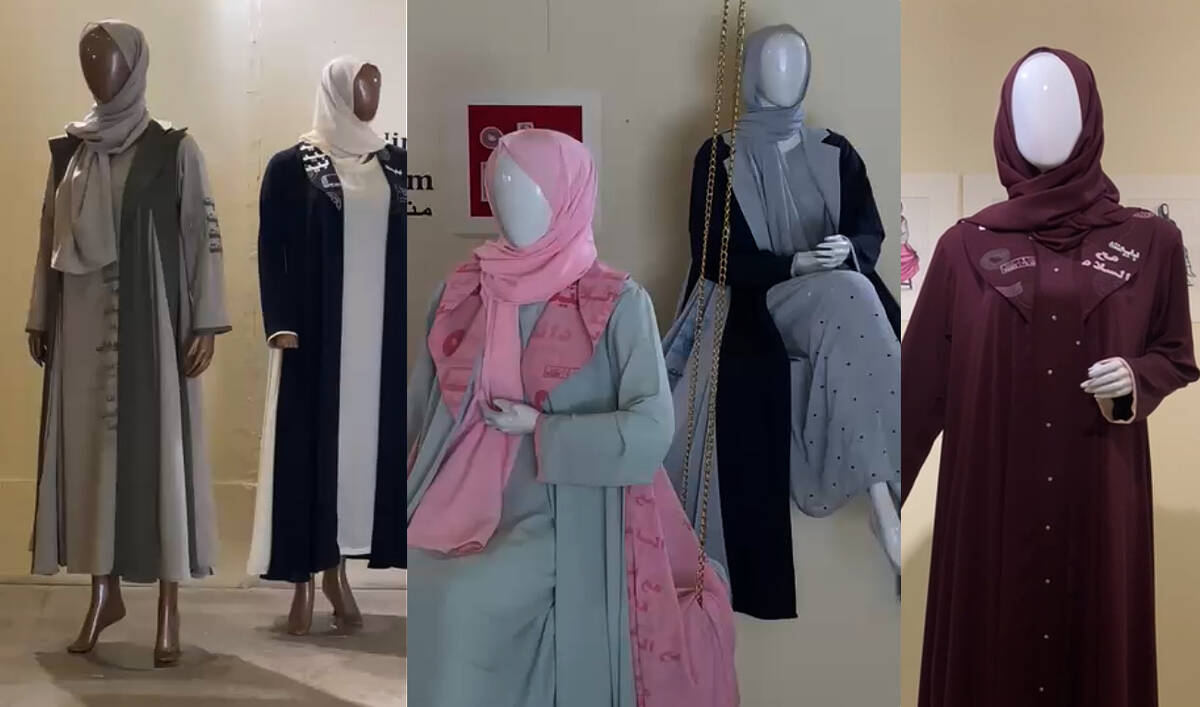
This combination of photos show Pakistani fashion designer Nimra Saleem's latest abaya collection. (AN Photo)
To accommodate Pakistan’s climate while staying true to Gulf-inspired styles, Saleem uses lightweight fabrics similar to those worn in the Middle East.
“These abayas can be worn in Pakistan too because they’re very weather friendly,” she said.
SOCIAL MEDIA INFLUENCE
The cultural pull of the Gulf, particularly from style hubs like Dubai and Jeddah, continues to influence aesthetics across South Asia, especially among upwardly mobile urban Pakistanis. Social media has only amplified that impact, offering a steady stream of Gulf fashion influencers and modestwear labels that are increasingly global in reach.
For designers like Abdul Rahman, a boutique owner in Rawalpindi with a strong social media following, the shift in tastes is undeniable.
“Over the past five years, trends have changed,” he said. “We design abayas according to customer choice, some like party wear, some need casual wear, and some prefer normal embroidery.”
Rahman’s business, which once catered mostly to domestic buyers, now processes online orders from across the globe.
“We get a lot of orders from South Africa, the United Kingdom, and UAE because abayas there are costly,” he explained.
His store offers options ranging from Rs3,000 ($11) to Rs20,000 ($71), making Pakistani-made garments more affordable for diaspora communities seeking modestwear.
This intersection of modesty and style also resonates with many young women in Pakistan, who say the abaya is no longer seen as restrictive, but adaptable.
“The time is changing, and people are understanding that it’s not about the black color,” said Areeba Faisal, a university student in Islamabad. “It’s about modesty and how you carry yourself.”
While she personally favors black abayas for most occasions, she appreciates the variety now available.
“On some occasions, I prefer to wear this kind of stuff— colored and embroidered abayas,” she said. “Islam does not mandate wearing a specific type of gown, nor does it require it to be black or free of embellishments.”
Another student, Humaira Javeed, echoed that view. “Everything evolves with time— including clothing. Abayas are no exception,” she said.
She prefers light colors, such as skin tones or pastels, but still sees black as modern and versatile. For her, wearing an abaya is more cultural than religious, and there’s space within tradition for creativity.
“It’s not something to be stigmatized in any way,” she added.
Indeed, the new wave of abaya culture in Pakistan reflects broader conversations about identity and modernity in the Muslim world.
In places like Saudi Arabia and the UAE, where strict dress codes once mandated uniform black cloaks, fashion-forward abayas now come in soft hues, adorned with intricate embroidery, pleats, lace, and avant-garde silhouettes.
These trends are finding fertile ground in Pakistan, where decades of exposure to Gulf culture through migration, media, and remittances have reshaped everything from food to fashion.
“Girls expressing themselves through abayas inspired me to create pieces that prove modesty can be just as fashionable and trend-aware,” said Saleem. “You can be modest, and you can still be in trend.”


