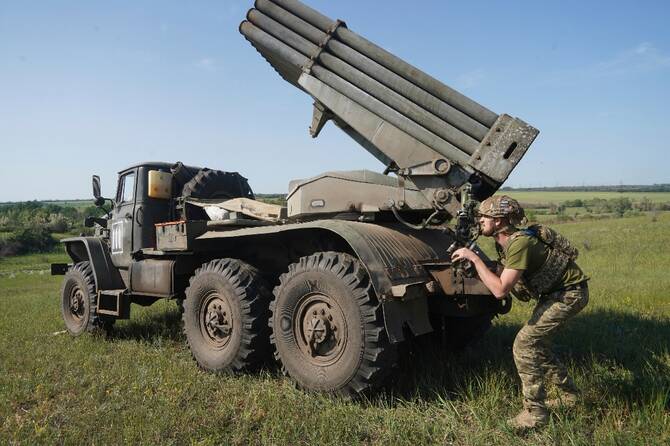
MOSCOW: Russia has taken full control of Ukraine’s eastern Luhansk region, more than three years after President Vladimir Putin ordered thousands of troops into Ukraine in February 2022, the Russian-backed head of the region told Russian state television.
Luhansk, which has an area of 26,700 square km (10,308 square miles), is the first Ukrainian region to fall fully under the established control of Russian forces since Russia annexed Crimea in 2014.
Putin in September 2022 declared that Luhansk — along with the partially controlled Donetsk, Kherson and Zaporizhzhia regions — was being incorporated into Russia, a step Western European states said was illegal and that most of the world did not recognize.
“The territory of the Luhansk People’s Republic is fully liberated — 100 percent,” Leonid Pasechnik, who was born in Soviet Ukraine and is now a Russian-installed official cast by Moscow as the head of the “Luhansk People’s Republic,” told Russian state television.
There was no immediate confirmation from the Russian defense ministry, or comment from Ukraine.
Ukraine says that Russia’s claims to Luhansk and other areas of what is internationally recognized to be Ukraine are groundless and illegal, and Kyiv has promised to never recognize Russian sovereignty over the areas.
Russia says the territories are now part of Russia, fall under its nuclear umbrella and will never be returned.
Luhansk was once part of the Russian empire but changed hands after the Russian Revolution. It was taken by the Red Army in 1920 and then became part of the Soviet Union in 1922 as part of the Ukrainian Soviet Socialist Republic.
Along with neighboring Donetsk, Luhansk was the crucible of the conflict which began in 2014 after a pro-Russian president was toppled in Ukraine’s Maidan Revolution and Russia annexed Crimea, with Russian-backed separatist forces fighting Ukraine’s armed forces in both Luhansk and Donetsk.
Russia controls nearly 19 percent of what is internationally recognized to be Ukraine, including Luhansk, plus over 70 percent of the Donetsk, Zaporizhzhia and Kherson regions, and fragments of the Kharkiv, Sumy and Dnipropetrovsk regions.


![]()

Russia takes full control of Ukraine’s Luhansk region, Russian backed official says
Short Url
https://arab.news/44352
Russia takes full control of Ukraine’s Luhansk region, Russian backed official says
- Ukraine says that Russia’s claims to Luhansk and other areas of what is internationally recognized to be Ukraine are groundless and illegal


Latest updates






© 2026 SAUDI RESEARCH & PUBLISHING COMPANY, All Rights Reserved And subject to Terms of Use Agreement.