

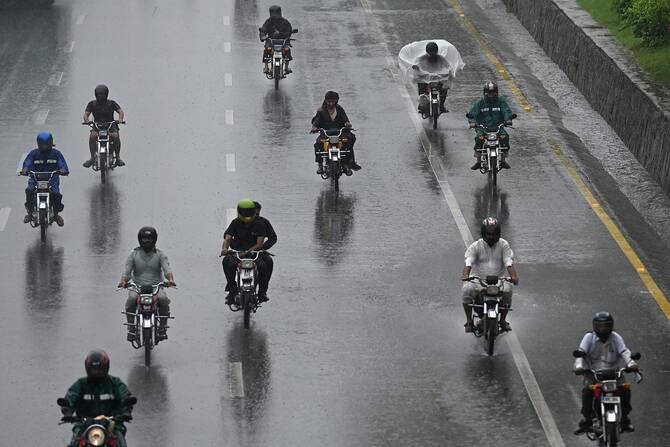

KARACHI: Torrential monsoon rains have killed at least 57 people and injured 99 across Pakistan since June 26, the National Disaster Management Authority (NDMA) said, warning of continued downpours, flash floods and landslides through July 5.
According to the NDMA, 28 children, 17 men and 12 women were among the dead, while the injured included 39 children, 33 men and 27 women. Most casualties were caused by flash floods, followed by roof collapses, drowning, lightning strikes, electrocution and landslides.
The Khyber Pakhtunkhwa (KP) province reported the highest number of fatalities, 22, followed by Punjab with 17, Sindh with 13 and Balochistan with five. Punjab also recorded the most injuries, 50, followed by 33 in Sindh, 11 in KP, three in Azad Jammu and Kashmir and two in Balochistan.
“Moderate rainfall with one or two heavy falls is expected over the upper catchments of all the major rivers along with north and northeast Punjab,” the NDMA said in its latest situation report on Monday, warning of more downpours until July 5.
The authority said weather conditions could disrupt transport in hilly regions and damage communication and electricity infrastructure.
The NDMA has urged provincial and local authorities to stay on high alert throughout the monsoon season, particularly in mountainous and low-lying areas. Citizens have been advised to avoid unnecessary travel to tourist sites and monitor weather updates via the NDMA’s mobile app.
The warnings follow a deadly flash flood last week in Swat Valley that swept away 17 members of a single tourist family during a sudden rise in water levels. Twelve bodies have been recovered so far, according to rescue officials, with search operations ongoing for the remaining person. The slow emergency response to the incident triggered widespread condemnation in the media and online.
As monsoon activity intensifies, the Provincial Disaster Management Authority (PDMA) in Punjab also issued an emergency directive to district authorities in Sialkot, Narowal, Gujranwala, Dera Ghazi Khan and Rajanpur to prepare for possible flash flooding.
The order, issued on Tuesday, instructs district commissioners and emergency services to activate 24-hour emergency operation centers, conduct patrols at vulnerable riverine and hilly sites, and ban public swimming at rivers, canals and picnic spots.
“All relevant departments must remain alert during the monsoon season,”Director General PDMA Irfan Ali Kathia said in the directive, adding that rescue boats, life jackets, ropes and emergency medicine should be pre-positioned in high-risk zones.
The PDMA also imposed Section 144 to prohibit river crossings without life jackets and overloading of passenger boats, warning of strict legal action against violators.
Pakistan, home to over 240 million people, is one of the countries most vulnerable to the effects of climate change, facing increasingly frequent and intense weather events such as heatwaves, droughts and torrential rains.
In 2022, a combination of heavy monsoon rains and glacial melt caused catastrophic floods that killed more than 1,700 people and caused damage estimated at over $33 billion.


