- The development comes weeks after a four-day Pakistan-India military standoff, which saw a widescale use of drones by them
- Small-scale drone attacks can strike targets without risking defense personnel or provoking uncontrollable military escalation
ISLAMABAD: Pakistan’s naval and air forces will be undertaking a strategic collaboration to advance indigenous capabilities in unmanned warfare systems, the country’s military said on Monday, citing Pakistan Navy Chief Admiral Naveed Ashraf.
The development comes weeks after a four-day military standoff between Pakistan and India, in which the two countries traded fighter jet, missile, drone and artillery fire, leaving 70 people dead on both sides before a United States-brokered ceasefire on May 10.
The fighting in May marked the first time New Delhi and Islamabad utilized unmanned aerial vehicles (UAVs) at scale against each other, with defense analysts expecting increased use of UAVs by them in future as small-scale drone attacks can strike targets without risking personnel or provoking uncontrollable escalation.
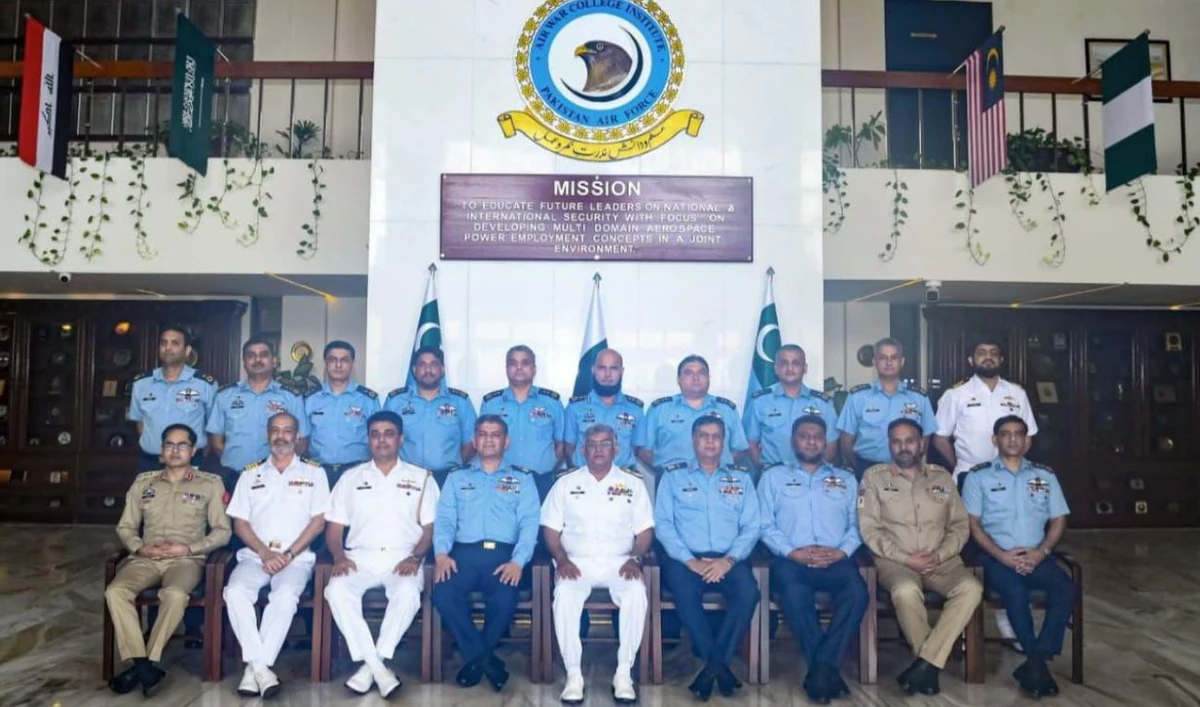
During a visit to Pakistan Air Force’s (PAF) Air War College Institute in Karachi, Naval Chief Ashraf announced the initiation of more frequent, integrated joint operational exercises with PAF, aimed at further reinforcing synergy and interoperability between the two services.
“The Naval Chief also highlighted the transformative role of technological innovation in contemporary conflicts. Citing the growing significance of Unmanned Aerial Systems, he highlighted an upcoming strategic collaboration between the National Aerospace Science & Technology Park (NASTP) and Pakistan Maritime Science & Technology Park (PMSTP),” the Inter-Services Public Relations (ISPR), the military’s media wing, said in a statement.
“This partnership, he noted, will focus on advancing indigenous capabilities in unmanned systems, thereby bolstering Pakistan’s technological self-reliance and operational edge in the defense sector.”
The development comes as the two South Asian neighbors, which spent more than $96 billion on defense last year, appear to be locked in a drones arms race.
India plans to invest heavily in local industry and could spend as much as $470 million on UAVs over the next 12 to 24 months, roughly three times pre-conflict levels, Smit Shah of Drone Federation India, which represents over 550 companies and regularly interacts with the government, told Reuters last month.
The PAF, meanwhile, is pushing to acquire more UAVs as it seeks to avoid risking its high-end aircraft, Reuters quoted a Pakistani source familiar with the matter as saying.
Pakistan and India both deployed cutting-edge 4.5 generation fighter jets during the latest clashes but cash-strapped Islamabad only has about 20 high-end Chinese-made J-10 fighters compared to the three dozen Rafales that Delhi can muster.
Pakistan is likely to build on existing relationships to intensify collaboration with China and Turkiye to advance domestic drone research and production capabilities.
Speaking to participants of an air war course in Karachi, Admiral Ashraf underscored that operational preparedness remains the cornerstone of triumph in modern warfare.
“He referenced recent developments along the eastern front as a vivid illustration of the critical need for constant readiness and strategic foresight,” the ISPR said.
“Emphasizing the imperative of cohesive national defense, he stressed the importance of inter-services collaboration in achieving strategic objectives.”
India and Pakistan, bitter rivals since they gained independence in 1947 from British rule, have fought three wars, including two over the disputed Himalayan territory of Kashmir.
The latest crisis was also triggered by an attack in Indian-administered Kashmir, which New Delhi blamed on Pakistan-backed militants without offering any evidence. Islamabad denied the allegation.