Saudi Arabia pitches $2.5tn mining sector potential to Canadian firms

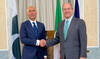
The speakers highlighted the competitive advantages of the Kingdom’s investment environment. SPA
Short Url
Updated 30 June 2025
Follow

Saudi Arabia pitches $2.5tn mining sector potential to Canadian firms

  • Ministry of Industry and Mineral Resources presented investment options to representatives from 25 firms in Vacouver
  • Ministry also held a seminar with investors in Toronto

JEDDAH: Canadian companies have been presented with exploration opportunities in Saudi Arabia’s mining sector during a roundtable in Vancouver.

Officials from the Kingdom’s Ministry of Industry and Mineral Resources presented investment options to representatives from 25 firms, outlining the goals of the government’s Comprehensive Mining Strategy, according to the Saudi Press Agency.

The speakers also highlighted the competitive advantages of the Kingdom’s investment environment and its ongoing efforts to develop the mining sector, maximizing its contribution to economic diversification.

The initiative is part of the Ministry of Industry and Mineral Resources’ ongoing efforts to attract high-quality investments to Saudi Arabia’s mining sector, with the Kingdom’s mineral wealth estimated at around SR9.3 trillion ($2.48 trillion).

This effort also includes the Future Minerals Forum, launched in 2022 as an annual international conference where global mining leaders collaborate, share knowledge, and tackle key industry challenges and opportunities.

The Vancouver meeting is one of a number set to be held ahead of the fifth edition of the Kingdom’s Future Minerals Forum in January, and according to SPA: “Roundtable participants reaffirmed FMF’s vital role in shaping the future of the global mining sector and developing effective solutions to its challenges amid ongoing shifts in the energy and industrial landscapes.” 

The report added that the ministry also held a seminar with investors in Toronto, where it also presented promising investment opportunities in the Kingdom’s mining sector.

The meetings build on the momentum of high-level engagement between Canada and Saudi Arabia, including Industry Minister Bandar bin Ibrahim Alkhorayef leading a delegation to Ottawa and Toronto in October to advance bilateral cooperation following the restoration of diplomatic ties in May 2023.

The visit also highlighted Saudi Arabia’s interest in Canada’s expertise in digital financial technologies, geological surveying, and human capacity development, aligning with the Kingdom’s efforts to build a knowledge-based, innovation-driven mining sector under Vision 2030.

In 2023, the Kingdom’s non-oil exports to Canada totaled SR140 million, mainly consisting of base metals and plant products. In contrast, non-oil imports from Canada reached SR2.89 billion, including locomotives, pharmaceuticals, optical and imaging equipment, and electrical devices.


World Bank lifts Saudi growth forecast to 3.8%, highlights Gulf’s digital leap

Updated 57 min 18 sec ago
Follow

World Bank lifts Saudi growth forecast to 3.8%, highlights Gulf’s digital leap

RIYADH: The World Bank has upgraded its 2025 economic growth forecast for Saudi Arabia to 3.8 percent, an increase from its previous estimate of 3.2 percent, citing renewed momentum in both oil and non-oil sectors.

In its latest Gulf Economic Update, the bank noted that while softer oil prices have widened the Kingdom’s fiscal deficit and raised its debt-to-GDP ratio toward 32 percent, Saudi Arabia benefits from low overall public debt. 

“Economic momentum is strengthening across oil and non-oil sectors,” the World Bank said, adding that “ongoing Vision 2030 reforms and liberalized foreign ownership rules should support investment inflows.”

It noted that historical data showed that while all GCC countries are pushing forward with diversification plans, those that are “demonstrating the benefits of early and sustained diversification are still reaping the benefits.”

The recent upward trends in Saudi Arabia and Kuwait are promising, according to the Group, indicating that policy reforms are starting to take effect. “Continued monitoring of non-oil GDP shares will be essential to assess the success of these transformative reforms,” it added.

The positive outlook for Saudi Arabia is part of a broader regional upswing. Economic growth across the GCC is accelerating, driven by structural reforms and rapid digital transformation. 

The UAE led with a forecast of 4.8 percent growth in 2025, followed by Saudi Arabia, Bahrain at 3.5 percent and Oman at 3.1 percent. Qatar’s economy is projected to grow at a rate of 2.8 percent, and Kuwait 2.7 percent.

Titled “The Gulf’s Digital Transformation: A Powerful Engine for Economic Diversification,” the report assessed a decade of efforts to reduce oil dependence. It found that while hydrocarbons remain central to fiscal planning, diversification is advancing, with the digital sector making particularly strong gains

The World Bank emphasized that reducing reliance on hydrocarbon revenues is a key challenge as tax revenue remains low.

“In a period marked by global uncertainty and ongoing geopolitical tensions, the Gulf Cooperation Council countries are accelerating national reform programs to transition toward more diversified and sustainable economies,” the report added.

The GCC is emerging as a digital frontrunner, with 5G coverage exceeding 90 percent and major investments in data centers and high-performance computing. Data plans and devices are highly affordable, supporting broad digital inclusion. 

“Significant investments in data centers and high-performance computing systems, especially in Saudi Arabia and UAE, underpin the region’s digital economy and AI readiness,” the World Bank remarked.

The two countries were highlighted as regional and global leaders in artificial intelligence readiness, supported by vibrant startup ecosystems and strong government commitment to integrating generative AI.

“The number of AI startups and venture funding is growing rapidly, and generative AI applications are increasingly adopted by Governments,” the report said. “Investments in data centers, cloud computing and the Graphic Processing Units— microchips indispensable to AI— are on the rise in both countries. Investments in tertiary educa- tion for AI specialized skills are on the rise.”

It noted that e-government services “are highly advanced” in Saudi Arabia and UAE who are among the top ranked in the UN E-Government Development Index, but still uneven across the region.

The World Bank urged other GCC countries to implement a comprehensive set of policies to help maximize AI’s productivity gains, mitigate labor market disruptions and ensure environmental sustainability. It also noted the nations’ readiness and position to harness the benefits of digital transformation and AI stressing that it must proactively address labor and environmental challenges. 

Safaa El Tayeb El Kogali, World Bank Division director for the GCC said that “diversification and digital transformation are no longer optional. They are essential for long-term stability and prosperity.” She noted the region’s “remarkable digital leap” but emphasized the need to proactively address labor market and environmental challenges.

A key strength is women’s participation in STEM fields, which now surpasses the global average, bolstering the region’s digital competitiveness. “Over 80 percent of the population in most GCC countries possess basic digital skills, with Saudi Arabia and UAE leading in advanced skills and STEM graduates,” the report said.

However, it noted that gender gaps persist in tertiary education, notably in Qatar. “Women participation in STEM fields is higher than the World average, particularly in the UAE and Saudi Arabia.”

To sustain growth, the World Bank advised continued progress on national vision strategies and disciplined fiscal management to mitigate risks from oil volatility and geopolitical tensions. 

Key recommendations included supporting small and medium-sized enterprises in adopting AI, strengthening innovation ecosystems, launching reskilling programs, and enhancing regional cooperation to build a unified digital market across the broader Middle East region.

“By enabling better supply chain management, easier communication, and effective digital marketing, digital platforms have allowed businesses, including small and medium-sized enterprises, to access global consumer bases, eliminating the need for a physical storefront,” the report noted.