Surge in conflicts fuels extreme poverty: World Bank

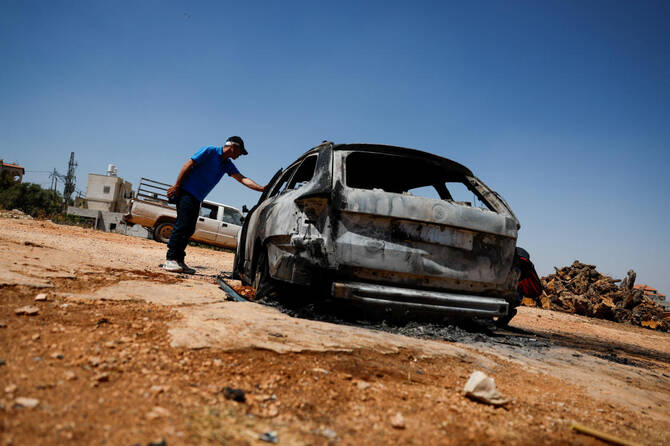
A Palestinian man inspects a burnt car after an attack by Israeli settlers in Kafr Malik, in the Israeli-occupied West Bank. The territory is on a World Bank list of economies facing conflict or instability. (Reuters)
Short Url
Updated 27 June 2025
Follow

Surge in conflicts fuels extreme poverty: World Bank

  • Development lender says 39 economies are classified as facing conflict or instability, including Gaza, West Bank and Iraq
  • Report concludes moves to prevent conflict are far more cost-effective than responding after violence erupts

WASHINGTON: Conflicts and related fatalities have more than tripled since the early 2000s, fueling extreme poverty, the World Bank said Friday.
Economies in fragile and conflict-affected regions have become “the epicenter of global poverty and food insecurity, a situation increasingly shaped by the frequency and intensity of conflict,” the bank added in a new study.
This year, 421 million people get by on less than $3 a day in places hit by conflict or instability — a situation of extreme poverty — and the number is poised to hit 435 million by 2030.
Global attention has been focused on conflicts in Ukraine and the Middle East for the past three years, said World Bank Group chief economist Indermit Gill.
But “half of the countries facing conflict or instability today have been in such conditions for 15 years or more,” he added.
Currently, 39 economies are classified as facing such conditions, and 21 of them are in active conflict, the Washington-based development lender said.
The list includes Ukraine, Somalia, South Sudan and the West Bank and Gaza.
It also includes Iraq although not Iran.
The report flagged that moves to prevent conflict can bring high returns, with timely interventions being “far more cost-effective than responding after violence erupts.”
It also said that some of these economies have advantages that could be used to reignite growth, noting that places like Zimbabwe, Mozambique and the Democratic Republic of Congo are rich in minerals key to clean tech like electric vehicles and solar panels.
“Economic stagnation — rather than growth — has been the norm in economies hit by conflict and instability over the past decade and a half,” said Ayhan Kose, World Bank Group deputy chief economist.
The bank’s report noted that high-intensity conflicts, which kill more than 150 per million people, are typically followed by a cumulative fall of around 20 percent in GDP per capita after five years.


Mediterranean search-and-rescue NGOs refuse to cooperate with Libyan coast guard

Updated 5 sec ago
Follow

Mediterranean search-and-rescue NGOs refuse to cooperate with Libyan coast guard

  • Group of 13 organizations announce they will no longer share information over allegations of violent conduct
  • Migrants and asylum-seekers allegedly attacked, taken to camps notorious for slavery, torture and rape in North African country

LONDON: A group of NGOs operating rescue missions in the Mediterranean have ceased cooperating with the Libyan coast guard over the latter’s alleged violent treatment of asylum-seekers.

Thirteen groups running boats across the sea say it is a rejection of pressure from the EU to share information with Libya in a bid to stem the flow of migrants, particularly to Italy.

The EU funds and trains Libya’s coast guard, but the groups say that it has been involved in violently preventing people crossing to Europe, and has taken migrants to camps where rape, torture and slavery are common.

A 2021 UN report found asylum-seekers and refugees in Libya faced a “litany of abuses” in camps across the country that were “suggestive of crimes against humanity.”

Another report published last month by Berlin-based NGO Sea-Watch said that the Libyan coast guard had engaged in 54 acts of violence in the Mediterranean since 2016.

It highlighted ramming, shootings and assaults, while in August the Libyan coast guard was accused of opening fire on a ship belonging to the NGO SOS Mediterranee.

Ina Friebe, a member of the German activist group CompassCollective, said in a joint statement on behalf of the 13 NGOs: “We have never recognized these actors (Libya’s coast guard) as a legitimate rescue authority — they are part of a violent regime enabled by the EU.”

She added: “Now we are increasingly being pressured to communicate with exactly these actors. This must stop. Ending all operational communication with the so-called Libyan Rescue Coordination Center is both a legal and moral necessity — a clear line against European complicity in crimes against humanity.”

The group of 13 NGOs added that they know their stance could result in fines, detention and loss of their vessels.

“It is not only our right but our duty to treat armed militias as such in our operational communication — not as legitimate actors in search-and-rescue operations,” said Giulia Messmer of Sea-Watch.

Rescue organizations operating in the Mediterranean have saved more than 155,000 people over the past decade, but that has led to backlashes, including in Italy where the law was changed to prevent them operating freely out of ports.

The 13 NGOs said this week that they had launched the Justice Fleet initiative to track incidents involving the Libyan coast guard, as well as compile information on legal action taken by the groups.

“For 10 years, civil sea rescue has been providing first aid in the Mediterranean. For that, we have been blocked, criminalized, slandered,” the Justice Fleet website said.

“That’s why we are joining forces now, stronger than ever — to defend human rights and international maritime law together.”