

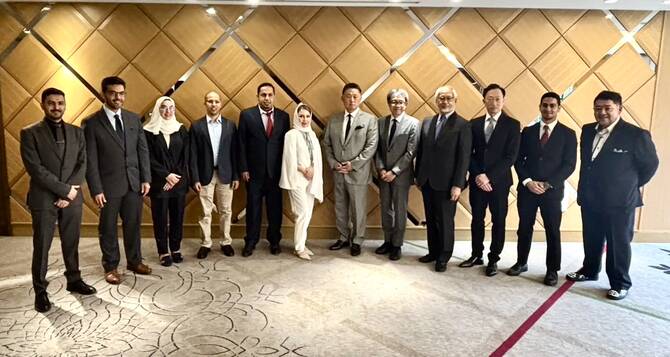
Tokyo firm partners with Saudi hospital to advance stem cell treatment system

The number of patients in the Middle East with diabetes and other chronic diseases is rapidly increasing due to changes in lifestyle, and a rising number of cases are difficult to treat with conventional therapies. (PRTimes)
Short Url
Updated 27 June 2025
Follow

Tokyo firm partners with Saudi hospital to advance stem cell treatment system

TOKYO: ADR Therapeutics, a subsidiary of Tokyo-based Cytori Cell Research Institute, Inc., has signed a Letter of Intent to conduct a joint clinical trial for “90-minute complete stem cell therapy” with the King Abdullah International Medical Research Center.

The collaboration, reported in PR Times, is expected to drive medical innovation in the Middle East and bring new hope to patients with intractable diseases that were previously considered difficult to treat. 

In conventional stem cell therapy, harvested cells must be cultured for anything between several weeks and months at a dedicated facility, resulting in high costs and long waiting times. ADR Therapeutics’ Cellution System purifies non-cultured cells from a patient’s tissue to the state needed for treatment in just 90 minutes and can be administered on the same day of collection.

This provides a safe and effective treatment option for diseases such as osteoarthritis, diabetic foot lesions, Crohn’s disease and chronic pain. The risk of rejection is extremely low because the patient’s own cells are used and the risk of infection is reduced because no culture process is required.

Saudi Arabia has positioned the medical and healthcare sector as a key strategic area in Vision 2030, the national transformation program led by Crown Prince Mohammed bin Salman, and aims to become a world-leading medical hub.

The number of patients in the Middle East with diabetes and other chronic diseases is rapidly increasing due to changes in lifestyle, and a rising number of cases are difficult to treat with conventional therapies.

It is expected the strategic partnership between the Kingdom and Japan in the medical field will be further strengthened by the contribution of Japan-originated stem cell therapy technology to solving local medical issues.

The most important feature of the treatment is that it can be performed at ordinary medical institutions without the need for advanced culture facilities or specialized technicians. This will enable the provision of advanced regenerative medicine in regions with limited specialized facilities and is expected to contribute significantly to improving access to medical care.

Saudi medical professionals will be able to acquire the latest stem cell therapy technology through specialist Japanese doctors providing direct technical guidance locally.


Foreign ministers chair Saudi-Omani coordination council meeting in Muscat

Updated 23 December 2025
Follow

Foreign ministers chair Saudi-Omani coordination council meeting in Muscat

MUSCAT: Saudi Foreign Minister Prince Faisal bin Farhan met with Oman’s Foreign Minister Sayyid Badr bin Hamad Al-Busaidi on Monday.

They reviewed bilateral relations between their nations and ways to enhance and develop them across various fields. Additionally, they discussed regional and international developments.

The ministers co-chaired the third meeting of the Saudi-Omani Coordination Council in the Omani capital, Muscat, with the participation of the heads of the Council’s subsidiary committees and the two heads of the Council’s General Secretariat teams.

The meeting comes as an affirmation of the keenness of Saudi and Omani leaders to strengthen ties and advance them toward greater prosperity for both nations.

In his remarks during the meeting, Prince Faisal affirmed that gathering builds on the previous council meeting, held last year in AlUla, and on its positive and fruitful outcomes within the framework of the approved recommendations and initiatives. 

He stressed the importance of continuing the work of the council’s subsidiary committees to complete the necessary procedures to implement the remaining initiatives, and of the General Secretariat’s role in follow-up and in addressing any challenges that may hinder implementation.

He also underscored the importance of developing and enhancing trade relations, stimulating investment, and strengthening cooperation between the public and private sectors.

He also praised the ongoing work to establish and launch the Coordination Council’s electronic platform, which aims to connect all committee work and initiatives to facilitate follow-up on the Council’s progress. 

Al-Busaidi affirmed in his remarks the qualitative progress in relations between the two countries and the notable development witnessed across numerous sectors toward achieving economic integration and enhancing intra-trade and joint investments. 

The Omani foreign minister also highlighted deeper cooperation in the security and judicial fields, as well as the cultural and tourism sectors, noting the advanced and continuous political cooperation, consultation, and coordination on regional and international issues.