

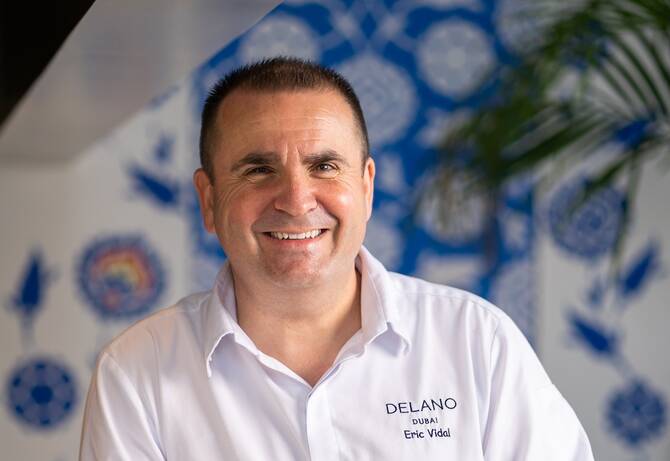

DUBAI: Running six restaurants, a bar and a beach club might sound like a logistical nightmare, but for French chef Eric Vidal, it is just another day at Delano Dubai.
As executive chef of the new luxury destination, Vidal oversees everything from in-room dining to curated tasting menus across venues including Blue Door, Gohan, Tutto Passa, and La Cantine Beach.
Here, Vidal offers advice and a recipe for grilled seabass.
When you were starting out, what was the most common mistake you made?
I was absolutely determined to make every single element perfect, down to the tiniest garnish. If a microgreen was not angled just right or a sauce swirl looked a little off, I would start over. That obsessive attention to detail came from a genuine love for the craft, but it also meant I was constantly behind. During training, I was almost always the last to plate and serve. While others were already wiping down their stations, I was still fussing over aesthetics that, in hindsight, barely made a difference.
Looking back, I realize that pursuit of perfection wasn’t the problem, it was the way I went about it. In a professional kitchen, you simply can’t afford to sacrifice speed for polish that only you notice. I have learned that excellence is not about obsessing over every detail, it’s about knowing which ones truly matter. Ultimately, a great plate is one that delights the diner and makes it to the (table) on time.

Delano Dubai. (Supplied)
What’s your top tip for amateur chefs?
Enjoy the process. Try not to treat dinner like a high-stakes performance. Take a breath. Cooking should be something that grounds you, not stresses you out.
It also definitely helps to have a few basics in place, like a solid grasp of simple techniques, equipment that actually works with you (not against you), and good-quality ingredients that you’re excited to use. When you have those essentials sorted, you can approach each meal with a mix of care and curiosity, whether you’re following a recipe or freestyling from the fridge.
What one ingredient can instantly improve any dish?
For me, it’s a close call between garlic and good-quality olive oil with a squeeze of fresh lemon. These are not just great ingredients on their own, but they form a trio that can transform even the simplest of dishes into something really special.
Garlic is one of those essentials I cannot live without. If it is raw and fiery or slow-cooked until soft and sweet, it brings a depth of savory flavor that is hard to beat. It’s the backbone of so many cuisines and adds warmth and complexity that instantly makes a dish feel more complete.
Good-quality olive oil is so much more than a cooking medium. The right bottle adds real character — fruity, sometimes peppery with a richness and silkiness that gives food a beautifully rounded finish. It also carries a personal significance for me. It brings back memories of the flavors I grew up with. And just a dash of fresh lemon juice can completely change a dish. It cuts through richness, lifting flavors, and adding that bit of brightness that makes everything taste fresher, lighter and more alive.
When you go out to eat, do you find yourself critiquing the food?
I try to approach the experience with an open mind rather than picking things apart. If something doesn’t quite suit my palate, I simply make a quiet mental note and I’m probably just not going to order it again. Cooking is a form of expression, and not every dish is meant to please everyone.
What’s the most common issue that you find in other restaurants?
It tends to come down to the basics: attention to detail and solid training. It’s often the small things — an under-seasoned sauce, a lukewarm plate, or a misstep in communication between the kitchen and front of house — that can affect the whole experience. Most of these issues are not about talent, they are about consistency, care and making sure everyone on the team is properly supported and well-trained. When those foundations are in place, it really makes all the difference.
What’s your favorite cuisine to order?
I have a soft spot for the artistry and surprise of Japanese cuisine, but what I really savor when dining out is the chance to explore new culinary styles — whether it’s the bold flavors of street food, the elegance of fine dining, or the comfort of a cozy local spot. I love that feeling of trying a new flavor or technique for the first time — it keeps things exciting for me.
What’s your go-to dish if you have to cook something quickly at home?
A simple pasta dish. The combination of garlic sautéed in olive oil with a basic tomato sauce is incredibly quick to prepare and always satisfying. Alternatively, a no-cook option I often rely on is a classic French cheese and salad with crusty bread — minimal effort for a delicious and well-balanced light meal.
What customer request most annoys you?
I genuinely don’t find requests a hassle; I see them as an opportunity to really understand individual needs and come up with creative solutions. Flexibility and a bit of patience are crucial in making sure everyone has a great experience.
What’s your favorite dish to cook?
Veal cheek blanquette. It requires a few patient hours of simmering, but the process is incredibly rewarding. I really enjoy the mindful attention it demands, from the initial browning to the gentle simmering that fills the kitchen with a comforting aroma.
What’s the most difficult dish for you to get right?
I find Indian cuisine the hardest. The art of balancing the blend of spices is not easy. It’s not just about knowing which spices to use, but also the quantities and the precise moment to add them during cooking. It is a delicate dance to make sure no single spice dominates the others.
What are you like as a leader? Are you a disciplinarian? Or are you more laidback?
My approach is all about empowerment and trust. Of course, a structured and disciplined environment is important to maintain high standards, but I firmly believe that respect and genuine support are far more powerful motivators than fear or intimidation. I aim to create a team where everyone feels proud of what they bring to the table and confident enough to take initiative. They know they’ve got my full support, which gives them the freedom to grow, experiment and really shine in their roles.
RECIPE
Chef Eric’s Mediterranean grilled seabass with vierge sauce

(Supplied)
Ingredients:
1 whole Mediterranean seabass (1.2 Kg)
Fleur de sel
9 gr fennel seeds and herbs (tarragon, dill, thyme, rosemary)
1 pc of lemon
20 cl extra virgin olive oil
Method:
1. Clean and pat the fish dry (ask supplier for scaling/gutting).
2. Brush the fish inside and out with olive oil.
3. Score skin with cross marks on both sides.
4. Stuff the belly with lemon slices and mixed herbs.
5. Place the fish on a tray, drizzle with olive oil, herbs and fleur de sel.
6. Bake it in a preheated oven at 180°C for 15-20 minutes.
7. Rest the fish, tented with foil, for 5-10 minutes before serving.
8. Fillets will be easy to remove after resting.
9. Serve hot with sauce vierge.
Note: Cooking time varies with fish size.
Vierge sauce
Ingredients:
Tomatoes on vine – 150gr
Basil leaves – 24gr
Taggiasche olives – 50gr
Lemon pulp diced – 50gr
Olive oil extra virgin – 120grs
Salt
Pepper
Method:
Score tomato skin with a cross, blanch in boiling water for 20 seconds, deseed and peel.
Sprinkle tomato petals with salt and drain on paper towel.
Quarter the taggiasche olives.
Dice the fresh basil leaves.
Dice the lemon pulp evenly.
Dice the salted tomato petals evenly.
Combine all ingredients in a bowl with salt, pepper and extra virgin olive oil.
Adjust seasoning.
Serve at room temperature.


