

Saudi efforts to boost innovation pay off

Investment in research and development in Saudi Arabia increased to SR22.6 billion ($6 billion) in 2023, a 17.4 percent increase compared with 2022. (SPA)
Short Url
Updated 26 June 2025
Follow

Saudi efforts to boost innovation pay off

  • Official figures show that 8,029 patent applications were submitted in the country in 2024, an increase of 13.3 percent on the previous year

RIYADH: Support provided by Saudi authorities for scientific research, innovation and university teaching have been credited for recent achievements by innovators in the Kingdom.

Official figures show that 8,029 patent applications were submitted in the country in 2024, an increase of 13.3 percent on the previous year. In addition, 31,834 trademarks and 1,578 industrial designs were registered, and 4,355 patents were published.

Investment in research and development in Saudi Arabia increased to SR22.6 billion ($6 billion) in 2023, a 17.4 percent increase compared with 2022.

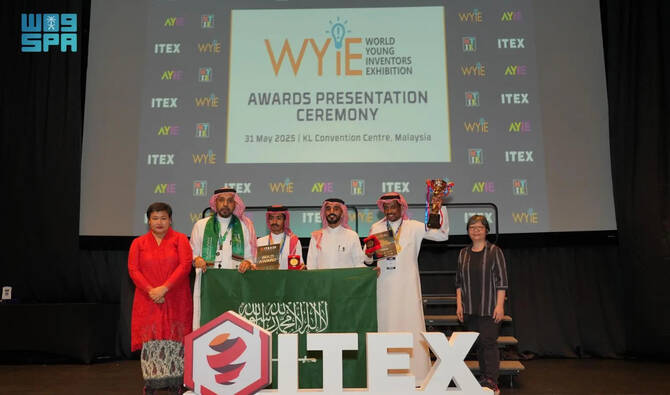
Recent examples of Saudi innovators honored with awards for research and innovation at international events included ophthalmologist Dr. Saad Al-Anzi, who won the grand prize at the Geneva International Exhibition in April this year for inventing a cost-effective surgical tool for cataract operations, while six other Saudi innovators received global awards at the event and 134 received global medals.

And 39 students from King Abdulaziz University received a global award at the IENA Expo for ideas, inventions and new products in Germany last October.


Saudi Post issues commemorative stamp to mark Al-Faw’s UNESCO recognition

Updated 8 sec ago
Follow

Saudi Post issues commemorative stamp to mark Al-Faw’s UNESCO recognition

RIYADH: Saudi Post has issued a SR3 ($0.79) commemorative stamp to celebrate the registration of Al-Faw Archaeological Area on the list of UNESCO World Heritage Sites, making it the eighth Saudi site on this prestigious list.

Located south of Riyadh at the junction of a vast plain and the Tuwaiq mountain range, Al-Faw is strategically positioned along ancient trade routes connecting the southern Arabian Peninsula to its center and east.

The area in Wadi Ad-Dawasir, at the intersection of the Empty Quarter desert and the Tuwaiq mountain range, is home to almost 12,000 archaeological remains and has a history of human habitation stretching back more than 6,000 years.

The site features a landscape shaped over millennia by human interaction with the environment and which was abandoned in the 5th century AD owing to depleted water sources.

The commemorative stamps issued honor significant national and international events, highlighting key chapters of Saudi history making them collectible for philatelists, researchers, and heritage enthusiasts, the Saudi Press Agency reported.

UNESCO, while recognizing the site last year, has said the site was a strategic point on the ancient trade routes of the Arabian Peninsula, but was abruptly abandoned around the fifth century.

Archaeological remains uncovered at the site range from prehistoric times to the late pre-Islamic era, testifying to successive occupations by three different populations.

Features include paleolithic and neolithic tools, tapered structures, cairns and circular constructions, the sacred mountain of Khashm Qaryah, rock carvings, funeral cairns, an ancient water management system, and remains of the city of Qaryat Al-Faw.

Other Saudi sites on the UNESCO Heritage List are Al-Hijr (2008), At-Turaif in Diriyah (2010), Historic Jeddah (2014), rock art in the Hail Region (2015), Al-Ahsa Oasis (2018), Hima Cultural Area (2021), and Uruq Bani Maarid protected area (2023).