

Saudi Arabia’s Uruq Bani Ma’arid gains spot on global conservation list

1 / 4
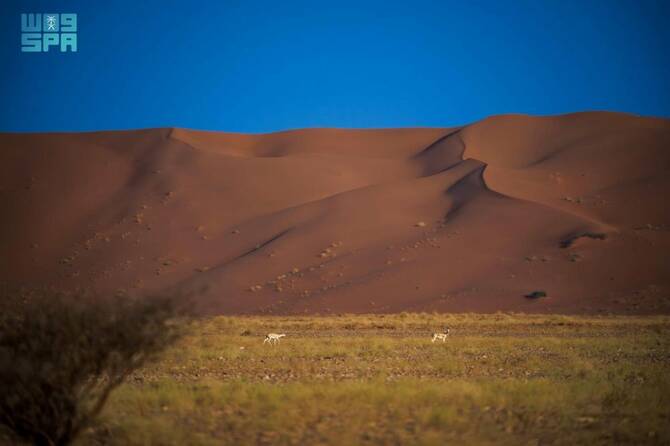
Uruq Bani Ma’arid has been admitted to the International Union for Conservation of Nature’s Green List of Protected and Conserved Areas. (SPA)
2 / 4
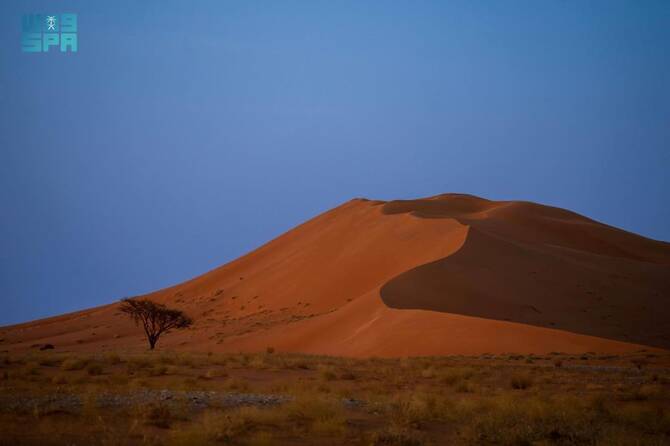
Uruq Bani Ma’arid has been admitted to the International Union for Conservation of Nature’s Green List of Protected and Conserved Areas. (SPA)
3 / 4
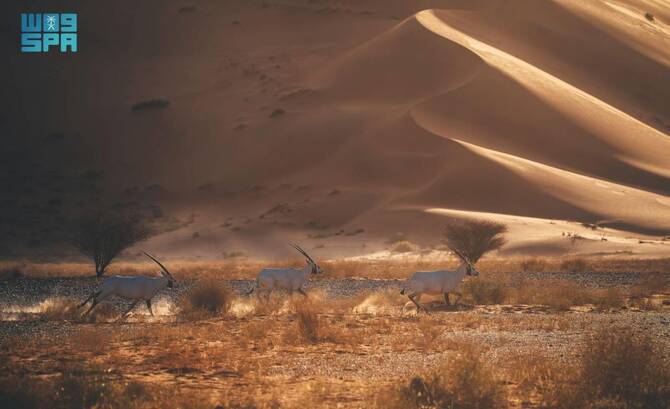
Uruq Bani Ma’arid has been admitted to the International Union for Conservation of Nature’s Green List of Protected and Conserved Areas. (SPA)
4 / 4
Uruq Bani Ma’arid has been admitted to the International Union for Conservation of Nature’s Green List of Protected and Conserved Areas. (SPA)
Short Url
Updated 24 June 2025
Follow

Saudi Arabia’s Uruq Bani Ma’arid gains spot on global conservation list

  • UNESCO World Heritage Site praised for ecological restoration, biodiversity efforts
  • Uruq Bani Ma’arid has implemented a breeding and reintroduction program for the endangered Arabian oryx

RIYADH: Uruq Bani Ma’arid, one of Saudi Arabia’s most ecologically significant protected areas and a UNESCO World Heritage Site, has been admitted to the International Union for Conservation of Nature’s Green List of Protected and Conserved Areas.

The recognition confirms the site’s global ecological importance and highlights the Kingdom’s growing leadership in conserving arid-land habitats, the Saudi Press Agency reported on Tuesday.

Saudi Arabia’s inclusion of Uruq Bani Ma’arid follows earlier Green List achievements, notably the Ibex Protected Area and the King Salman bin Abdulaziz Royal Reserve.

These milestones reflect sustained progress toward excellence in protected-area management, according to the SPA report.

Uruq Bani Ma’arid covers 12,765 sq. km at the western edge of the Empty Quarter — the world’s largest continuous sand desert — and harbors the greatest biodiversity in the region. In 2023, it was inscribed as a UNESCO World Heritage Site for its outstanding natural value.

The union’s Green List sets the global benchmark for effective and equitable protected-area management. To qualify, sites must demonstrate transparent governance, measurable conservation outcomes and meaningful engagement with local stakeholders.

Uruq Bani Ma’arid met the criteria through integrated planning, resilient ecological monitoring and habitat restoration programs, the SPA reported.

Under the stewardship of the National Center for Wildlife, Uruq Bani Ma’arid has implemented a breeding and reintroduction program for the endangered Arabian oryx.

Mohammad Qurban, CEO of the National Center for Wildlife, said: “Uruq Bani Ma’arid exemplifies what science-guided conservation can achieve in extreme landscapes. Its inclusion on the IUCN Green List reflects our dedication to protecting biodiversity and delivering real conservation impact at both national and global levels.”

He added that the milestone supports Saudi Arabia’s contribution to the global 30x30 biodiversity target — protecting 30 percent of terrestrial and marine areas by 2030 — and aligns with the Saudi Green Initiative, a core pillar of Vision 2030.


Stray animals cause 426 accidents, 5 deaths in 2025

Updated 21 sec ago
Follow

Stray animals cause 426 accidents, 5 deaths in 2025

  • Govt says heavy fines for cutting road fencing
  • Animal owners must use designated crossings

RIYADH: Stray animals have been the cause of 426 accidents, five deaths and 26 injuries on the Kingdom’s roads in 2025, according to the Saudi Press Agency.

The General Authority for Roads revealed the statistics to raise awareness about the dangers of people tampering with road fencing, the SPA reported recently.

It said the public must use designated camel crossings to protect lives and property.

The authority added that fencing and crossings are designed according to the highest standards to regulate the movement of animals.

It warned that deliberately cutting fencing was a criminal offence, with fines running up to SR50,000 ($13,000).

In addition, perpetrators will be responsible for the costs of repairing the damage.

The authority said measures are in place for camel crossings on single-lane roads or other unfenced routes.

Owners can coordinate with the call center at 938 to determine a suitable time for crossing, provided it is done all at once, during daylight hours, and in the presence of a road supervisor.

The authority urged camel owners to educate their workers about the regulations.

The Kingdom’s road network has 51 camel crossings and 3,056 km of fenced roads.

The authority said it is adhering to the standards of the International Road Safety Assessment Program.

The aim is sixth place globally in the quality index by 2030, and reduce fatalities to under five per 100,000 people.