

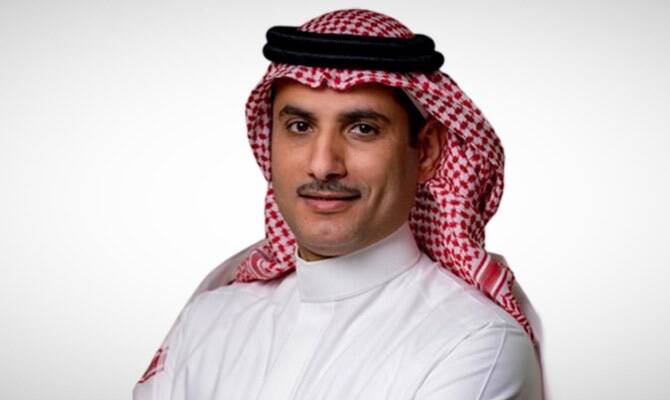

JEDDAH: Saudi Ports Authority has appointed Suliman bin Khalid Al-Mazroua as its new president, effective June 29, as part of its push to strengthen leadership and advance key strategic goals.
Al-Mazroua succeeds Mazen bin Ahmed Al-Turki, who had been serving as acting president and played a key role in several initiatives aimed at developing logistics zones and parks across the Kingdom.
Al-Turki’s most recent contribution included overseeing the signing of a series of new build-operate-transfer contracts valued at more than SR2.2 billion ($586.6 million) to develop multi-purpose cargo terminals at eight Saudi ports.
The appointment of Al-Mazroua, announced by Mawani’s board of directors, underscores the authority’s commitment to supporting the National Transport and Logistics Strategy and Saudi Vision 2030. Both initiatives aim to position the Kingdom as a global logistics hub and a leading industrial power.
In a post on his X account, Al-Mazroua expressed his appreciation for the board’s trust and pledged to further the authority’s strategic goals.
“I extend my sincere thanks and appreciation to His Excellency the Minister of Transport and Logistics Services and Chairman of the Board of the Saudi Ports Authority, Eng. Saleh bin Nasser Al-Jasser, as well as to their Excellencies and distinguished members of the board for this generous trust,” he said.
Al-Mazroua added: “I pray to God for success in serving our blessed country and fulfilling the aspirations of our visionary leadership. I am also very pleased to work alongside my colleagues at the Saudi Ports Authority.”
In a statement, the authority said that Al-Mazroua “affirmed his commitment to advancing Mawani’s strategic objectives and enhancing its performance in line with its development plans and transformation programs.”
Before assuming his new role, Al-Mazroua served as CEO of the National Industrial Development and Logistics Program, where he played a key role in driving economic diversification and enhancing infrastructure in key sectors, including industry, mining, energy, and logistics.
“He also played a key role in stimulating investment in these sectors with the aim of increasing their contribution to the Kingdom’s gross domestic product, promoting innovation, enhancing local content, and advancing the Fourth Industrial Revolution,” the statement added.
With more than two decades of professional experience, Al-Mazroua has held several senior leadership positions, including at Saudi Aramco from 2001 to 2017.
Over the years, he progressed from technical roles to executive leadership, contributing to the establishment of research and development centers, strengthening cybersecurity frameworks, and advancing health care sector initiatives.
He also worked at US-based Aruba Networks from November 2006 to July 2007 and previously served as a quality assurance engineer at California-based Caspian Networks.
In addition, Al-Mazroua led the National Transformation Program and the Delivery and Rapid Intervention Center, where he contributed to planning, monitoring, and accelerating the implementation of development initiatives in support of Vision 2030.
He is also a member of several boards, including the Center for the Fourth Industrial Revolution in Saudi Arabia and Marafiq Co.


