

Najran’s Al-Manjam Village showcases centuries of mudbrick heritage

1 / 3
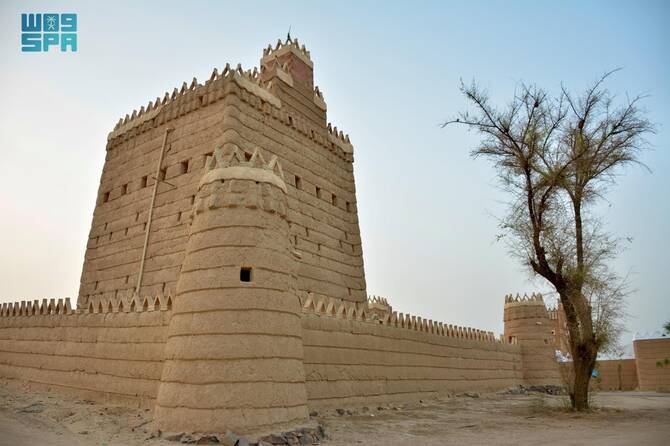
The site is enclosed by a thick mud wall with three main gates, preserving its historical significance. (SPA)
2 / 3
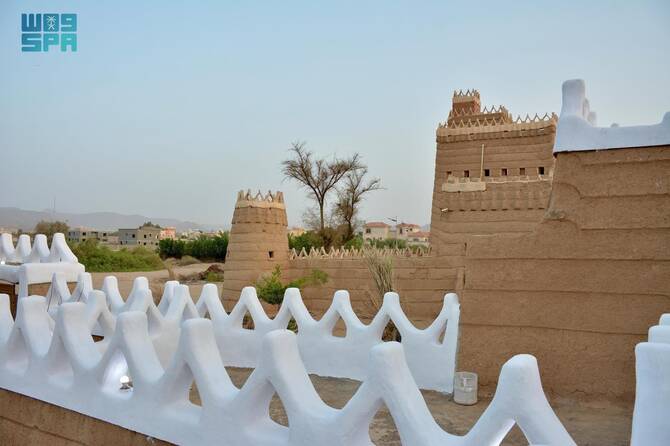
The site is enclosed by a thick mud wall with three main gates, preserving its historical significance. (SPA)
3 / 3
The site is enclosed by a thick mud wall with three main gates, preserving its historical significance. (SPA)
Short Url
Updated 23 June 2025
Follow

Najran’s Al-Manjam Village showcases centuries of mudbrick heritage

  • 7 tall buildings for meetings, storage, horses
  • Site has stood for over 300 years, says official

Riyadh: Located on the northern bank of Wadi Najran, the historic village of Al-Manjam showcases distinct mud architecture and is a key cultural landmark in the region.

The village features seven towering mudbrick palaces, each from four to seven stories high. These buildings include a mosque, horse stables, majlises (meeting rooms), grain storage areas, and upper balconies.

The site is enclosed by a thick mud wall with three main gates, preserving its historical significance, according to a recent Saudi Press Agency report. 

Rashid Al-Manjam, the village’s supervisor, said the site has stood for over 300 years and has undergone restoration over the past two decades, transforming it into a heritage destination for history enthusiasts and tourists.

Each building reflects distinct architectural styles and functions. The Al-Mashoulq structure has sloping angles and a low roof, while the Al-Murabba and Al-Qasaba buildings are circular that narrow at the top, often constructed on corners for defense.

The Al-Muqaddam, a three-story building with an inner courtyard, serves as both a majlis and storage area.

Constructed from local materials including mud, palm fronds, tamarisk and sidr wood, these buildings illustrate a sustainable relationship with the environment. 

Al-Manjam said that ongoing preservation efforts align with Saudi Vision 2030. 

The aim is to revive national heritage, empower local communities, and transform heritage villages into tourist destinations, thereby strengthening cultural identity and contributing to the national economy, he said.


Riyadh Ramadan tents illuminate festive traditions

Updated 5 sec ago
Follow

Riyadh Ramadan tents illuminate festive traditions

  • As the sun sets, Ramadan tents open for guests to enjoy sumptuous meals

Riyadh: The much-anticipated tradition of Ramadan tents in Riyadh draws hundreds of daily for lavish iftar and suhoor menus, surrounded by sophisticated and luxurious decor.

One of the largest Ramadan gatherings in the capital, Fawanees at Mandarin Oriental Al Faisaliah, has over the years become a benchmark for the seasonal experience.

Named after the traditional lantern used to decorate homes during the holy month, Fawanees immerses guests in a traditional Saudi iftar, attracting people from around the Kingdom and abroad.

“Like the glow of fawanees lighting the night, Ramadan is the time to share our blessings with others. This year’s Fawanees brings togetherness and generosity,” Andrew Abram, general manager of Mandarin Oriental Al Faisaliah, told Arab News.

“May we carry this light in our hearts throughout the holy month and extend it to everyone around us.”

The buffet comprises a wide variety of dishes and beverages with lanterns decorating the venue and oud music echoing through the hall.

The Four Seasons Hotel in Riyadh hosts a Ramadan tent and majlis celebrating “Hikayat Ramadan,” inspired by the timeless art of storytelling.

Cafe Boulud has a French-inspired iftar menu, with a signature Ramadan cake crafted by pastry chef Wael Elsherif Ahmed El-Sherif, and there is a special Ramadan high tea experience at Obaya Lounge.

Families and young guests are also welcome, with dedicated childrens’ activities ensuring a festive experience for all.

“Every detail is designed to create meaningful experiences that connect families, celebrate heritage and leave lasting memories year after year,” Shadi Suleman, regional vice president and general manager at Four Seasons Riyadh, told Arab News.

The Ramadan tent and majlis have been designed with oriental-inspired decor, blending tradition with contemporary touches.

Guests can enjoy live oud music in a warm and inviting atmosphere, perfect for families, friends and corporate gatherings.

“Every detail has been thoughtfully crafted to surprise and delight our guests,” Suleman said.

At the heart of the culinary offerings is the signature Ramadan cake, inspired by the Arabian desert and made with Saudi dates, crisp kunafa, malt-infused white chocolate, pistachio cream and honey.

Fairmont Riyadh offers seasonal celebrations centered around the Al Thuraya Ramadan Tent with generous iftar buffets, intimate chef’s tables, and serene suhoor under the stars.

Set within the Al Thuraya Ballroom which extends into an outdoor tent, the inviting sanctuary captures the warmth of Ramadan and authentic Arabian hospitality.

In addition to hosting sophisticated iftars after sunset, the venue is home to a lively Ramadan bazaar, where guests can explore a selection of handcrafted jewelry, premium perfumes and traditional garments.

Younger guests can enjoy a dedicated children’s area, with engaging activities and a dedicated buffet.

With the holy month being a festive occasion, guests enjoy extensive menus at Ramadan tents catering to every preference in the nation’s capital.