

Saudi culture sector to triple GDP share to $48bn by 2030, says minister

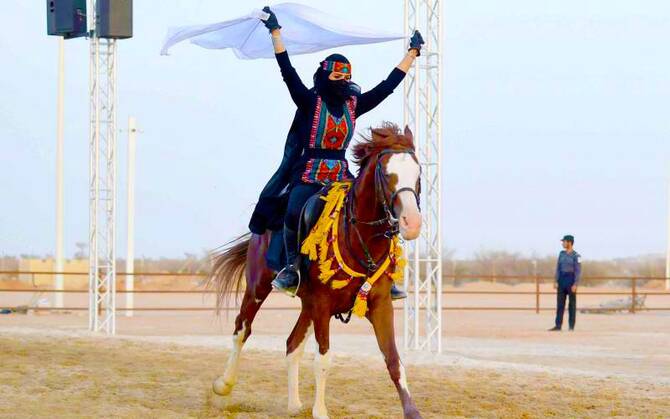
Cultural event attendance exceeded 23.5 million between 2021 and 2024, and major festivals such as the Red Sea Film Festival and Islamic Arts Biennale have become global draws. AFP
Short Url
Updated 22 June 2025
Follow

Saudi culture sector to triple GDP share to $48bn by 2030, says minister

JEDDAH: Saudi Arabia plans to raise the cultural sector’s contribution to gross domestic product to 3 percent — or SR180 billion ($48 billion) — by 2030, up from under 1 percent, according to Minister of Culture Prince Badr bin Abdullah bin Farhan.

In an interview with Al-Eqtisadiah, the minister said the sector has already surpassed its previous 0.91 percent GDP share, with Vision 2030 targets being met ahead of schedule.

“Vision 2030 forms the foundation of the Ministry of Culture’s strategy and direction,” he said. 

“By 2030, we envision a cultural environment that nurtures talent, encourages innovation both locally and internationally, and supports the flourishing of creative and cultural enterprises.” Prince Badr said in the interview. 

“Ultimately, our goal is to increase the sector’s contribution to GDP to 3 percent, equivalent to SR180 billion,” he said. “This represents the core mission of the Ministry of Culture and its affiliated bodies in driving an ambitious cultural transformation.”

Since the ministry’s founding in 2018, employment in the sector has jumped 318 percent, while the number of cultural graduates reached 28,800 in 2024, up 79 percent from 2018. The ministry has also issued over 9,000 licenses, while cultural associations and amateur clubs surged from 28 to 993.

“One notable outcome is the increase in the percentage of citizens who believe culture is important—from under 70 percent to 92 percent,” Prince Badr said. The ministry also oversees national celebrations such as Founding Day and Flag Day and has documented 9,317 antiquities sites and 25,000 urban heritage locations.

Saudi Arabia has now met its Vision 2030 target of having eight UNESCO World Heritage sites, with Al-Faw joining the list in 2024. Cultural event attendance exceeded 23.5 million between 2021 and 2024, and major festivals such as the Red Sea Film Festival and Islamic Arts Biennale have become global draws.

The Cultural Scholarship Program has awarded scholarships to 1,222 students studying at over 120 institutions across countries, including the US, the UK, and France. The program’s flexible design — no age limit or required academic background — has broadened participation. “Today, scholarship recipients are pursuing degrees in fields such as music, theater, and visual arts,” the minister said.

Through the Cultural Development Fund, the ministry has disbursed SR377 million to more than 120 projects. “Key areas of growth include heritage, music, and fashion. More than 1,200 creatives and entrepreneurs have benefited from its development services,” he added.

“Globally, there is increasing recognition of culture’s role in sustainable economic value creation,” the minister said. “Our role is to preserve and promote cultural identity while making it accessible and economically valuable.”


Cruise Saudi strengthens global ties as Celestyal makes maiden calls to Jeddah

Updated 10 December 2025
Follow

Cruise Saudi strengthens global ties as Celestyal makes maiden calls to Jeddah

JEDDAH: Saudi Arabia is accelerating its push to become a global cruise hub, with Cruise Saudi — a wholly owned Public Investment Fund subsidiary — expanding international partnerships to draw more travelers to the Kingdom’s Red Sea and Arabian Gulf ports.

The latest milestone came as award-winning Greek cruise line Celestyal completed its first-ever calls to Jeddah, signaling rising global interest in Saudi Arabia’s cultural and natural attractions.

The visits form part of Cruise Saudi’s strategy to build a year-round cruise ecosystem that supports tourism growth, boosts local supply chains, and contributes to the Kingdom’s broader economic diversification.

Three UNESCO World Heritage Sites — AlUla, Jeddah Historic District, and Al-Ahsa Oasis — are now accessible by sea, with curated shore excursions designed to deepen visitor engagement.

Cruise Saudi aims to welcome 1.3 million cruise passengers annually by 2035, creating 50,000 direct and indirect jobs and positioning the Kingdom as a premier international cruise destination.

The 1,360-passenger Celestyal Discovery arrived in Jeddah on Dec. 5, following the 1,260-passenger Celestyal Journey, which made its maiden call on Nov. 29. The Journey concluded a seven-night Athens–Jeddah itinerary with stops in Turkiye and Egypt, marked by a traditional plaque exchange ceremony attended by Cruise Saudi executives, port officials and Celestyal representatives.

Passengers were welcomed with traditional Saudi hospitality and toured Jeddah’s historic Al-Balad district, bustling souks, and cultural sites. Some Muslim travelers also visited Makkah to perform Umrah.

“We are honored to celebrate our maiden call in Jeddah alongside our partners at Cruise Saudi, marking the beginning of a long and effective relationship,” said Lee Haslett, chief commercial officer at Celestyal.

He added that Jeddah’s role as “the cultural heart of Saudi Arabia” presents strong potential for cruise tourism.

Barbara Buczek, chief destination experiences officer at Cruise Saudi, told Arab News: “This maiden Red Sea sailing highlights the strong appeal of the region and aligns with Cruise Saudi's commitment to developing seamless, high-quality cruise experiences in Saudi Arabia.”

She noted that Celestyal’s expanded itineraries reflect rising demand for distinctive Red Sea and Arabian Gulf voyages.

Since its launch in 2021, Cruise Saudi has activated five cruise ports, introduced Aroya Cruises, the Kingdom’s first homegrown cruise line, and established Aman at Sea, an ultra-luxury JV with Aman Group set to launch in 2027. The company manages the full value chain — from terminals and berths to curated excursions — and has already welcomed more than 600,000 passengers of over 120 nationalities.

Celestyal, which carries more than 140,000 passengers annually across two refurbished vessels, is aligning with the Kingdom’s Vision 2030 ambition to transform coastal tourism. After departing Jeddah, both Celestyal ships continued to Abu Dhabi to begin the company’s second Arabian Gulf season.

Aroya Cruises has also launched a new seasonal program featuring stops in Mykonos, Athens, Crete, and coastal cities in Turkiye, expanding on a successful inaugural season that attracted over 95,000 guests.

The growing activity underscores Saudi Arabia’s emergence as a world-class cruise destination, supported by modern infrastructure, expanding routes, and experiences that highlight the Kingdom’s culture, heritage and hospitality.