

UAE real estate market ends 2024 with record growth, led by Dubai, Abu Dhabi

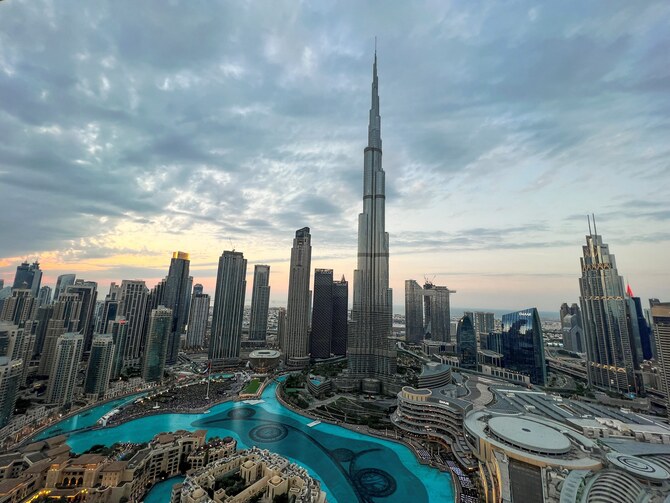
According to a report, Dubai’s residential sector saw an 18 percent rise in apartment prices and a 20 percent increase in villa prices. Reuters/File
Short Url
Updated 30 January 2025
Follow

UAE real estate market ends 2024 with record growth, led by Dubai, Abu Dhabi

  • Residential transactions in Abu Dhabi rose by 19%
  • Office occupancy rates in Dubai and the capital hit 945, pushing rents up by 15-20% annually

JEDDAH: The UAE’s real estate market ended 2024 on a strong note, with Dubai’s residential sales soaring 30 percent year on year to 119 billion dirhams ($32.4 billion) in the fourth quarter. 

According to CBRE Middle East’s latest market review, property transactions surged and rental prices climbed across key sectors — commercial, residential, retail, and industrial — driven by strong economic expansion and investor demand. 

The UAE real estate market saw strong growth in 2024, driven by rising demand, limited supply, and increasing prices across residential, commercial, retail, and industrial sectors, supported by new regulations. 

This trend is part of a broader regional shift, with property markets in Saudi Arabia, Qatar, and the UAE implementing reforms to better meet global investor demand.

For example, Saudi Arabia recently allowed foreigners to invest in Saudi-listed companies that own real estate in Makkah and Madinah, following a key decision by the Kingdom’s Capital Market Authority. 

“The UAE’s real estate market continue to attract rising foreign investor interest, supporting record residential transactional volumes across Dubai and Abu Dhabi during 2024. Commercial sectors also remain buoyant, with demand largely outstripping supply, as reflected in the rising occupancy and rental rates across the office, retail and industrial markets,” said Matthew Green, head of research MENA at CBRE.  

In the fourth quarter, residential transactions in Abu Dhabi rose by 19 percent, while office occupancy rates in both Dubai and the capital city hit 94 percent, pushing rents up by 15-20 percent annually due to supply constraints. 

“Amid these highly positive market dynamics, the UAE government has moved to ensure the long-term sustainability of the real estate market, by implementing several new regulations in recent weeks,” said Green.  

He said that these changes were aimed at improving transparency through the Dubai Smart Rental Index, expanding the addressable market via recent changes to Dubai’s designated Freehold areas, and cooling the off-plan market through the UAE Central Bank’s amendment to lending regulations on transactional set-up fees. 

The UAE’s economic growth further fueled the commercial market, with Abu Dhabi’s real gross domestic product expanding by 4.5 percent in the third quarter of 2024, driven by a 6.6 percent increase in non-oil sectors. The rise in new business licenses and corporate expansions drove strong tenant demand, particularly for premium office spaces, the report added. 

Residential sector  

Dubai’s residential sector saw an 18 percent rise in apartment prices and a 20 percent increase in villa prices, pushing average values to 1,647 dirhams and 2,024 dirhams per sq. foot, respectively. Transaction volumes soared, with total residential sales in 2024 reaching 434 billion dirhams, up 33 percent from 2023, the report noted. 

Abu Dhabi’s residential market followed suit, with apartment prices rising 11 percent and villa prices climbing 12 percent. The capital’s sales activity was led by a 59 percent surge in ready property transactions, while off-plan sales grew 5 percent but still accounted for 66 percent of total volume. 

Rental contract registrations in Dubai rose 7 percent year on year, with renewal contracts up 9 percent and new registrations increasing 5 percent. Despite rising costs, CBRE noted that tenants continued to prefer lease renewals to avoid steep rent hikes. 


Closing Bell: Saudi benchmark index closes lower at 10,540 

Updated 24 December 2025
Follow

Closing Bell: Saudi benchmark index closes lower at 10,540 

RIYADH: Saudi equities ended Wednesday’s session lower, with the Tadawul All Share Index falling 55.13 points, or 0.52 percent, to close at 10,540.72. 

The sell-off was mirrored across other indices, with the MSCI Tadawul 30 Index retreating 5.79 points, or 0.41 percent, to close at 1,393.32, while the parallel market Nomu slipped 74.56 points, or 0.32 percent, to 23,193.21.  

Market breadth remained firmly negative, as decliners outpaced advancers, with 207 stocks ending the session lower against just 51 gainers on the main market. 

Trading activity moderated compared to recent sessions, with volumes reaching 123.5 million shares, while total traded value stood at SR2.72 billion ($725.2 million). 

On the sectoral and stock level, Al Moammar Information Systems Co. led the gainers after surging 9.96 percent to close at SR172.30, extending its rally following a series of contract announcements tied to data center and IT infrastructure projects.  

Al Masar Al Shamil Education Co. climbed 4.89 percent to SR27.48, while Naqi Water Co. advanced 3.36 percent to SR58.50. Al Yamamah Steel Industries Co. and Al-Jouf Agricultural Development Co. also posted solid gains, rising 3 percent and 2.86 percent, respectively. 

Losses, however, were concentrated in industrial names. Saudi Kayan Petrochemical Co. fell 3.67 percent to SR4.73, while Makkah Construction and Development Co. slid 3.44 percent to SR80.  

Saudi Tadawul Group Holding Co. retreated 3.28 percent to SR147.50, weighed down by broader market weakness, and Saudi Cable Co. declined 3.18 percent to SR143.  

Alkhaleej Training and Education Co. rounded out the top losers, shedding just over 3 percent. 

On the announcement front, BinDawood Holding announced the signing of a share purchase agreement to acquire 51 percent of Wonder Bakery LLC in the UAE for 96.9 million dirhams, marking a strategic expansion of its food manufacturing footprint beyond Saudi Arabia.   

The acquisition, which remains subject to regulatory approvals, is expected to support the group’s regional growth ambitions and strengthen supply chain integration.  

BinDawood shares closed at SR4.68, up 0.43 percent, reflecting a positive market reaction to the overseas expansion move.  

Meanwhile, Al Moammar Information Systems disclosed the contract sign-off for the renewal of IT systems support licenses with the Saudi Central Bank, valued at SR114.4 million, inclusive of VAT.   

The 36-month contract is expected to have a positive financial impact starting from fourth quarter of 2025, reinforcing MIS’s position as a key technology partner for critical government institutions. The stock surged to the session’s limit making it the top gainer. 

In a separate disclosure, Maharah Human Resources confirmed the completion of the sale of its entire stake in Care Shield Holding Co. through its subsidiary, Growth Avenue Investments, for a total consideration of SR434.3 million.  

The transaction involved the transfer of 41.36 percent of Care Shield’s share capital to Dallah Healthcare, with Maharah receiving the full cash proceeds.  

Despite the strategic divestment, Maharah shares closed lower, ending the session at SR6.12, down 1.29 percent.