

Healthy demand — pumpkin production on the rise in Qassim

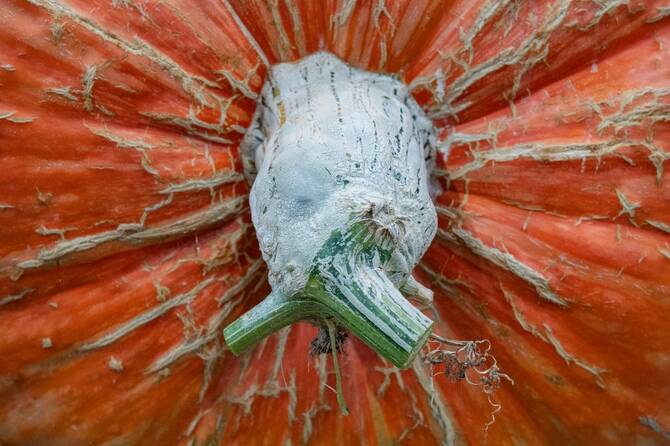
Recorded health benefits of eating pumpkin include enhanced vision and better immunity. (FILE/AFP)
Short Url
Updated 20 June 2025
Follow

Healthy demand — pumpkin production on the rise in Qassim

  • Promising crop supports local food safety and achieves notable economic revenues

BURAIDAH: It may be classed as a fruit, but pumpkin has become a key ingredient in cuisines around the world, thanks to its versatility and nutritional value.

And in Qassim, thanks to a favorable climate and agricultural conditions coupled with rising local demand, pumpkin production is enjoying significant growth.


Farmer Saleh bin Hamad Al-Saab spoke to the media about his experience of growing the fruit. (SPA)

Recorded health benefits of eating pumpkin include enhanced vision and better immunity. It also supports heart health, helps weight loss and promotes healthy skin and hair, as well as providing important nutrients and being low in calories.

Farmer Saleh bin Hamad Al-Saab spoke to the media about his experience of growing the fruit.

Possible, beneficial and promising

“Pumpkin cultivation in Qassim is not only possible, but also beneficial and promising,” he said.

“There are different kinds, including field pumpkin, butternut squash, kabocha squash, and even spaghetti squash, which is gaining increasing popularity.”

Each variety has its own uses and benefits. Field pumpkin is used in soups and baked goods, while butternut squash is a rich source of beta-carotene and spaghetti squash is a healthier alternative to pasta. As for white pumpkin, it is especially popular for festive decorations and seasonal occasions.


Recorded health benefits of eating pumpkin include enhanced vision and better immunity. (FILE/AFP)

Al-Saab said that as pumpkin did not need huge amounts of water or pesticides to grow successfully, and it could be stored for long periods without deteriorating, it was considered a promising economic crop. Drip irrigation systems and the cultivation of diverse varieties have also significantly enhanced crop quality and boosted productivity.

The farmer highlighted the public’s growing awareness of pumpkin as a healthy food choice and said there were a number of opportunities to develop other industries around the crop, such as juices, dehydrated foods and cosmetics.

This promising crop supports local food safety and achieves notable economic revenues, reflecting the agricultural sector’s role in meeting the Kingdom’s sustainable development targets.


Saudi chef wins culinary competition

Updated 18 December 2025
Follow

Saudi chef wins culinary competition

  • Event aimed to empower chefs’ ability to showcase talent on global scale 
  • Bayan Abdullah Al-Sudani: It (has) encouraged me to participate in more challenging spaces

RIYADH: A Saudi has won the Saudi Elite Chefs competition at Horeca Riyadh.

The event, which was organized by the Culinary Arts Commission of the Ministry of Culture, in alignment with the ministry’s long-term goals, aimed to empower Saudi chefs’ ability to showcase their talent and creativity on a global scale.

Speaking to Arab News, the winner, Bayan Abdullah Al-Sudani, shed light on how the competition equipped her with confidence for the future, saying: “It was a big challenge, and I faced off against strong chefs. It (has) encouraged me to participate in more challenging spaces.”

On her future plans, Al-Sudani wants to give back to the industry, and added: “I look forward to opening the Bayan Academy soon so that I can support chefs and help them with the pastry sector specifically.”

Celebration and achievement were echoed throughout, and it was evident at the event that the culinary industry in the Kingdom is hungry for growth, recognition, and global competition.

Seba Zarea, general manager of strategy and program delivery at the Culinary Arts Commission, told Arab News of the many facets of the industry that the ministry was prioritizing.

Zarea said: “This competition is just one of the initiatives that the Culinary Arts Commission is working on. There are also local scholarships (and) vocational training. We are also working on attracting the best culinary schools to Saudi. For example, Le Cordon Bleu is opening next year in Misk City.”

Zarea stressed the rewards of events like the Saudi Elite Chefs competition, adding that the winner had a fast track to Bocuse d’Or and the World Pastry Cup — representing global opportunities to place both competitors and Saudi cuisine on the map.

Zarea added: “Food is a soft power and, in terms of tourism, food is a universal language so we codified the Saudi cuisine, an initiative started four years ago, and we came up with more than 1,300 codified recipes, items, and local produce from the Kingdom.”

Zarea went into depth on some of the behind-the-scenes efforts that have helped create the food that the Kingdom is able to showcase.

She shared the example of the Wild Plant Initiative, a program designed to explore plants of various regions in the Kingdom to discover new ingredients that can be integrated into Saudi cuisine.

These efforts go into helping to build an industry that is rooted in culture, creativity, and passion. 

In the same way that the Saudi Elite Chefs competition provides its winners and participants with the tools to bring their success to global attention, the Culinary Arts Commission works to elevate the Kingdom’s cuisine through tourism and hospitality.

Zarea said: “This sector is the easiest way to showcase the culture.”