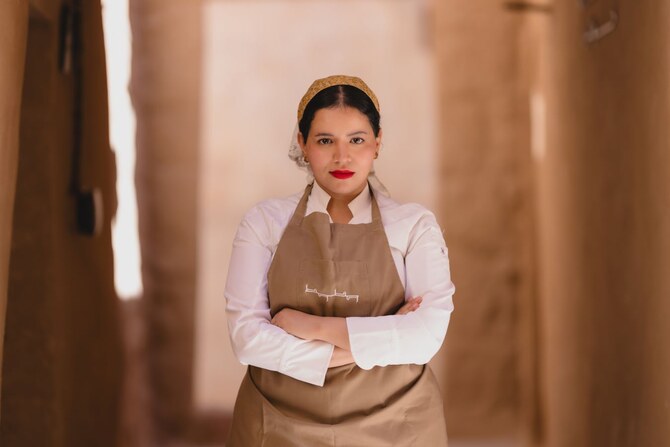

DUBAI: In 2019, AlUla native Meitha Yaseen was one of 24 aspiring Saudi chefs who participated in an intensive cooking course at Ferrandi Paris, one of France’s leading training schools.
“I was lucky enough to travel as part of a scholarship, which was organized by the Royal Commission of AlUla. I’m really grateful for the opportunity and all of the work that is being done to develop the local community because I was able to learn firsthand from some of the best chefs,” Yaseen told Arab News.
In 2019, AlUla native Meitha Yaseen was one of 24 aspiring Saudi chefs who participated in an intensive cooking course at Ferrandi Paris. (Supplied)
“It was an exciting time for me as I was living in the heart of Paris, passing by amazing Parisian cafés and bakeries in the mornings. I would often visit fantastic restaurants while exploring the city and experiencing their food culture. It was truly a wonderful experience, not only because I learned so much, but also because it was my first time traveling solo.”
She went on to train in New York and the UK, before returning to AlUla to launch her career with a job at the Banyan Tree AlUla.

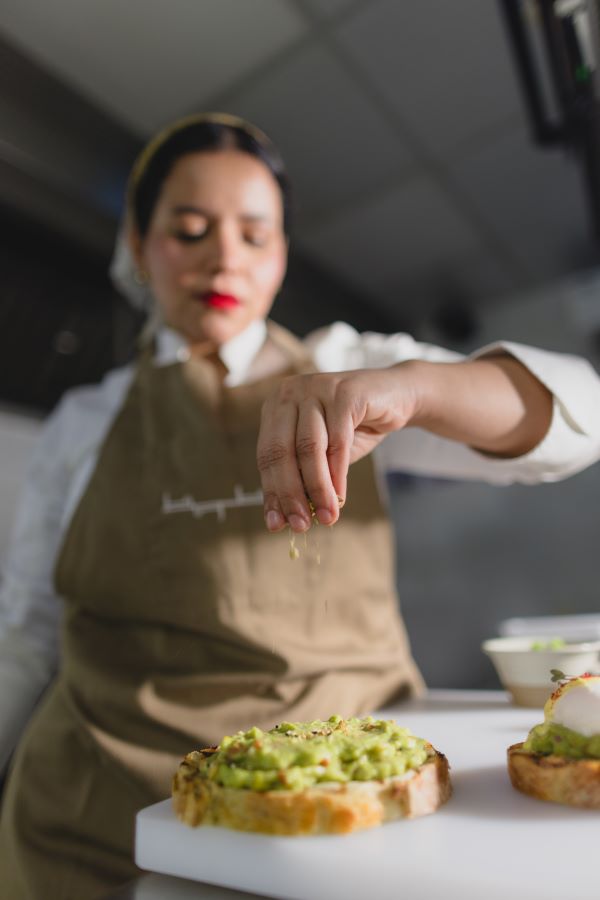
Saudi chef Meitha Yaseen is the chef de partie at Joontos, Dar Tantora The House Hotel in AlUla. (Supplied)
Currently, Yaseen is chef de partie at Joontos, one of the restaurants at Dar Tantora The House Hotel, an exclusive eco-lodge located in the heart of AlUla Old Town.
“My mother and her family are of Bedouin descent, born and raised in the surrounding desert,” Yaseen says. “I’ve always been inspired by the women in our family, not just through their cooking but also their incredible work ethic, and I try to bring that with me to the kitchen every day.”
When you started out what was the most common mistake you made?
At first, I struggled with proper time management.
What’s your top tip for amateur chefs?
Travel. It’s the best way to expose yourself to different cuisines and techniques. Always remember to be curious about learning and trying new things — ideas, techniques, and recipes.
What one ingredient can instantly improve any dish?
Simple seasoning — salt, for example — can make a world of difference to a dish. Also, most of my recipes are based around a nice stock to start with, so that would be my personal ingredient.
When you go out to eat, do you find yourself critiquing the food?
Not really, Since I work in a professional kitchen I try to be understanding when I visit another restaurant, as I know that something can go wrong at any given moment.
What’s the most common issue that you find in other restaurants?
Being served the wrong order.
What’s your favorite cuisine?
Japanese. And Asian food in general. I would say Nasi lemak (rice cooked in coconut and pandan leaf) is my favorite dish. It’s the national dish of Malaysia, and uses many ingredients that work together in the most delicious way.
What’s your go-to dish if you have to cook something quickly at home?
I’d say soft scrambled eggs served with a nice salty butter, toasted sourdough, and a tasty strawberry jam. It’s just the perfect combination of sweet and savory to start the day with.
What customer request most annoys you?
I’ve worked in luxury hospitality my whole career, and therefore have the mindset of catering to customers’ outlandish requests. So generally, it’s very hard for me to get annoyed by them. However, if I had to pick something it would be when a customer frequently changes their mind or alters requirements mid-way through, without understanding the impact it has on us in the kitchen.

What’s your favorite dish to cook and why?
Nasi goreng (Indonesian fried-rice dish). It’s very simple to cook, but it always brings joy to my heart because of its amazing flavors.
What’s the most difficult dish for you to get right?
I would say the national dish of Saudi Arabia: Jareesh. Only because every household has a different way of cooking it, so I’m always worried that people won’t like my spin on this particular dish. We do have it on our special heritage menu at Joontos.
As a team leader, what are you like? Are you a disciplinarian? Or are you more laid back?
I have a team that I lead for certain functions. I don’t like to shout, typically, but sometimes during the service things will get hectic so I find myself pushing other people to hurry up and finish.
RECIPE
Chef Meitha’s layered pumpkin salad with tahini-coriander emulsion

INGREDIENTS
For the roast pumpkin: 2 cups pumpkin, peeled and cubed; 2 tbsp olive oil; salt and black pepper to taste
For the spiced pumpkin puree: 2 cups pumpkin, peeled and cubed; 1 tsp cumin powder; 1 tsp coriander powder; 1/2 tsp cinnamon powder (optional); 1/2 tsp chili flakes; 2 tbsp olive oil; salt and pepper, to taste
For the salad: 2 cups fresh arugula (or mixed greens); 1/4 cup pumpkin seeds, toasted; 1/2 cup feta or goat cheese, crumbled; Qursan bread
For the tahini-coriander emulsion: 2 tbsp tahini; 1/4 cup olive oil; juice of 1 lemon; 1 tbsp fresh coriander, chopped; 1 tsp lemon zest; salt and pepper, to taste; water to thin, if needed
INSTRUCTIONS:
For the roast pumpkin:
1. Preheat the oven to 200°C (400°F).
2. Toss the pumpkin cubes with olive oil, salt, and pepper. Spread them on a baking sheet and roast for 25-30 minutes, until golden and tender. Set aside.
For the spiced pumpkin puree:
1. In a saucepan, heat the olive oil and add the cumin, coriander, cinnamon (if using), and chili flakes. Stir for 30 seconds to bloom the spices.
2. Add the pumpkin cubes, toss to coat in the spices, and cook for 15-20 minutes until soft.
3. Mash into a smooth puree. Add salt and pepper to taste. Set aside.
For the tahini-coriander emulsion:
1. In a bowl, whisk together tahini, olive oil, lemon juice, lemon zest, and chopped coriander. Add salt and pepper to taste.
2. Gradually add water 1 tablespoon at a time until the emulsion reaches a smooth, pourable consistency. Set aside.
For the salad:
In a large mixing bowl, toss the arugula, roasted pumpkin cubes, pumpkin seeds, and crumbled cheese together.
Plating:
1. On a serving platter or individual plates, place a layer of the salad mixture.
2. Top with slices of crisp Qursan bread.
3. Add another layer of the salad, creating a stacked effect.
4. Drizzle the tahini-coriander emulsion generously over the top.
5. Garnish with additional pumpkin seeds and a sprinkle of fresh coriander, if desired.