


ISLAMABAD: The European Investment Bank (EIB) announced on Wednesday that it was committing €160 million to help Pakistan rebuild homes in its southern Sindh province and improve water quality in its commercial hub Karachi, saying the move would help the country’s long-term resilience.
The commitment was made by EIB Global, the bank’s lending arm, on Wednesday during a European Union–Pakistan business forum in Islamabad. The EIB describes itself as one of the biggest multilateral financial institutions worldwide and one of the largest providers of climate finance.
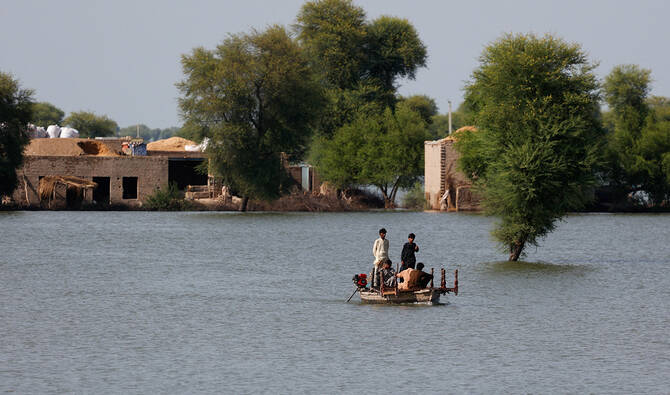
The EIB said in a report that it is providing a €100 million loan to the Pakistani government for the Sindh housing initiative, which is the world’s largest ongoing reconstruction program that aims to rebuild around 2.1 million rural homes damaged by devastating floods in 2022. It said the project has a total cost of almost $2 billion and covers 40 percent of rural households in Sindh.
The bank said it is also lending €60 million to the Pakistani government for the Karachi Water and Sewerage Corporation (KWSC) to build two energy-efficient filtration plants in the Gharo and Pipri towns to the east of Karachi.
“The European Investment Bank’s renewed engagement in Pakistan is a significant step toward strengthening Pakistan’s recovery and long-term resilience,” Ahad Khan Cheema, Pakistan’s minister for economic affairs, was quoted as saying by the EIB.
“This financing will play a vital role in rebuilding flood-affected communities in Sindh and improving access to safe drinking water in Karachi.”
The EIB said that the filtration plants in Karachi will ensure that the city is supplied with about 300 million liters of clean drinking water per day, enough to meet the needs of 2.2 million residents.
EIB Vice President Nicola Beer said the loans will support inclusive, sustainable development for the most vulnerable people in Pakistan.
“This also marks an important step as the EIB resumes financing in Pakistan after a decade, reaffirming our commitment to support climate resilience and inclusive recovery,” she was quoted as saying.
The housing construction program in Sindh is also being supported by the World Bank, the Asian Development Bank, the Islamic Development Bank and the provincial government.
Reconstruction will be based on a plan ensuring that households play a central role in rebuilding their homes in line with resilience standards that cover the risks of combined or consecutive disasters, the EIB added.
Pakistan’s southern Sindh province was devastated by deadly floods in 2022 that killed over 1,700 people nationwide, destroyed critical infrastructure and inflicted damages worth over $30 billion as per government estimates.


