

Healthy demand — pumpkin production on the rise in Qassim

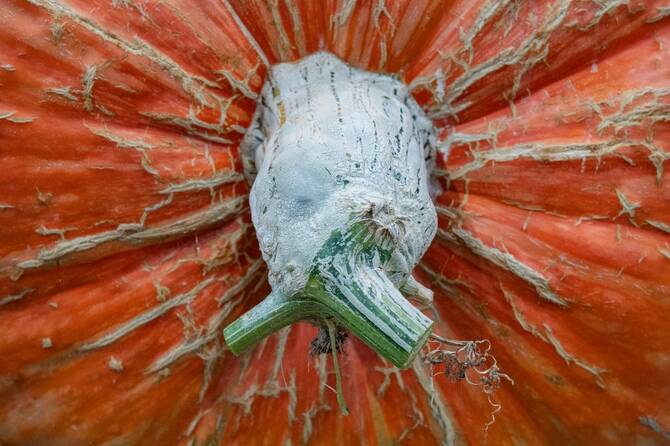
Recorded health benefits of eating pumpkin include enhanced vision and better immunity. (FILE/AFP)
Short Url
Updated 20 June 2025
Follow

Healthy demand — pumpkin production on the rise in Qassim

  • Promising crop supports local food safety and achieves notable economic revenues

BURAIDAH: It may be classed as a fruit, but pumpkin has become a key ingredient in cuisines around the world, thanks to its versatility and nutritional value.

And in Qassim, thanks to a favorable climate and agricultural conditions coupled with rising local demand, pumpkin production is enjoying significant growth.


Farmer Saleh bin Hamad Al-Saab spoke to the media about his experience of growing the fruit. (SPA)

Recorded health benefits of eating pumpkin include enhanced vision and better immunity. It also supports heart health, helps weight loss and promotes healthy skin and hair, as well as providing important nutrients and being low in calories.

Farmer Saleh bin Hamad Al-Saab spoke to the media about his experience of growing the fruit.

Possible, beneficial and promising

“Pumpkin cultivation in Qassim is not only possible, but also beneficial and promising,” he said.

“There are different kinds, including field pumpkin, butternut squash, kabocha squash, and even spaghetti squash, which is gaining increasing popularity.”

Each variety has its own uses and benefits. Field pumpkin is used in soups and baked goods, while butternut squash is a rich source of beta-carotene and spaghetti squash is a healthier alternative to pasta. As for white pumpkin, it is especially popular for festive decorations and seasonal occasions.


Recorded health benefits of eating pumpkin include enhanced vision and better immunity. (FILE/AFP)

Al-Saab said that as pumpkin did not need huge amounts of water or pesticides to grow successfully, and it could be stored for long periods without deteriorating, it was considered a promising economic crop. Drip irrigation systems and the cultivation of diverse varieties have also significantly enhanced crop quality and boosted productivity.

The farmer highlighted the public’s growing awareness of pumpkin as a healthy food choice and said there were a number of opportunities to develop other industries around the crop, such as juices, dehydrated foods and cosmetics.

This promising crop supports local food safety and achieves notable economic revenues, reflecting the agricultural sector’s role in meeting the Kingdom’s sustainable development targets.


Crown prince sponsors launch of world-class Arabic calligraphy center in Madinah

Updated 23 December 2025
Follow

Crown prince sponsors launch of world-class Arabic calligraphy center in Madinah

  • The Prince Mohammed bin Salman Global Center for Arabic Calligraphy was inaugurated by Prince Salman bin Sultan bin Abdulaziz

RIYADH: A new center for Arabic calligraphy under the patronage of Crown Prince Mohammed bin Salman officially opened in Madinah on Monday.

The Prince Mohammed bin Salman Global Center for Arabic Calligraphy was inaugurated by Prince Salman bin Sultan bin Abdulaziz, governor of Madinah region.

He was joined by Culture Minister Prince Badr bin Abdullah bin Farhan, touring the new facility’s exhibition spaces and receiving briefings on cultural programming and the center’s achievements.

They also viewed collections highlighting Arabic calligraphy’s artistic and historical importance.

Speaking at the opening, Prince Badr said: “From this land of enlightenment and scholarship, we proudly launch a global platform dedicated to Arabic calligraphy as an invaluable cultural asset.”

He went on to credit the crown prince’s “generous and boundless support” for the cultural sector.

The minister said that the center demonstrated to the world the legacy of Arabic calligraphy while underscoring Saudi Arabia’s commitment to safeguarding its cultural identity and heritage.

According to Prince Badr, the facility represents an ambitious vision to elevate Arabic calligraphy as both a universal communication tool and an integral element of Arab heritage, art, architecture and design.

The center further aims to enhance the Kingdom’s cultural identity and strengthen its international presence, targeting calligraphers, emerging talents, visual artists, Islamic arts researchers, educational and cultural institutions, as well as art and heritage enthusiasts worldwide.

It will deliver specialized programs including research and archival services, calligraphy instruction, academic grants, a permanent museum, touring exhibitions, an international calligraphy association and a business incubator supporting calligraphy enterprises.

Additional offerings feature artist residency programs, expert-led workshops, and standardized curriculum development, complemented by international educational partnerships aimed at heritage conservation and expanding global appreciation for this time-honored art form.

The center’s establishment in Madinah carries particular significance, given the city’s historical role as the cradle of Arabic calligraphy and its association with transcribing the Qur’an and preserving Islamic knowledge.