



ISLAMABAD: Pakistan’s Defense Minister Khawaja Asif said on Monday Islamabad had not engaged in any new military cooperation with Tehran since Israel launched attacks on Iran last week and had not held specific talks with the United States over the escalating crisis in the Middle East.
Iran, which borders Pakistan, has hit back with strikes against Israel after it unleashed waves of attacks on Friday at Iranian nuclear installations, missile stockpiles, scientists, and military generals, among other targets, sparking global alarm that the conflict could erupt into a regional war.
The latest escalation follows months of hostilities between Israel and Iranian-backed groups in Lebanon, Syria and Yemen, which intensified after the war in Gaza was launched late in 2023. Regional powers fear a direct confrontation could spiral into a broader conflict involving major oil shipping lanes and global energy supplies. For Pakistan, a close Iranian neighbor and a longtime opponent of Israel, a prolonged conflict risks disrupting border security, inflaming sectarian tensions at home, and possibly putting it in a tight spot with other Arab allies and the West.
Speaking in an interview to Arab News, Asif said regular security cooperation was continuing with Iran along their shared border to combat militant groups, but no fresh operational coordination had been initiated in response to Israel’s attacks on Iranian territory since June 13.
“I don’t see any need of [it],” the defense minister said in response to a question on whether Pakistan’s military was coordinating with Iranian counterparts on the border or engaging in any fresh defense cooperation.
“We coordinate on a very regular basis as far as the Iran and Pakistan border is concerned because of terrorist activities… that sort of cooperation is already on. So I don’t see any new activity.”
Asked if Pakistan had held talks with Washington to discuss the fast-evolving situation, the defense minister said there had been no recent contact specifically on the crisis in the past five days:
“But we are in constant touch with the United States of America regarding the tense situation we have in this region.”
Asif said Pakistan’s leadership was instead focused on engagement with close partners like China and Muslim countries to press for calm, warning that the conflict risked engulfing the entire region.
“The countries who have religious affinity with us or geographical affinity, even China or other countries, because what we are pursuing is peace,” he said.
“And we would like to mobilize the countries of this region that this conflict can multiply and it can engulf the whole region into a situation which could be very, very disastrous.”
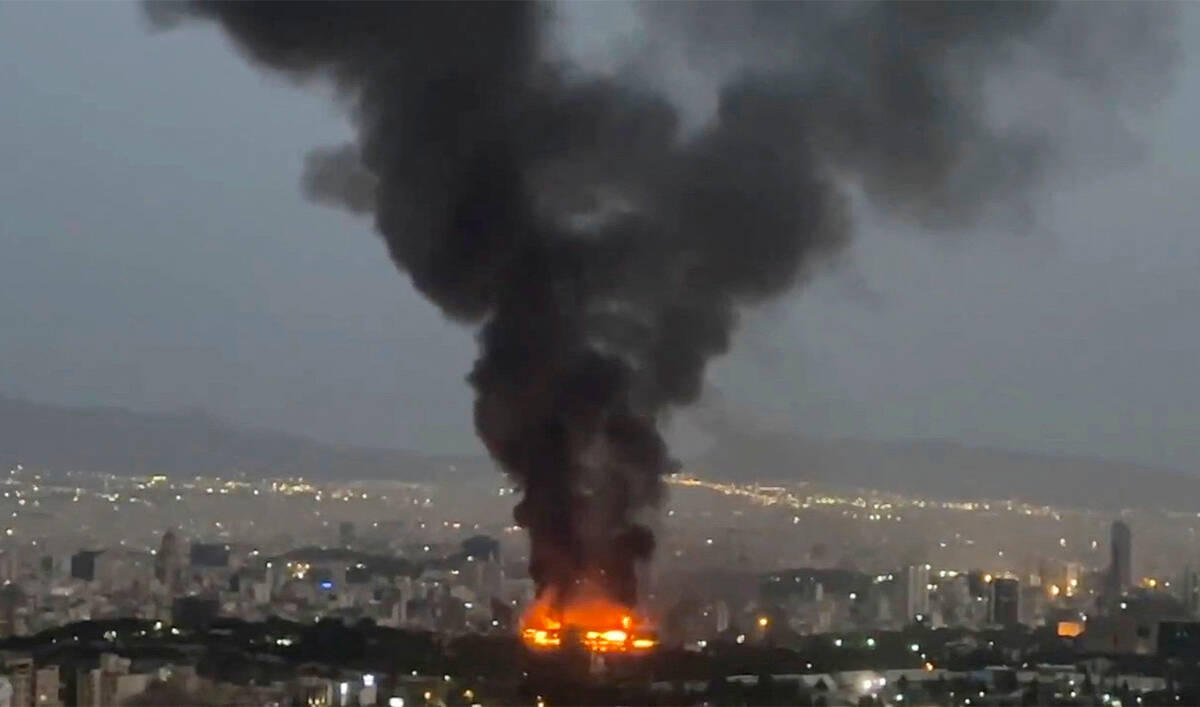
Smoke rises from a fire, as the Israel-Iran air war continues, in Tehran, Iran, in this still image obtained from social media video released June 17, 2025. (Social Media via REUTERS)
NUCLEAR FACILITIES “MILITANTLY GUARDED”
Diplomatic and security experts warn that the Israel-Iran hostilities could affect Pakistan by destabilizing its western border with Iran, threatening energy imports as oil prices surge, and creating new pressures in Pakistan’s relations with the US and Gulf partners if Islamabad is seen as tilting too far toward Tehran. On the other hand, if Tehran were to fall or be severely weakened, analysts say Pakistan would likely side with the United States and its allies — despite being Iran’s immediate neighbor — to protect its strategic and economic interests.
Addressing concerns over past remarks by Israeli Prime Minister Benjamin Netanyahu that have drawn parallels between Iran and Pakistan as so-called “militant Islamic regimes” that needed to be deterred, Asif rejected any immediate threat to Pakistan from Tel Aviv but stressed Islamabad would remain vigilant.
“If we are threatened by Israel, which I will discount at the moment… what happens in the coming months or years I can’t predict, but at the moment I discount [a threat from Israel],” he said.
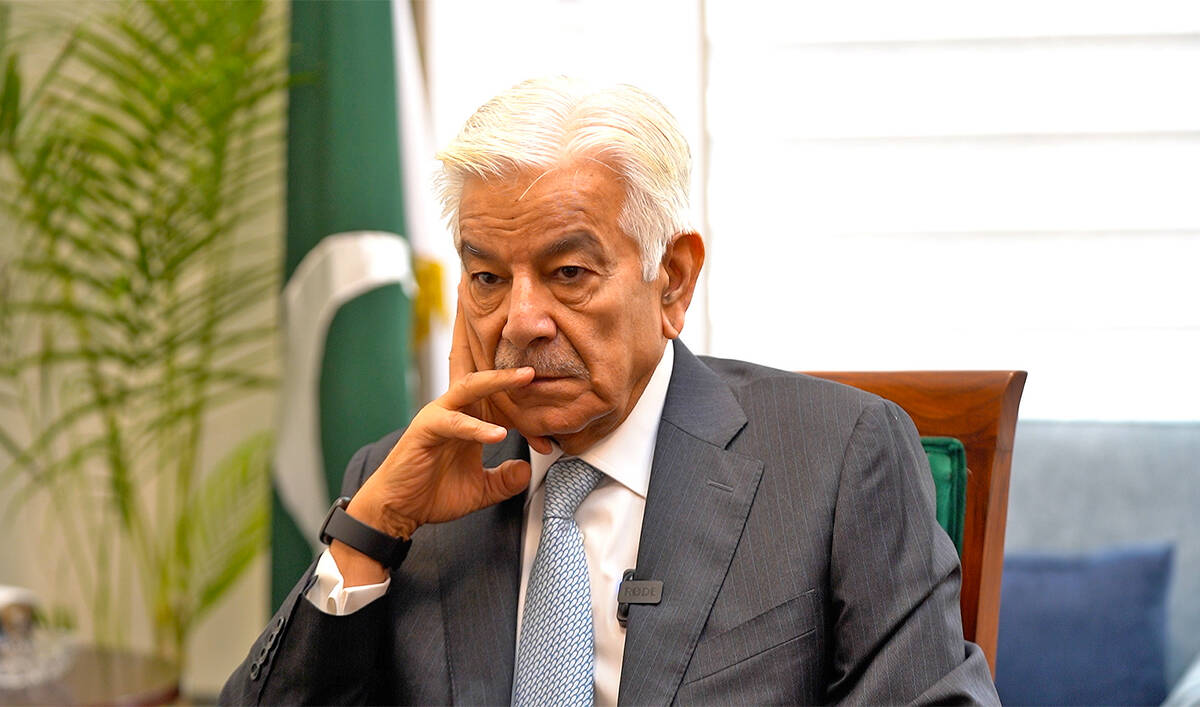
Pakistan’s Defense Minister Khawaja Asif speaks with Arab News Pakistan in Islamabad, Pakistan, on June 17, 2025. (AN photo)
He described Israel as a state with “hegemonic intent” whose recent actions in Gaza and against Iran were “extremely dangerous to the immediate region,” and said global public opinion was turning against Israeli policies despite support or muted reactions from many Western governments.
Asif declined to comment on reports that Pakistan had scrambled fighter jets near its nuclear sites and the Iranian border in response to Israel’s initial strikes on Iran but insisted that its nuclear security remained robust.
In addition to the Middle East tensions, Pakistan faced a major military standoff with India last month in which the two nations exchanged missile, drone and artillery attacks. Islamabad claimed to have shot down six Indian jets and struck back at military positions, triggering fears of a wider conflict between the nuclear-armed rivals before a ceasefire was announced by the President Donald Trump administration on May 10.
When questioned about any direct threat to Pakistan’s national security or strategic assets as a result of the conflict in the Middle East, the defense minister said Pakistan’s armed forces were already on high alert following the latest confrontation with New Delhi, describing the country’s nuclear facilities as “very militantly guarded, very grudgingly guarded” and fully compliant with international safeguards.
“Since our short war with India [in May], we have been on alert so we have not lowered guards… We can never take the risk of any attack on our nuclear facility from anywhere, that is something which is a lifeline as far as our defense is concerned,” he said
Asif said Pakistan’s performance in the recent fight with India was evidence of the country’s defense capability and national resolve, which would deter Israel from any adventurism.
“We have just had a bout with India and we clearly established our superiority, the superiority of our armed forces, Air Force, Pakistan Army, Pakistan Navy and the determination of our people, the way the nation stood behind the armed forces,” the defense minister said.
“So I think Netanyahu or his people or his government will think many times before taking on Pakistan.”


