

Jadal Library: A cultural oasis in Saudi Arabia’s Eastern Province

1 / 6
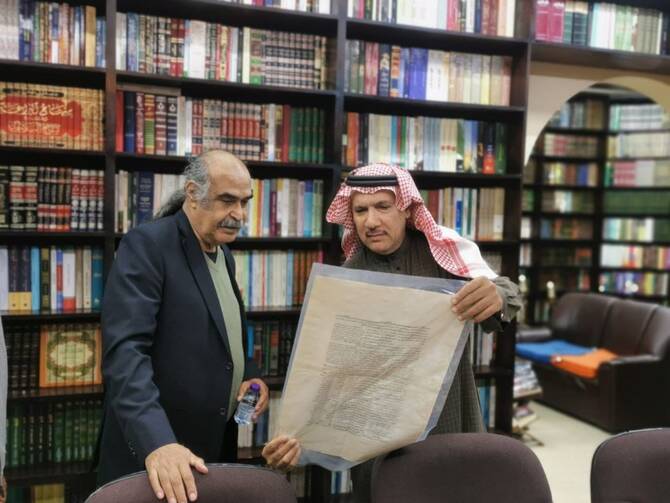
Ali Al-Herz (right) turned his home into a library of over 37,000 books. (Supplied)
2 / 6
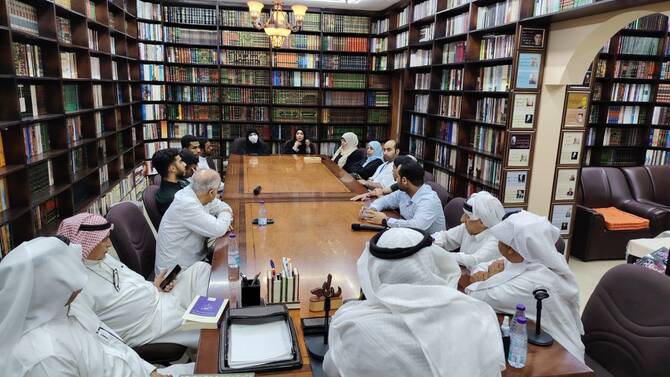
Ali Al-Herz turned his home into a library of over 37,000 books. (Supplied)
3 / 6
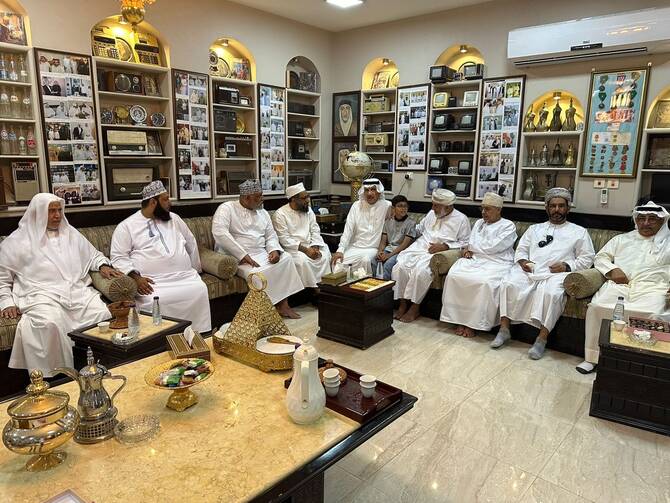
Ali Al-Herz turned his home into a library of over 37,000 books. (Supplied)
4 / 6
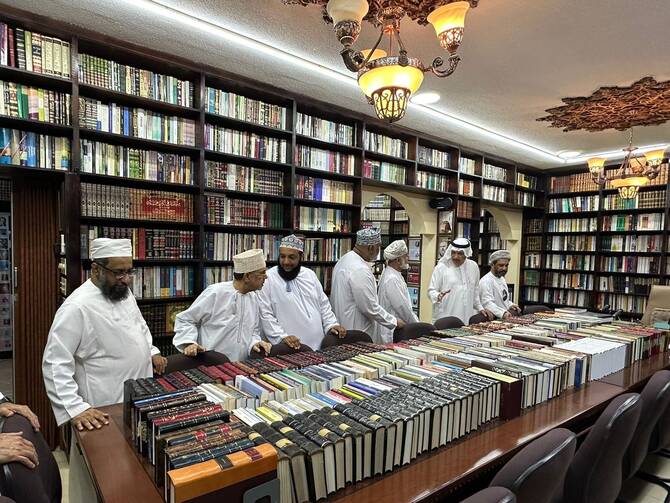
Ali Al-Herz turned his home into a library of over 37,000 books. (Supplied)
5 / 6
Ali Al-Herz (pictured) turned his home into a library of over 37,000 books. (Supplied)
6 / 6
Ali Al-Herz turned his home into a library of over 37,000 books. (Supplied)
Short Url
Updated 15 June 2025
Follow

Jadal Library: A cultural oasis in Saudi Arabia’s Eastern Province

  • Ali Al-Herz turned his home into a library of over 37,000 books, offering visitors space where memory, philosophy, culture come alive

DHAHRAN: In the quiet village of Umm Al-Hamam, located in Saudi Arabia’s Eastern Province, a lifelong passion for books has been transformed into a cultural haven.

Ali Al-Herz, a bibliophile and literary archivist, has turned his home into Jadal Library, a treasure trove of over 37,000 books, more than 100,000 newspapers and magazines, and antiques, some dating back more than a century. 

Yet Jadal is not just a library; it is much more than that. It is a museum to explore, a philosophical space to reflect, and a stand against forgetting important cultural stories.

Al-Herz told Arab News: “Since I was born I have been surrounded by my mother’s books. I grew up immersed in this passion to the point where it completely took hold of me; I became a bookworm.”

The spark that ignited it all was when Al-Herz encountered the epic “Sirat Antar” at age 13. “From that epic and through it, I began to look into other worlds,” he said.  

This curiosity and fascination ultimately led Al-Herz to create one of Saudi Arabia's most unique initiatives.

The name “Jadal” means “debate” or “discussion” in Arabic, reflecting the library’s curious spirit. For Al-Herz, the goal is not just to preserve texts but also to preserve the idea of questioning and exploring ideas.

Al-Herz said: “I chose this name for the library because it is deeply rooted in ancient Greek philosophical history and in our own Arab-Islamic cultural tradition, particularly in our religious heritage.”

The philosophical atmosphere fills three main halls — named after Socrates, Plato, and Aristotle — which welcome visitors into a curated world of reading and reflection.  

Rare manuscripts, ancient texts, newspapers, and antiques have been carefully archived. Each piece is a whisper from the past speaking into the future. 

Al-Herz explained: “Even my recent focus on buying books has mostly shifted toward rare editions and old prints, to create a harmony between heritage and modernity.”

But Jadal is not stuck in nostalgia, as every two weeks Al-Herz holds a literary gathering. The event brings back a tradition that was once important in the intellectual life of Arabs.

It is an environment where writers, scholars, and thinkers gather over Arabic coffee to exchange ideas in a vibrant atmosphere.

And in a time when people seek instant information online, Al-Herz still uses traditional methods. “There is an ongoing struggle between two generations,” he observed. “Victory will ultimately go to this latter generation once my generation becomes extinct. Paper libraries will then be transformed into museums.”

Perhaps he is right; but for now, in the heart of Qatif’s countryside, Jadal Library lives on, and it is a place where ink, memory, debate, and heritage continue to shape the cultural soul of the Kingdom.


Experimental farm in Al-Lith looks into future of Saudi Arabian agriculture

Updated 01 February 2026
Follow

Experimental farm in Al-Lith looks into future of Saudi Arabian agriculture

  • Research initiative reflects strategic transformation

JEDDAH: An experimental farm in Saudi Arabia’s Al-Lith Governorate is one of the research initiatives reflecting the strategic transformation taking place in the Kingdom’s agricultural sector.

The farm uses highly efficient, sustainable production models that combine scientific research with commercial application, contributing to strengthening the country’s food security system and the sustainability of water resources.

Located in the Ghumaiqa Center on an area of about 10 hectares, the cutting-edge farm is a testing platform for modern agricultural technologies that tackle the challenge of water scarcity.

The farm includes developed open fields and modern greenhouses, supported by smart irrigation encompassing drip and sprinkler irrigation alongside surface and subsurface technologies.

All the systems operate via smart controls that enable the monitoring of water consumption and ensure improved efficiency, thereby achieving a balance between agricultural production and water conservation.

The farm also uses treated and diluted low-salinity seawater.

It aims to diversify agricultural water sources, reduce reliance on freshwater, and open new horizons for agriculture in coastal and semi-arid environments.

The project represents a promising investment opportunity in the field of smart agriculture, enabling the development of commercially scalable production models, particularly for high-value vegetables and fruits, while reducing operational costs associated with water and energy, enhancing the economic feasibility of future agricultural projects.

In addition, the project contributes to transferring and localizing agricultural expertise, supporting local food supply chains, and creating an attractive environment for agricultural investment.

This aligns with Sustainable Development Goals and enhances the efficiency of the private sector in adopting innovative agricultural solutions.

Yahya bin Abdulrahman Al-Mahabi, the director of the Ministry of Environment, Water and Agriculture office in Al-Lith Governorate, told the Saudi Press Agency that the project represented the future of agriculture in the Kingdom.

He explained that the vision was based on investing in technology, enhancing the return on water per unit, and integrating scientific research with investment opportunities.

Al-Mahabi spoke of the experimental farm as a modern, scalable and replicable model applicable in several regions of the Kingdom, particularly in coastal environments.

Al-Mahabi highlighted the Ministry of Environment, Water and Agriculture’s commitment to supporting distinctive projects that contributed to achieving food security while developing rural areas and enhancing agricultural production efficiency, in line with the objectives of the Kingdom’s Vision 2030.