Pakistan urges political inclusion in Iraq ahead of elections, warns UN of regional volatility

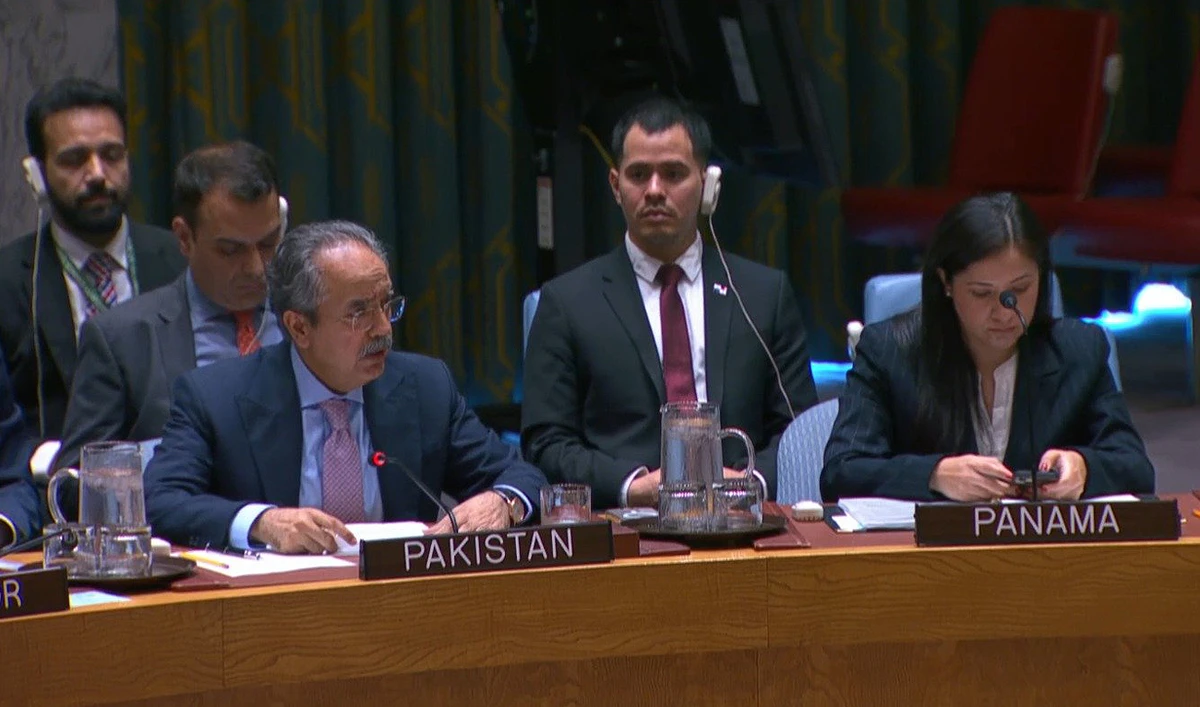
Pakistan’s Ambassador to the United Nations Asim Iftikhar Ahmad speaks during a UN Security Council briefing on the United Nations Assistance Mission in Iraq, at the UN Headquarters in New York on June 10, 2025. (Photo courtesy: X/@PakistanUN_NY)
Short Url
Updated 11 June 2025
Follow

Pakistan urges political inclusion in Iraq ahead of elections, warns UN of regional volatility

  • Pakistan reaffirms support for Iraq’s sovereignty, says it should not be pulled into regional confrontations
  • It seeks an inclusive, coordinated transition aligned with Iraq’s priorities as the UN mission nears its end

ISLAMABAD: Pakistan on Tuesday called for greater political inclusion in Iraq ahead of national elections later this year, warning the United Nations that rising regional tensions could undermine the stability of the Arab country.

Speaking at a UN Security Council briefing on the United Nations Assistance Mission in Iraq (UNAMI), Pakistan’s Ambassador to the UN, Asim Iftikhar Ahmad, praised Iraq’s efforts to strengthen democratic institutions and improve governance.

The UN mission was established in 2003 following the US-led invasion, with a mandate to support Iraq’s political transition, humanitarian coordination and national reconciliation. The mission is set to conclude by the end of 2025, as part of a structured drawdown approved by the Security Council last year.

Ahmed said Islamabad supported Iraq’s progress but remained concerned about the broader security situation in the Middle East, including ongoing conflicts in neighboring states and the risk of Iraq being drawn into regional confrontations.

“Pakistan remains concerned about the volatile regional security environment, which poses a risk to Iraq’s stability,” Ahmad told the Council. “We reiterate our firm support for Iraq’s sovereignty, unity and territorial integrity. It is imperative that Iraq not be drawn into regional confrontations.”

The ambassador encouraged all political stakeholders in Iraq to maintain dialogue and inclusivity as the country prepares for national elections in November, urging them to address institutional gaps and reinforce democratic processes.

He also welcomed Iraq’s recent reforms, including the implementation of the federal budget and successful provincial council elections.

Pakistan also highlighted the need for sustained humanitarian attention, particularly for internally displaced persons (IDPs), and acknowledged Iraq’s progress in enabling voluntary returns and reintegration.

As the UNAMI mission approaches the end of its mandate, Pakistan welcomed transition planning but emphasized that the process must remain “inclusive, coordinated and responsive to Iraq’s national priorities.”
Pakistan minister orders measures to ease port congestion, speed up sugar and cement handling

Updated 08 November 2025
Follow

Pakistan minister orders measures to ease port congestion, speed up sugar and cement handling

  • Meeting in Islamabad reviewed congestion at Port Qasim and its impact on export shipments
  • Ports directed to enforce first-come, first-served berthing and penalize unnecessary delays

KARACHI: Pakistan’s Maritime Affairs Minister Junaid Anwar Chaudhry on Saturday directed authorities to streamline sugar and cement operations at Port Qasim after reports of severe congestion caused by the slow unloading of sugar consignments disrupted export activities.

The government has been working to ease port bottlenecks that have delayed shipments and raised logistics costs for exporters, particularly in the cement and clinker sectors. The initiative is part of a broader effort to improve operational efficiency and align port management with national trade and logistics priorities.

“Improving operational efficiency is vital to prevent port congestion, which can cause delays, raise costs, and disrupt the supply chain,” Chaudhry told a high-level meeting attended by senior officials from the maritime and commerce ministries, port authorities and the Trading Corporation of Pakistan.

The meeting was informed that sugar was being unloaded at a rate below Port Qasim’s potential capacity. The minister instructed the Port Qasim Authority to optimize discharge operations in line with its daily capacity of about 4,000 to 4,500 tons.

Participants also reviewed directives from the Prime Minister’s Office calling for up to 60 percent of sugar imports to be redirected to Gwadar Port to ease the load on Karachi terminals.

Officials said all vessels at Port Qasim and Karachi Port would now be berthed on a first-come, first-served basis, with penalties to be applied for unnecessary delays.

The TCP was told to improve operational planning and coordinate vessel arrivals more closely with port authorities.

Chaudhry commended the engagement of all participants and said consistent adherence to performance standards was essential to sustaining port efficiency and preventing a recurrence of logistical disruptions.