

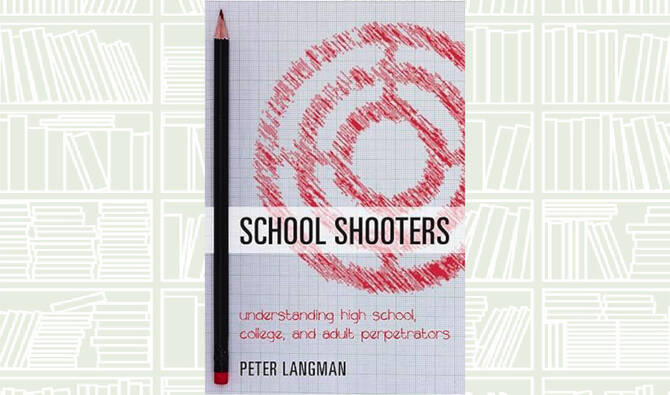
What We Are Reading Today: School Shooters by Peter Langman

Short Url
Updated 10 June 2025
Follow

What We Are Reading Today: School Shooters by Peter Langman

School shootings scare everyone. They make parents afraid to send their children to school. But they also lead to generalizations about those who perpetrate them. 

Most assumptions about the perpetrators are wrong, and many warning signs are missed. 

In this book, Peter Langman takes a look at 48 national and international cases of school shootings to dispel the myths, explore the motives, and expose the realities of preventing school shootings from happening in the future, according to a review on goodreads.com.


What We Are Reading Today: Shame: The Politics and Power of an Emotion

Updated 23 December 2025
Follow

What We Are Reading Today: Shame: The Politics and Power of an Emotion

Author: David Keen

Today, we are caught in a shame spiral—a vortex of mutual shaming that pervades everything from politics to social media. We are shamed for our looks, our culture, our ethnicity, our sexuality, our poverty, our wrongdoings, our politics. But what is the point of all this shaming and countershaming? Does it work? And if so, for whom?

In Shame, David Keen explores the function of modern shaming, paying particular attention to how shame is instrumentalized and weaponized. Keen points out that there is usually someone who offers an escape from shame—and that many of those who make this offer have been piling on shame in the first place. Self-interested manipulations of shame, Keen argues, are central to understanding phenomena as wide-ranging as consumerism, violent crime, populist politics, and even war and genocide. Shame is political as well as personal. To break out of our current cycle of shame and shaming, and to understand the harm that shame can do, we must recognize the ways that shame is being made to serve political and economic purposes.

Keen also traces the rise of leaders on both sides of the Atlantic who possess a dangerous shamelessness, and he asks how shame and shamelessness can both be damaging.