


RIYADH: For many pilgrims, the spiritual journey of Hajj does not end when they leave the holy sites. It continues — quietly, intentionally — in the days and weeks that follow.
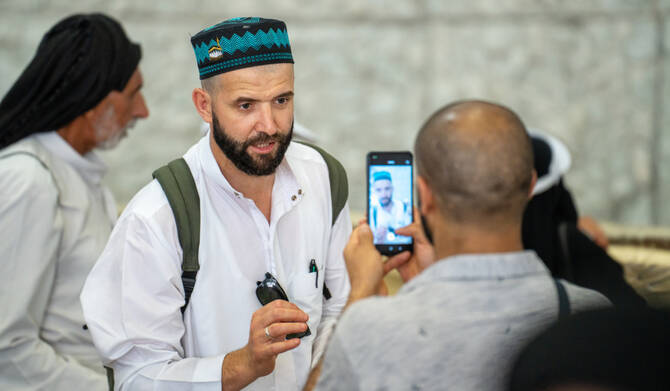
Across Saudi Arabia, young pilgrims are using social media to process the weight of Hajj and share the experience with loved ones.
Noor Ahmad, 21, did not plan to post during her pilgrimage. But after she returned, the urge to share came naturally.
After returning from Hajj, I decided to share a few captured moments. But how can a photo truly capture the depth and majesty of the experience?
Noor Ahmad
“After returning from Hajj, I decided to share a few captured moments,” she said. “But how can a photo truly capture the depth and majesty of the experience?”
She described how people responded in varied ways. “Those who had gone before felt nostalgic and started sharing their own stories. Others — those who hadn’t been yet — expressed their longing. It became this moment of connection.”
For Noor, the decision to post was not about aesthetics. “It’s a monumental event. Maybe I could inspire someone who’s hesitant to go. Maybe they’ll see what I saw — and want to experience it for themselves.
“It was my way of saying thank you”
Shatha Al-Jadaan, 25, took a different approach to sharing, after taking a digital detox.
I enjoy sharing meaningful moments, and after seeing the tremendous effort put into Hajj on every level, I felt my post was a small, sincere gesture of appreciation.
Shatha Al-Jadaan
“During Hajj, I decided to partially fast from social media. I used only the essentials,” she said. “After I returned, I posted a thread to my close friends explaining where I’d been and shared some of the most meaningful moments.”
The response was full of prayers and warmth. “People were kind, supportive, and curious. But what mattered most to me was that I used the thread to say thank you — to the organizers, to the volunteers, and to Allah.”
She spoke about how she found value in using digital platforms to document something greater than herself.
“I enjoy sharing meaningful moments, and after seeing the tremendous effort put into Hajj on every level, I felt my post was a small, sincere gesture of appreciation.”
Salem Al-Khudair, 28, recorded a voice note to his family group chat while performing the rites.
“I just couldn’t find the words to write. So I recorded myself speaking right after standing in Arafat. I sent it to my family WhatsApp group. My mom was emotional. My dad said, ‘May God accept from you.’ That was enough.”
In an age of curated content, Hajj posts tend to stand out for their sincerity. Pilgrims often strip away the filters, metaphors and trend-driven formats, and just speak from the heart.
Noura Al-Dosari, 23, uploaded a private Instagram story highlight with no captions. “Just visuals. No filters. No hashtags,” she said. “It wasn’t for followers. It was for me. For reflection. A digital bookmark of who I became.”
Some write long captions, others simply post a photo of their ihram folded neatly back into a drawer.
But all of them carry a silent message: I went. I came back different.
Many pilgrims use their posts to recall moments of physical hardship that brought emotional breakthroughs — the heat, the long walks, the brief but powerful connections with strangers.
Others use it to highlight the seamless organization of the pilgrimage as a reminder of how far the experience has evolved.
Amani Al-Saad, 26, used X to share a short story about a volunteer who helped her carry her bag in Muzdalifah. “She didn’t speak much, but she smiled at me and said, ‘This is what we’re here for.’ That stuck with me. I wrote about it as a reminder to myself — that sometimes the smallest moments hold the most meaning.”
While digital connections are increasingly common, most pilgrims emphasize that the real processing happens offline — in quiet conversations with family, in their prayer rooms, or on long drives home.
“I didn’t post to perform,” said Al-Jadaan. “I posted to remember.”


