

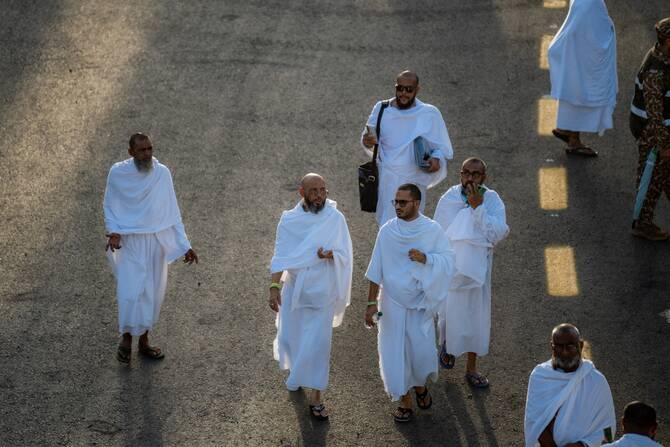


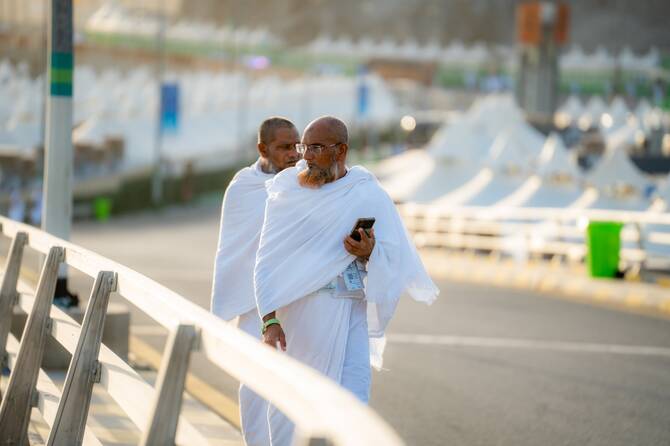

MINA: Mina was alive in recent days with the footsteps of millions, yet every pilgrim’s pace told a different story, from those who waited decades for the moment to those capturing it in real time.
In the tent city of Mina, two pilgrims rested side by side: one catching his breath, the other capturing a selfie. One scrolled through prayer times on his smartphone; the other adjusted the strap of his orthopedic sandal. One leaned on a walking stick; the other scrolled through digital navigation. But both wore the same white ihram and followed the same steps.
This was the paradox of Hajj 2025, where generations decades apart walked the same sacred path in remarkably different ways. They shared no common language except the unspoken one of faith.
For 73-year-old Moinuddin from Pakistan, the pilgrimage was a long-awaited dream, one that had been etched over decades of supplication.
He said: “I have the desire and I ask help from God to give me courage and power to perform this Hajj for the Isaal-e-Sawaab (gifting of spiritual rewards) for my mother.”
He paused often, not just for rest, but to reflect — at Arafat, in Muzdalifah, and between the pillars of Jamarat.
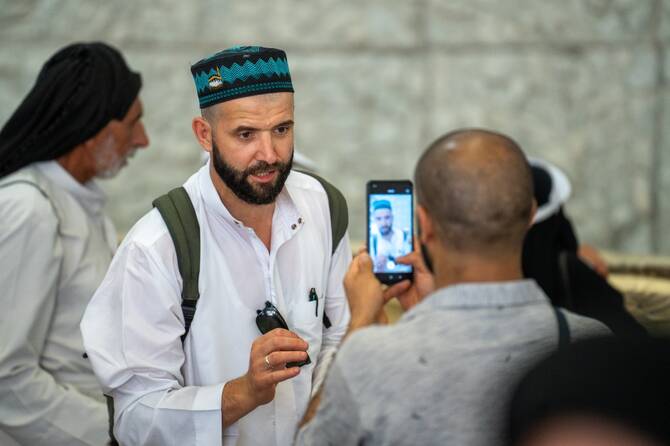
Just a few rows behind him, Mustafa, 22, from Denmark, documented his Hajj in quick snaps and video clips. He brought a camera with him to capture the moments for his friends and family back home. He said: “Coming here as a young person, I am grateful. I see a lot of older people and it’s difficult; you have to work a lot.”
While Mustafa relied on digital navigation to track his group, Moinuddin leaned gently on a young companion’s shoulder. Both pilgrims endured the same sun, the same crowds, and the same powerful rituals, but the lens through which they experienced Hajj was shaped by their stage in life.
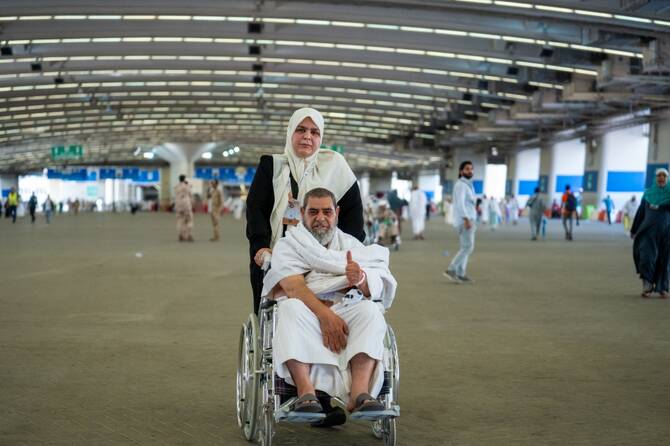
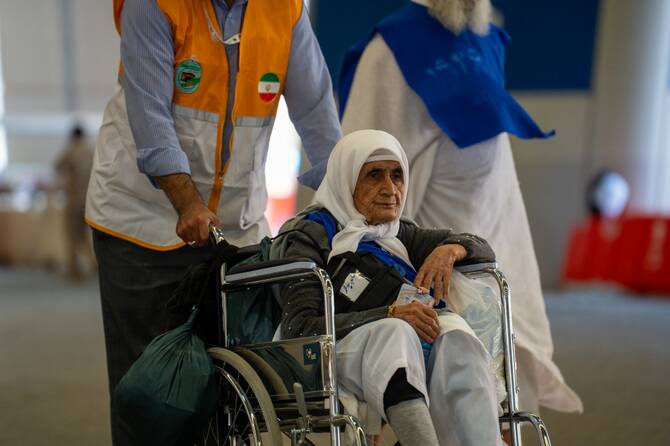
As the majority of pilgrims were elderly, many arrived with wheelchairs, walkers, or full family support. Their presence was treated with reverence — volunteers readily offered water, fans, and silent prayers as they passed.
In contrast, the younger generation brought a different rhythm — one of documentation, discovery, digital devotion, QR codes at checkpoints, real-time language translation apps, and virtual guides to make this year’s Hajj more accessible than ever.
But tech aside, the younger pilgrims still found themselves drawn into moments of stillness.
What binds both ends of the age spectrum was the raw, shared surrender to something greater. In a space where nationality, status, and language dissolve, so too does age. You could be 18 or 81 — you still bow to the same qibla.
At Mina, where pebbles were cast in symbolic defiance of ego, one young man gently steadied an old man’s arm before throwing his own stones. A quiet exchange, but one that said everything.
As pilgrims circled the Kaaba one final time before departure, the generational divide faded further. Some walked swiftly, others were pushed gently in wheelchairs, but all completed the same Tawaf Al-Wadaa (farewell tawaf).
The journey in the end was not measured in steps or speed, but in surrender. And that, in the valley of Makkah, was a language every pilgrim spoke fluently.



