


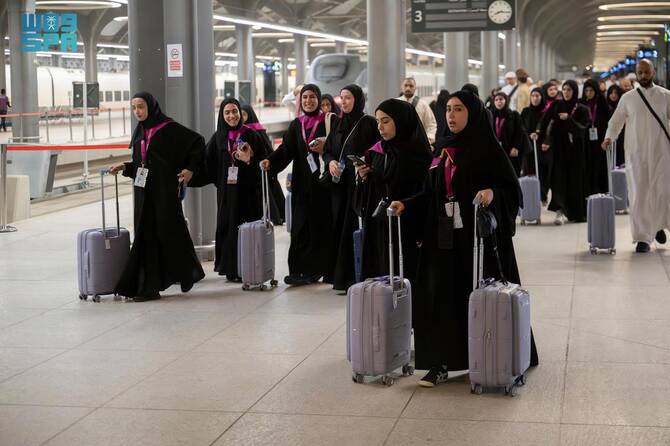
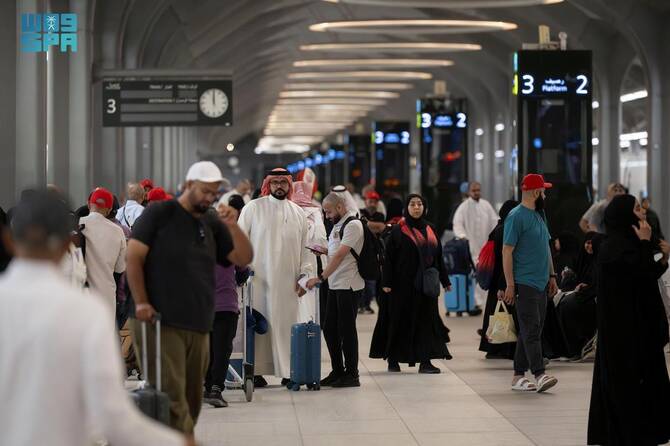
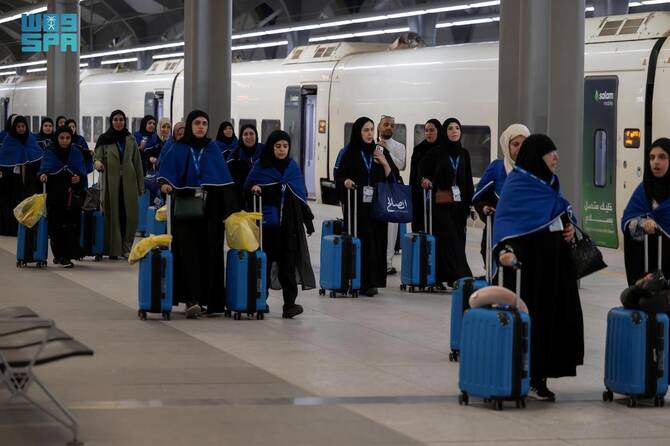
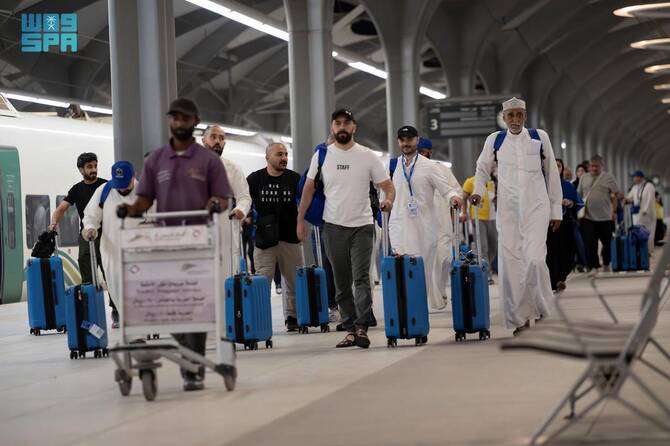

MADINAH: As pilgrims bid farewell to Makkah on Monday after completing Hajj — the fifth pillar of Islam — many departed for Madinah with cherished memories.
Hajj authorities in Madinah have begun implementing their operational plans for the second season, expecting thousands of pilgrims in the coming days.
The Special Forces for Hajj and Umrah Security have completed preparations to receive the pilgrims, as part of a comprehensive plan to ensure their safe and smooth arrival, according to the Saudi Press Agency.
The field plan focuses on regulating pilgrim movement, facilitating entry and exit from Madinah, maintaining traffic flow, and reducing congestion.
Preparations include increased security presence on major routes, providing assistance and guidance, and ensuring emergency teams are ready to respond to health cases and other situations.
Government and volunteer bodies have raised readiness levels to support reception centers, entry points, and historical sites, while enhancing efforts in transport, guidance, hospitality, and healthcare through an integrated, 24/7 system.
These efforts reflect the leadership’s commitment to serving pilgrims and ensuring their safety during their journey between the holy sites and Madinah, the SPA reported.
Meanwhile, 2,443 pilgrims from 100 countries, hosted under the Custodian of the Two Holy Mosques’ Guests Program for Hajj and Umrah, also traveled to Madinah after completing Hajj.
During their stay, they will pray at the Prophet’s Mosque, visit Quba Mosque, and explore significant historical landmarks.
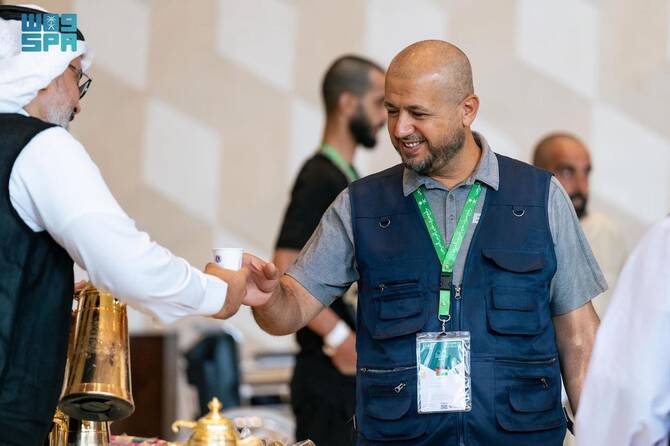
The pilgrims expressed gratitude for the services provided by the Ministry of Islamic Affairs, Dawah and Guidance, which met their needs and facilitated smooth movement between sites.
They shared their joy at completing the Hajj rituals, including standing at Mount Arafat, staying in Muzdalifah, the days of Tashreeq in Mina, stoning the Jamarat, and concluding with the farewell Tawaf.
A coordinated program is in place to transfer pilgrims from their accommodations to Madinah airport, overseen by the Hajj and Visit Committee and relevant authorities to ensure timely flight departures.
Prince Mohammad bin Abdulaziz International Airport recorded a successful pre-Hajj phase, receiving pilgrims smoothly and efficiently. During the arrival period, the airport handled 719,400 pilgrims — 49 percent of all air-arriving pilgrims this Hajj season — via 1,910 flights from 196 cities in 53 countries.
The General Directorate of Passports confirmed its readiness to finalize departure procedures at the Kingdom’s international air, land, and sea ports, supported by modern security systems and trained personnel.
Minister of Transport and Logistic Services Saleh Al-Jasser also inspected King Abdulaziz International Airport in Jeddah to assess its readiness for pilgrim departures.
He reviewed procedures for receiving and dispatching pilgrims, including departure hall operations, service performance, and overall efficiency, aiming to ensure a smooth travel experience that meets international standards.