
GHARO, SINDH: As the scent of marinated meat sizzling on open flames wafts through neighborhoods in Karachi this Eid Al-Adha, few pause to consider where the fire itself comes from.
The crackle beneath the skewers and the smoke that perfumes the city’s rooftops and courtyards originate not just from the sacrifice of animals, but from a quieter, often forgotten labor force deep in rural Sindh.
The joy of Eid barbecues, the centerpiece of celebration for many families, is ignited by the enduring heat of charcoal, most of which is produced in the blistering kilns of Pakistan’s southern Sindh province. Along a dusty belt stretching from the coastal town of Gharo in Thatta district to the southeastern edge of Pakistan bordering India, thousands of kilns work year-round, fueling festive fires across the country.
Charcoal, valued for its high, consistent heat and the signature smoky flavor it imparts, is a barbecue staple during Eid. Whether it’s tender beef skewers, spicy mutton chops, or lamb cooked Pashtun-style in a rosh pot, nearly every Eid dish cooked on open flame starts with charcoal. And come Eid, demand spikes sharply.
“Our peak season is during Eid Al-Adha when people prepare sacrificial meat at home and at barbecues, and it is also cooked in hotels,” said Khushhal Khan, a kiln owner in Gharo. “This leads to an increase in our business.”
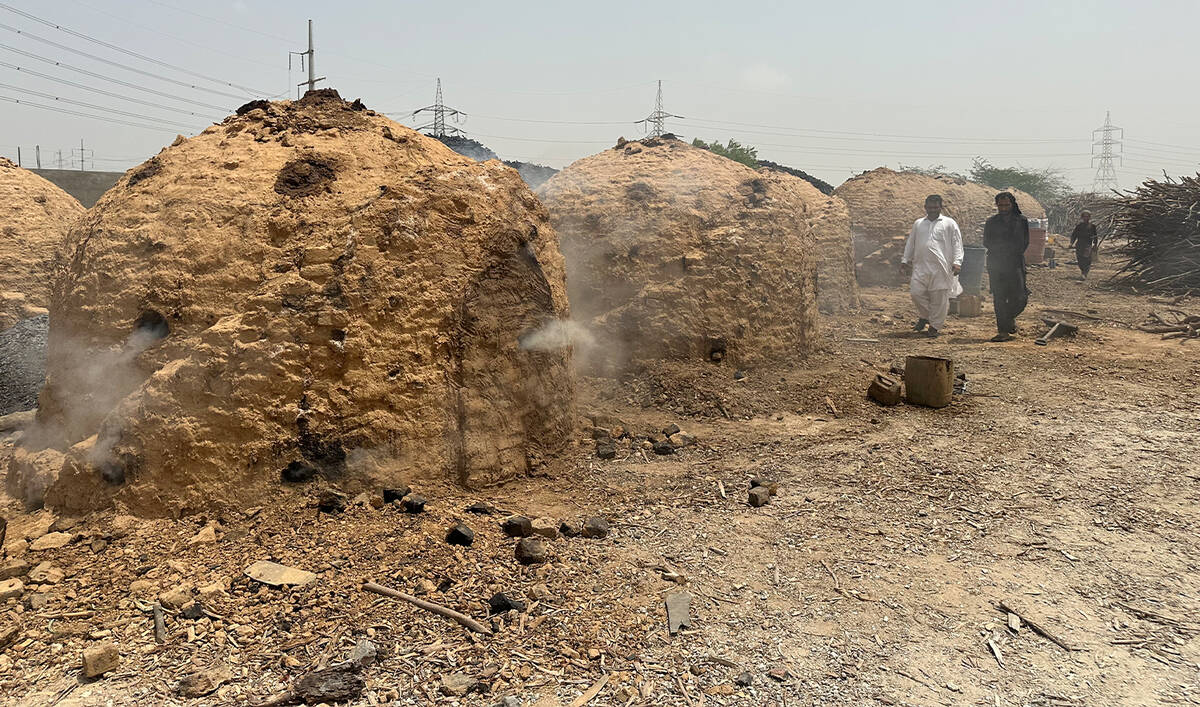
Khushhal Khan (left), a kiln owner, and a laborer walk past mud kilns to make charcoal in Gharo in Pakistan's southern province in May 29, 2025. (AN photo)
Khan owns 14 kilns. Like many in the informal charcoal trade, his work is unregistered but vital.
According to estimates from local producers, Sindh is home to over 2,000 charcoal-making establishments, each operating around 15 kilns. Combined, they produce roughly 72,000 metric tons of charcoal every month, much of which is funneled into urban centers like Karachi in the days before Eid.
“NO EID WITHOUT CHARCOAL”
The process of making charcoal is as ancient as it is arduous.
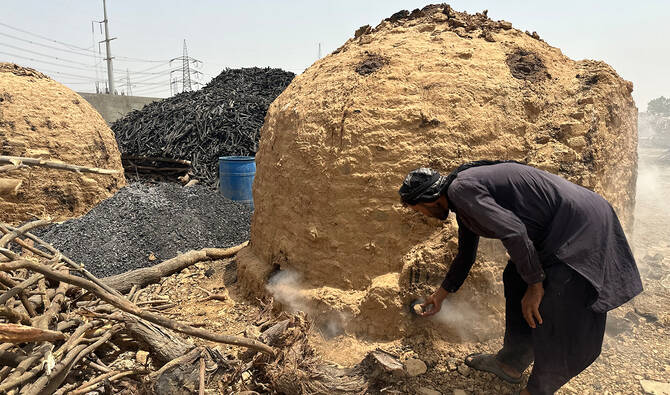
Large nine-foot mud kilns are loaded with carefully stacked wood, around 45 to 50 maunds (approximately 1.8 to 2 metric tons) per batch. Once the wood is in place, the kiln is sealed with mud and ignited through a top opening.
It then burns slowly for several days, without oxygen, transforming into dense black chunks of carbon. Managing this burn requires constant vigilance.
“If the fire is too intense, the charcoal becomes low quality,” said Niaz Khan, who has worked at kilns for two decades. “It needs to be burned at a steady, medium flame.”
Once cooled, the charcoal is extracted, sifted, and bundled for transport.
“This is not easy work,” Niaz added. “Our forefathers have been doing this work, making charcoal, and we are still continuing it.”
The next link in the chain lies in the markets of Karachi. Trucks loaded with charcoal pull into warehouses and shops like the one run by Muhammad Younus, whose family has sold fuel in the city since 1956.
“This charcoal comes from interior Sindh, from areas like Badin, Gharo, Thatta and Sujawal,” Younus said from his store in Karachi’s old city district.
“On normal days, most buyers are hotel owners. But during Eid Al-Adha, the demand increases because every household … is preparing to cook the sacrificial meat.”
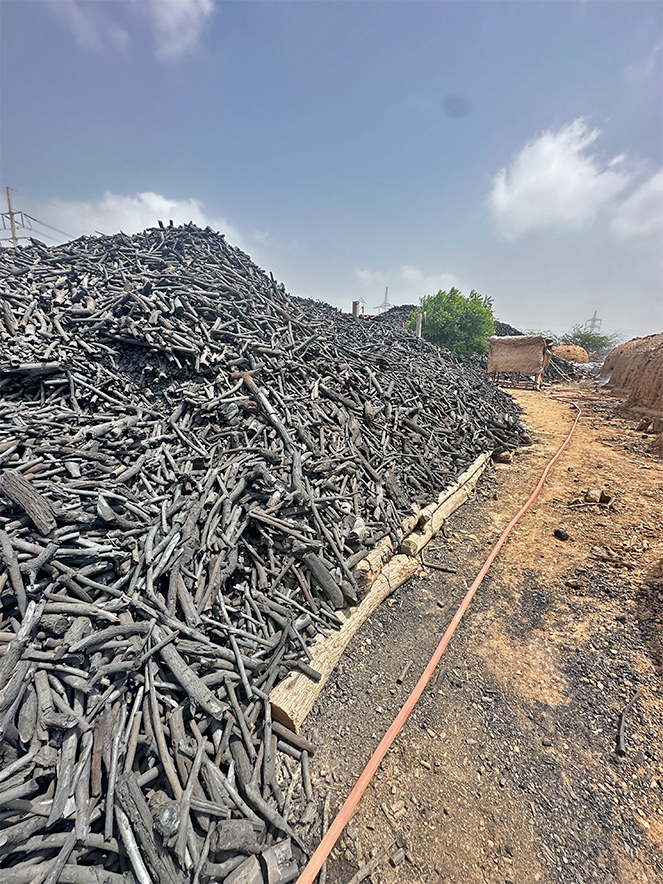
Coal is stacked in Gharo in Pakistan's southern province in May 29, 2025. (AN photo)
Normally, Younus sells around 150 kilograms of charcoal per day. But during Eid season, that figure can jump to 400 kilograms or more.
Purchased from kiln operators at around Rs2,200 per maund (40kg), the charcoal is sold at retail for about Rs100 per kilogram.
“Some people buy two, five or even 10 kilograms,” he said. “In every home, cows are slaughtered, meat is kept, children do barbecues on rooftops, families hold gatherings inside their homes and parties take place.”
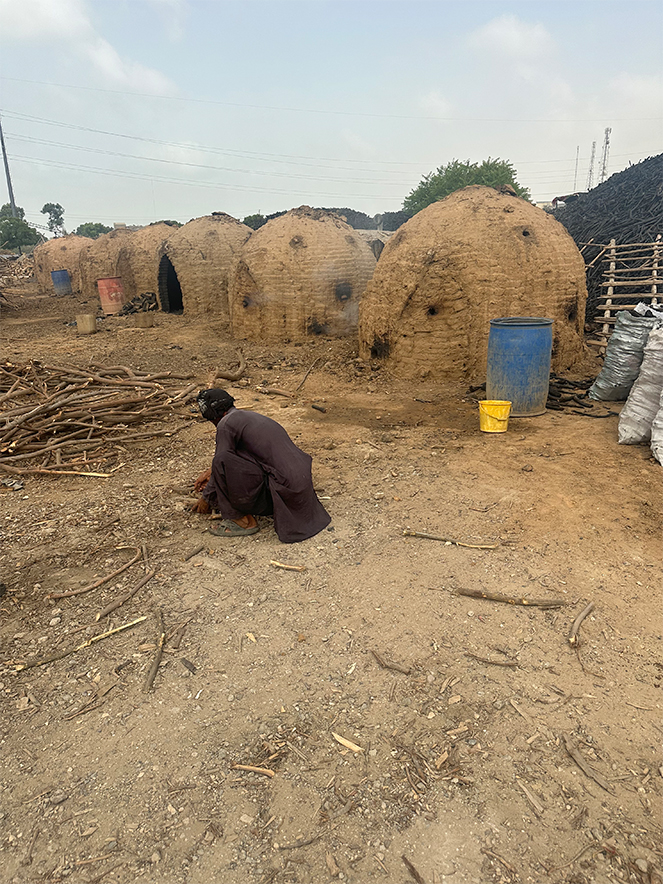
A laborer collects wood near mud kilns to make charcoal in Gharo in Pakistan's southern province in May 29, 2025. (AN photo)
“ROOFTOPS COME ALIVE”
In Karachi’s packed neighborhoods, rooftops come alive after the Eid sacrifice.
Families, especially young men and children, light coals in metal grills and prepare platters of marinated meat. The flames flicker, music plays, and conversations stretch into the night.
“We invite our relatives, make our rooftops lively and there is a bustle,” said Jabir Khan, a city resident shopping for charcoal. “The barbecue becomes a festive event.”
Despite rising prices, charcoal remains central to the Eid experience in urban Pakistan. It is not just a fuel, it’s a cultural bridge that links the sacrifice to the celebration, rural toil to urban delight, and labor to memory.
“Without charcoal, there is no barbecue,” Jabir said simply.
“And without barbecue, Eid feels incomplete.”