

Pakistan PM exchanges Eid greetings with world leaders, thanks them for support during India crisis

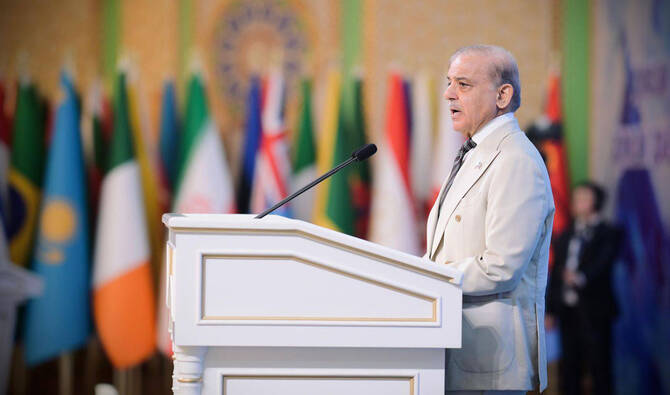
Pakistan Prime Minister Shehbaz Sharif addresses the International High-Level Conference on Glacier Protection (IGCP 2025) in Dushanbe, Tajikistan on May 30, 2025. (PMO/File)
Short Url
Updated 07 June 2025
Follow

Pakistan PM exchanges Eid greetings with world leaders, thanks them for support during India crisis

  • Shehbaz Sharif speaks to leaders of Jordan, Azerbaijan, Tajikistan, Qatar, Uzbekistan
  • Vows to enhance bilateral cooperation and strengthen ties further, says Sharif’s office

ISLAMABAD: Prime Minister Shehbaz Sharif on Saturday exchanged Eid Al-Adha greetings with the leaders of the Muslim nations of Jordan, Uzbekistan, Qatar, Tajikistan and Malaysia, thanking them for their efforts to bring about peace during Islamabad’s conflict with New Delhi last month.

Pakistan marked Eid Al-Adha, one of the two most important festivals of the Islamic calendar, on Saturday. Muslims mark the Eid Al-Adha holiday in Pakistan and around the world by slaughtering animals such as sheep and goats, and the meat is shared among family and friends and donated to the poor.

Sharif conveyed Eid greetings to Azeri President Ilham Aliyev, his family and the people of Azerbaijan, the Prime Minister’s Office (PMO) said in a statement.

“The Prime Minister thanked President Ilham Aliyev, once again for Azerbaijan’s unwavering support to Pakistan during the recent Pakistan-India crisis, that demonstrated the strong bonds of brotherhood between the two countries,” Sharif’s office said in a statement.

The Pakistani premier also exchanged Eid greetings and similar calls with Qatar’s emir, Tajikistan President Emomali Rahmon, Malaysian Prime Minister Dato’ Seri Anwar Ibrahim, Uzbekistan President Shavkat Mirziyoyev and Jordan’s King Abdullah II ibn Al Hussein.

Sharif’s office said the Pakistani prime minister and these leaders vowed to enhance their bilateral cooperation and further strengthen ties.

Nuclear-armed nations India and Pakistan engaged in the worst fighting between them since 1999 last month before US President Donald Trump announced he had brokered a ceasefire on May 10.


Pakistan reports decline in polio cases in 2025

Updated 4 sec ago
Follow

Pakistan reports decline in polio cases in 2025

  • Cases drop to 30 from 74 in 2024, with no new infections recorded since September
  • Authorities plan intensified targeted drives in 2026 to halt remaining transmission

ISLAMABAD: Pakistan reported a sharp decline in polio cases in 2025, with infections falling to 30 from 74 a year earlier, as intensified vaccination campaigns and improved surveillance helped curb the spread of the virus, health authorities said on Wednesday.

No new polio cases have been recorded anywhere in the country since September, said a statement, as Pakistan carried out six polio campaigns, including five nationwide drives, trying to reach children in high-risk areas and improve monitoring of virus circulation.

Despite the decline, the authorities cautioned that poliovirus continues to circulate in some districts, requiring sustained vigilance to prevent a resurgence.

“Targeted interventions, robust community engagement, and ongoing vaccination efforts remain essential to reach every missed child and prevent any resurgence,” the official statement said.

“Frontline health workers, security personnel, and local authorities continue to work in close coordination to maintain high immunity levels and ensure that Pakistan remains on course toward becoming polio-free,” it added.

The most recent nationwide campaign, conducted from Dec. 15 to 21, achieved more than 98 percent coverage across the country, including all four provinces, Azad Jammu and Kashmir, Gilgit-Baltistan and the capital, Islamabad.

Authorities reported an 18 percent reduction in the number of missed children compared with the previous round, with notable improvements in access and operations in southern Khyber Pakhtunkhwa, a longstanding challenge area.

Pakistan’s polio eradication drive relies on close coordination between health workers, security personnel and local authorities, amid ongoing resistance in some communities and access constraints in remote or insecure regions.

Officials said district-specific interventions, including improved microplanning, better deployment of vaccination teams and enhanced community outreach, were being used to address remaining gaps, particularly in parts of southern Khyber Pakhtunkhwa.

The statement said Pakistan plans to intensify targeted efforts in 2026 to interrupt the remaining transmission chains and move closer to eliminating the disease.