

Playwright Caryl Churchill pulls out of theater project over Barclays’ ties to Israel

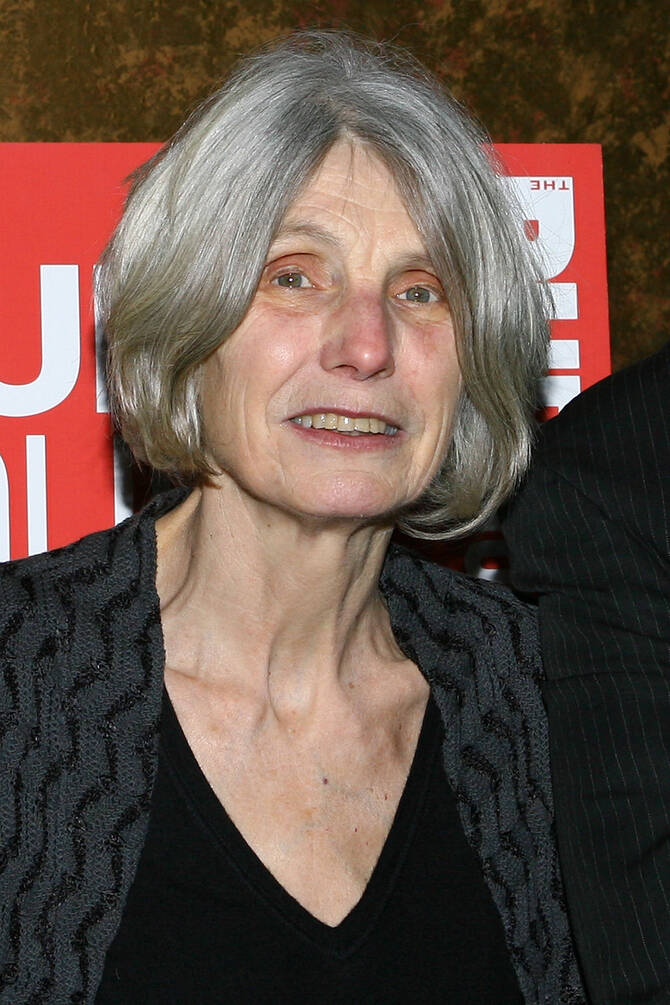
Acclaimed playwright Caryl Churchill (pictured) has withdrawn from a project with a London theater over its sponsorship by Barclays and the bank’s links to companies supplying arms to Israel. (AFP/File Photo)
Short Url
Updated 05 June 2025
Follow

Playwright Caryl Churchill pulls out of theater project over Barclays’ ties to Israel

  • Churchill, who is a long-time advocate for Palestinian rights, called on the Donmar Warehouse to cut ties with Barclays

LONDON: Acclaimed playwright Caryl Churchill has withdrawn from a project with a London theater over its sponsorship by Barclays and the bank’s links to companies supplying arms to Israel.

In a statement, Churchill, who is a long-time advocate for Palestinian rights, called on the Donmar Warehouse to cut ties with Barclays, The Guardian reported.

“Theaters used to say they couldn’t manage without tobacco sponsorship, but they do. Now it’s time they stopped helping advertise banks that support what Israel is doing to Palestinians,” she said.

The project had not yet been publicly announced but would have marked Churchill’s return to the Donmar for the first time since “Far Away” in 2020.

Her move has been backed by more than 300 artists and arts workers, including actors Harriet Walter, Juliet Stevenson, Alfred Enoch, Samuel West and Tim Crouch, who signed an open letter in support.

Barclays has faced increasing pressure from arts and activist groups over its provision of financial services to defense companies operating in Israel.

In 2023, the group Culture Workers Against Genocide published a letter condemning Barclays’ sponsorship of Sadler’s Wells, with signatories including Maxine Peake, an actress.

Last year, the Bands Boycott Barclays campaign led to the bank being dropped as a sponsor by several UK music festivals, including Latitude and The Great Escape.

Barclays declined to comment on Churchill’s withdrawal but said on its website: “While we provide financial services to these companies, we are not making investments for Barclays and Barclays is not a ‘shareholder’ or ‘investor’ in that sense in relation to these companies.”

Barclays CEO C.S. Venkatakrishnan defended the bank’s position in a 2023 Guardian article, writing: “These companies are supported by our democratically elected governments for their role in protecting the UK and allies in Europe. We will not undermine our own national security by de-banking them.”

Responding to Churchill’s decision, Culture Workers Against Genocide said: “Arts institutions have an ethical duty not to contribute to oppression and injustice. By continuing to accept sponsorship from Barclays, Donmar Warehouse is helping to launder the bank’s reputation as it profits from Israel’s genocide in Palestine.”

The Donmar, which lost its £500,000 ($679,355) annual government grant in 2022, has increasingly relied on private support, including corporate sponsorships. It has been approached for comment.

Churchill was previously stripped of a European lifetime achievement award in 2022 following criticism of her play “Seven Jewish Children” and her public pro-Palestinian stance.


From trends to routines — how beauty is evolving in the Gulf region

Updated 03 February 2026
Follow

From trends to routines — how beauty is evolving in the Gulf region

DUBAI: The beauty landscape in the Gulf is shifting, driven by a new generation of consumers who see skincare, self-care and digital discovery as part of their everyday lives. According to Nicole Nitschke, managing director of FACES Beauty Middle East, the region has moved far beyond simply buying products.

“Beauty in the GCC (Gulf Cooperation Council) has evolved from being product-focused to increasingly experience-driven, with consumers seeking solutions that combine effectiveness, self-care and personalization,” she told Arab News. 

Shoppers today may browse online, but many still want to touch, test and experience products in-store, creating what she describes as a balance between digital inspiration and physical retail.

That evolution is being led by Gen Z — those born between the late 1990s and early 2010s. “Gen Z in the GCC is informed, experimental and digitally connected,” Nitschke said. “Social media plays a major role in how young consumers discover and engage with beauty trends, and routines that support both appearance and wellbeing have become especially important to them.”

One of the most powerful trends shaping this generation is the rise of Asian and Korean beauty. Nitschke said: “The success of Korean beauty in the GCC is driven by a convergence of product excellence and innovation, accessible pricing and cultural influence. K-beauty is not just about products; it represents a broader lifestyle movement.”

From K-pop to K-dramas, Korean pop culture has created an aspirational pull that resonates strongly with young consumers in the region. But it is also about results, Nitschke said: “Its products deliver high quality and visible results.” 

In the Gulf’s climate, skincare routines have also become more purposeful. “GCC consumers are gravitating toward hydration-focused and barrier-supporting products, including essences, serums, ampoules and lightweight creams,” she said, adding that multi-step routines centered on skin health and self-care are especially popular.

Shoppers in the region are also highly aware of what they are putting on their skin, she says: “They are highly ingredient-conscious, value education and seek guidance that combines expertise with accessibility.”

Looking ahead, Nitschke believes Korean beauty is here to stay: “Korean beauty has become structurally integrated into the GCC market, influencing routines, expectations, and retail offerings.” It is no longer a passing trend, but a permanent part of how beauty is understood in the region.