

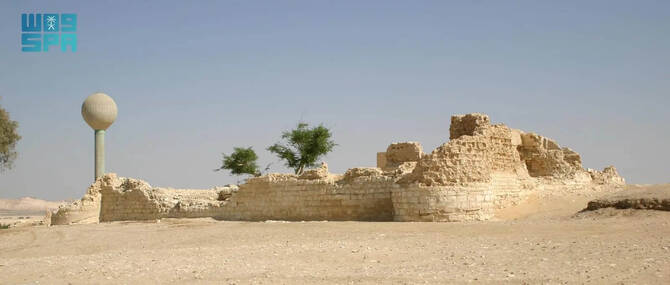


CAIRO: The Egyptian Hajj Road is recognized by historians and travelers as one of the most important pilgrimage and trade arteries connecting the Islamic world to the Arabian Peninsula.
Used by pilgrims since the dawn of Islam, this route transcends mere religious significance, embodying a rich cultural, civilizational, and archaeological legacy, the Saudi Press Agency reported recently.
Its importance has earned it a place on the UNESCO World Heritage Tentative List, which is a precursor to the World Heritage List.
Saudi Arabia made its submission in 2015, in which it outlined the route linking Egypt to Makkah and Madinah.

Map showing land and sea routes of the Hajj in the early 20th century. (Courtesy of AramcoWorld)
The document states that the route “benefited pilgrims coming from Egypt, Sudan, Central Africa, Morocco, Andalusia and Sicily, as they meet in Egypt, then travel through Sinai to Aqaba then march across two trails.”
The road starts from the town of Haqel on the Gulf of Aqaba and ends in Makkah.
Several Muslim rulers over the centuries established structures on the road including pools, canals, wells, barricades, bridges, castles, forts and mosques, the document stated.
And “on the road near the camps are numerous Islamic inscriptions and commemorative writings, engraved by pilgrims as they passed through the road.”
It also noted that rulers and wealthy patrons built caravanserais, supplied water and provided protection along these roads to Makkah and Madinah to ease the pilgrims’ journey.
“Individual Muslims, in the name of charity, helped others to make the journey,” it added.
Historians have divided the ancient Egyptian Hajj Road into four chronological periods.
The first period from about the year 1150 featured both overland and coastal routes to the Arabian Peninsula.
The second from 1042 to 1268 had the North Sinai passageway ended and pilgrims opting for sea travel from Egypt to Jeddah.
The third from 1269 to 1884 had pilgrims reverting to using the coastal overland route.
The fourth period, from 1884 to contemporary times, marked the discontinuation of the overland route, replaced first by sea travel from Suez, and subsequently by air travel to Jeddah.

Used by pilgrims since the dawn of Islam, this route transcends mere religious significance, embodying a rich cultural, civilizational, and archaeological legacy. (SPA)
The route’s importance for pilgrims from Africa and the Maghreb is particularly notable.
Caravans from Moroccan cities including Marrakech, Fez and Sale, sometimes including pilgrims from Senegal, would travel either by land along the Mediterranean or by sea.
These caravans would then converge with pilgrims from Algeria, Tunisia and Libya, passing through cities including Mahdia, Sfax, Sousse, Tripoli, Barqa and Tobruk.
They would then cross Egyptian land, often along the coast, to reach Alexandria and Rashid.
From there, pilgrims would take Nile boats to Cairo, joining the Egyptian Hajj caravan at modern-day Al-Baraka. The combined caravans would then continue by land to Suez.
From Suez, pilgrims either continued the land route through Sinai and along the Red Sea to Jeddah, or sailed across the Red Sea to Jeddah, then proceeded by land to Madinah and Makkah.


