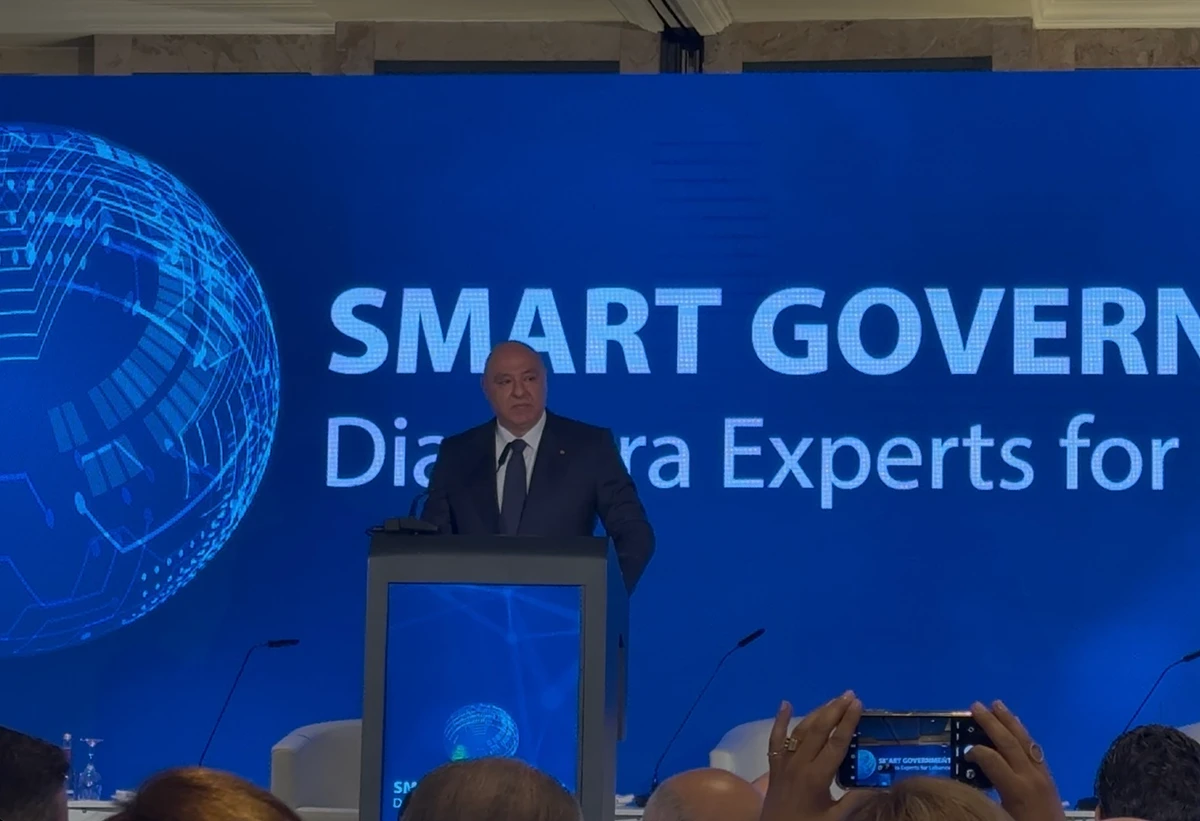
- Aoun calls it a ‘sovereign decision’ to combat corruption and modernize governance
BEIRUT: Lebanon has pledged to pursue comprehensive digital transformation, with President Joseph Aoun framing it as the nation’s best hope to tackle corruption, modernize governance, and engage its skilled diaspora in rebuilding efforts.
Speaking at the “Smart Government, Diaspora Experts for Lebanon” conference in Beirut on June 3, Aoun described the initiative as a “sovereign decision to build a better future.”
The event, organized by the Lebanese Executives Council, aimed to connect Lebanon’s global talent pool with efforts to revitalize both public and private sectors.
The conference’s core themes included smart governance, public sector reform, and private sector collaboration, all driven by digital innovation. Aoun emphasized that Lebanon must abandon outdated and corrupt administrative structures in favor of efficient, transparent systems.
“Digital transformation is not a technical choice. Digitalization is not just a government project; it is a national project.” He also announced Lebanon’s application to join the Digital Cooperation Organization, a global body founded in 2020 to promote inclusive growth in the digital economy.
Aoun criticized systemic corruption that forces citizens to navigate bureaucracy through bribery or political favors. He highlighted the need for a government that serves all Lebanese equally, free from sectarian or partisan influences.
“We want Lebanon to open up to regional and international partnerships and to be eligible for foreign investments. This goal is an absolute necessity, indispensable and unavoidable,” Aoun said. “The time has come for them (the diaspora) to achieve it for their homeland and in their homeland.”
The day-long conference brought together ministers, private sector leaders, and diaspora experts for panel discussions on digitizing Lebanon’s institutions. Topics included the creation of a national digital ID, policy harmonization, and leveraging technology to reconstruct public services.
In an interview with Arab News, LEC President Rabih El-Amine highlighted the importance of engaging the Lebanese diaspora.
“We know by fact that diaspora is willing to help, but they don’t have the medium to offer this help, and we know by fact that the government needs this help, but they don’t know how to reach the diaspora,” he said.
El-Amine stressed that despite weak governance, Lebanon’s private sector and diaspora have helped sustain the country. However, implementing modern laws and digital systems is now critical. He called the digital ID system a foundational step toward enabling services like passport renewals and license issuance.
“This is probably the starting point. But I think the biggest challenge for us is how we can make the government and the parliament work together in order to issue modern laws for this system to take place,” he added.
Hajar El-Haddaoui, director general of the DCO, expressed strong confidence in Lebanon’s digital potential, citing the country’s talent pool and expansive diaspora.
“We trust that Lebanon does have all the ingredients to succeed during this digital economy transformation,” she told Arab News.
She said the DCO’s support will focus on investment, public-private partnerships, and capacity-building, including the Digital Economy Navigator program, which helps countries assess and close gaps in digital readiness.
El-Haddaoui underscored the importance of aligned policies, strong infrastructure, and openness to international cooperation.
“Any digital economy or digital transformation needs harmonization of policies. That’s really important and critical. Working on a regulation and standard of regulation is really one of the pillars of successful digital transformation,” she said.
Speaking to Arab News, Fadi Makki, Lebanon’s minister of state for administrative development affairs, outlined key reforms to upgrade the country’s administrative structures.
“We’re far behind in digital readiness. We’re trying to catch up through digital transformation, skilling, and reskilling programs,” he said.
Makki explained that Lebanon lacks planning and performance monitoring units that are standard in functional governments. He proposed modernizing human resources and encouraging the private sector to deliver services, while the government ensures oversight.
“We don’t want to compete with them (the private sector), but at the same time, we want to create opportunities for them while ensuring we provide the necessary oversight like any government,” he told Arab News..
“One of the missing functions in government is planning and performance monitoring. We don’t have that. So, part of our work is creating these basic units, not just centrally but eventually in every ministry. Without them, we’re building on weak foundations,” he added.
The event also featured remarks from Lebanese American University’s Chaouki Abdallah and panels with Minister of Technology and Artificial Intelligence Kamal Shehadi, along with global figures like Jad Bitar of the Boston Consulting Group.
In closing, Prime Minister Nawaf Salam thanked all participants for their contributions and reaffirmed the government’s resolve.
“Digital transformation in Lebanon is not a luxury but a necessity and a reform,” he said. “It directly serves the citizens, reduces corruption, and enhances the quality of life. It is also a prerequisite for economic growth.”
Salam called for full inter-ministerial coordination, asserting, “Lebanon cannot remain outside the digital world or on its margins.”
He concluded: “We are determined to be part of the regional and global digital economy and to reconnect Lebanon with the chains of knowledge and production in the 21st century.”
As Lebanon continues to navigate a complex political and economic crisis, the conference marked a clear call for reform. The message from both domestic and diaspora leaders was unambiguous: digital transformation is not only possible—it is imperative.