

CASA-1000 power line project with Pakistan to be completed next year — Tajikistan minister

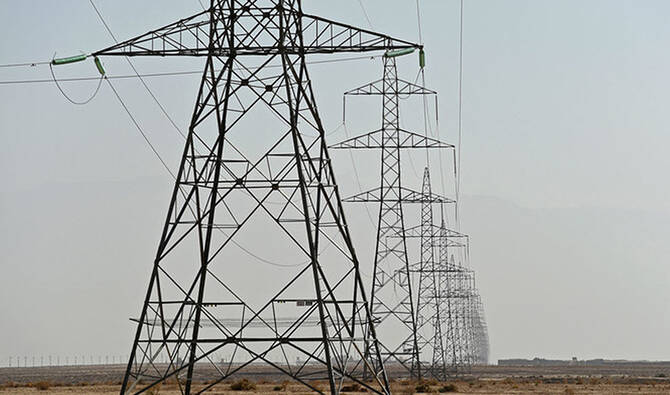
In this photograph taken on October 27, 2021, power pylons transmitting electricity from Uzbekistan to Afghanistan are pictured along the Hairatan Highway in Kaldar district of Balkh Province. (AFP/File)
Short Url
Updated 02 June 2025
Follow

CASA-1000 power line project with Pakistan to be completed next year — Tajikistan minister

  • $1.2 billion project aimed to allow export of Central Asian electricity to Afghanistan, Pakistan by 2020
  • Project was launched in 2016 but has been stalled for years by turmoil and violence in Afghanistan

ISLAMABAD: Tajikistan’s Deputy Minister for Energy Jamshed Shoimzoda has said a $1.2 billion Western-backed project to build a power line between Central Asia and South Asia would be completed by December next year, state news agency APP reported on Monday. 

The CASA-1000 project, launched in 2016, aims to allow Tajikistan and Kyrgyzstan, former Soviet republics with an extensive network of hydroelectric power plants, to sell excess energy to Pakistan and Afghanistan in the summer months. The project, initially meant to allow the export of electricity to Afghanistan and Pakistan by 2020, has been stalled for years by turmoil in Afghanistan. 

Tajikistan and Kyrgyzstan generate most of their energy from hydropower plants built on the rivers that flow into Kazakhstan, Turkmenistan and Uzbekistan. Tajikistan and Kyrgyzstan limit water release during summer due to lower power demand, angering their neighbors who need water for irrigation. The five countries have failed to reach an agreement after decades of negotiations. 

The new power line could smooth flows as power demand in Pakistan peaks during the summer months.

“Major energy project, CASA-1000 between Pakistan and Tajikistan, will be completed by December 2026, which will start providing 1000 MW of electricity to Pakistan,” Shoimzoda said in an interview to APP.

“This grand project will take time to be operational by January 2027, after which bilateral cooperation in the energy sector between the two countries will be further promoted and there will be a new beginning of clean and green energy projects in both countries.”

Tajikistan aims to completely switch to green energy and zero emission by 2027.

“The transmission capacity of the CASA-1000 energy project will be 1,300 megawatts, which will be an energy link between Tajikistan, Pakistan, and Afghanistan to provide clean energy not only to regional countries but also fill the need of Pakistan’s industrial sector,” Shoimzoda said. 

“Massive infrastructural projects will be beneficial for all of its stakeholders by fulfilling energy needs and strengthening regional connectivity.”

Shoimzoda said Tajikistan has the capacity to export 10 billion kilowatt of energy annually, which would benefit all countries in the region, including Pakistan. Tajikistan also currently has the capacity to generate 500 billion KW of electricity, the highest among regional countries in hydel power.

The minister said Tajikistan was already providing electricity to other regional countries, including Afghanistan, and in the future would create a regional energy hub, to “usher in a new era of sustainable energy production and economic prosperity in the region.”

The United States was initially involved in financing the 1,200-km-long line as part of its New Silk Road initiative to integrate Afghanistan with Central Asia. Other project sponsors have included the World Bank, Islamic Development Bank, the UK Department for International Development, and the European Bank for Reconstruction and Development.


Cross-border clash breaks out between Pakistan and Afghanistan amid rising tensions

Updated 6 sec ago
Follow

Cross-border clash breaks out between Pakistan and Afghanistan amid rising tensions

  • Border residents say exchange of fire in the Chaman border sector lasted nearly two hours
  • Both governments issue competing statements blaming the other for initiating the violence

ISLAMABAD: Pakistan and Afghanistan witnessed yet another border clash, according to officials in both countries who spoke in the early hours of Saturday, with each side accusing the other of launching “unprovoked” attacks.

Fighting erupted in Pakistan’s southwestern Chaman border sector, with an AFP report saying that residents on the Afghan side of the frontier reported the exchange of fire began at around 10:30 p.m. (1800 GMT) and continued for roughly two hours.

The incident underscored how tensions remain high between the neighbors, who have seen deadly clashes in recent months despite several rounds of negotiations mediated by Qatar and Türkiye that resulted in a tenuous truce in October.

“There has been unprovoked firing by Afghan Taliban elements in the Chaman Sector which is a reckless act that undermines border stability and regional peace,” said a Pakistani security official on condition of anonymity.

“Pakistani troops responded with precision, reinforcing that any violation of our territorial integrity will be met with immediate and decisive action,” he continued.

The official described Pakistan’s response as “proportionate and calibrated” that showed “professionalism even in the face of aggression.”

“The Chaman Sector exchange once again highlights the need for Kabul to rein in undisciplined border elements whose actions are destabilizing Afghanistan’s own international standing,” he added.

Relations between Pakistan and Afghanistan have grown increasingly bitter since the Taliban seized power in Kabul following the withdrawal of international forces in August 2021.

Islamabad accuses the Taliban administration of sheltering anti-Pakistan militant groups such as the Baloch Liberation Army (BLA) and Tehreek-e-Taliban Pakistan (TTP), which have carried out deadly attacks in its western provinces bordering Afghanistan, targeting civilians and security forces.

The Taliban deny the charge, saying Pakistan’s internal security challenges are its own responsibility.

The Pakistani security official said his country remained “committed to peaceful coexistence, but peace cannot be one-sided.”

“Attempts to pressure Pakistan through kinetic adventurism have repeatedly failed and will continue to fail,” he said. “The Chaman response has reaffirmed that message unmistakably.”

He added that Pakistan’s security forces were fully vigilant and that responsibility for any escalation “would solely rest with those who initiated unprovoked fire.”

Mosharraf Zaidi, spokesman for Pakistan’s prime minister, also commented on the clashes in a social media post, saying the Afghan Taliban had “resorted to unprovoked firing along the border.”

“An immediate, befitting and intense response has been given by our armed forces,” he wrote.

https://x.com/mosharrafzaidi/status/1997025600775786654?s=46&t=JVxikSd5wyl9Y96OwifS5A

Afghan authorities, however, blamed Pakistan for the hostilities.

“Unfortunately, tonight, the Pakistani side started attacking Afghanistan in Kandahar, Spin Boldak district, and the forces of the Islamic Emirate were forced to respond,” Taliban spokesman Zabihullah Mujahid said on X.

https://x.com/zabehulah_m33/status/1997018198508818891?s=48&t=x28vcP-XUuQ0CWAu-biScA

Border clashes that began in October have killed dozens of people on both sides.

The latest incident comes amid reports of back-channel discussions between the two governments, although neither has publicly acknowledged such talks.