Oil Updates — crude jumps after OPEC+ sticks to same output hike in July versus June

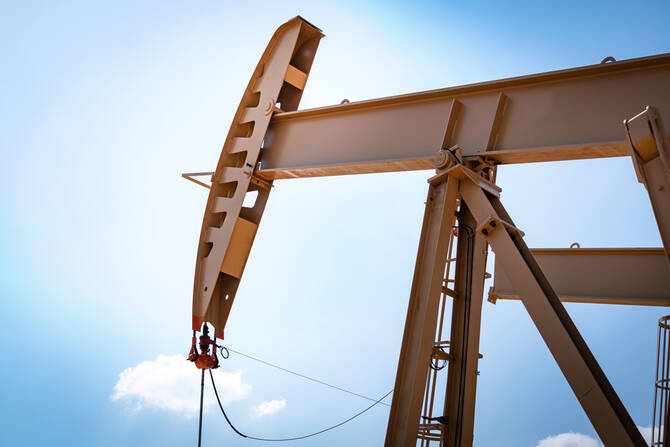
Brent crude futures climbed $1.46, or 2.33 percent, to $64.24 a barrel by 9:26 a.m. Saudi time. Shutterstock
Short Url
Updated 02 June 2025
Follow

Oil Updates — crude jumps after OPEC+ sticks to same output hike in July versus June

SINGAPORE: Oil prices rebounded more than $1 a barrel on Monday after producer group OPEC+ decided to increase output in July by the same amount as it did in each of the prior two months, which came as a relief to those who expected a bigger increase.

Brent crude futures climbed $1.46, or 2.33 percent, to $64.24 a barrel by 9:26 a.m. Saudi time after settling 0.9 percent lower on Friday. US West Texas Intermediate crude was at $62.45 a barrel, up $1.66, or 2.73 percent, following a 0.3 percent decline in the previous session.

Both contracts were down more than 1 percent last week.

The Organization of the Petroleum Exporting Countries and their allies decided on Saturday to raise output by 411,000 barrels per day in July, the third month the group known as OPEC+ increased by the same amount, as it looks to wrestle back market share and punish over-producers.

The group had been expected to discuss a bigger production hike.

“Had they gone through with a surprise larger amount, then Monday’s price open would have been pretty ugly indeed,” analyst Harry Tchilinguirian of Onyx Capital Group wrote on LinkedIn.

Oil traders said the 411,000-bpd output hike had already been priced into Brent and WTI futures.

“The headline motive has centered on punishing OPEC+ members like Iraq and Kazakhstan that have persistently produced above their pledged quotas,” said the Commonwealth Bank of Australia in a note on Monday.

Kazakhstan has informed OPEC that it does not intend to reduce its oil production, according to a Thursday report by Russia’s Interfax news agency citing Kazakhstan’s deputy energy minister.

Looking ahead, Goldman Sachs analysts anticipate OPEC+ will implement a final 410,000 bpd production increase in August.

“Relatively tight spot oil fundamentals, beats in hard global activity data, and seasonal summer support to oil demand suggest that the expected demand slowdown is unlikely to be sharp enough to stop raising production when deciding on August production levels on July 6th,” the bank said in a note dated Sunday.

Meanwhile, low levels of US fuel inventories have stoked supply jitters ahead of expectations for an above-average hurricane season, analysts said.

“More encouraging was a huge spike in gasoline implied demand going into what’s considered the start of the US driving season,” ANZ analysts said in a note, adding that the gain of nearly 1 million bpd was the third-highest weekly increase in the last three years.

Traders are also closely watching the impact of lower prices on US crude production which hit an all-time high of 13.49 million bpd in March.

Last week, the number of operating oil rigs in the US fell for a fifth week, down four to 461, the lowest since November 2021, Baker Hughes said in its weekly report on Friday.


Silver crosses $77 mark while gold, platinum stretch record highs

Updated 27 December 2025
Follow

Silver crosses $77 mark while gold, platinum stretch record highs

  • Spot silver touched an all-time high of $77.40 earlier today, marking a 167% year-to-date surge driven by supply deficits
  • Spot platinum rose 9.8% to $2,437.72 per ounce, while palladium surged 14 percent to $1,927.81, its highest level in over 3 years

Silver breached the $77 mark for the first time on Friday, while gold and platinum hit record highs, buoyed by expectations of US Federal Reserve rate cuts and geopolitical tensions that fueled safe-haven demand.

Spot silver jumped 7.5% to $77.30 per ounce, as of 1:53 p.m. ET (1853 GMT), after touching an all-time high of $77.40 earlier today, marking a 167% year-to-date surge driven by supply deficits, its designation ‌as a US ‌critical mineral, and strong investment inflows.

Spot gold ‌was ⁠up ​1.2% at $4,531.41 ‌per ounce, after hitting a record $4,549.71 earlier. US gold futures for February delivery settled 1.1% higher at $4,552.70.

“Expectations for further Fed easing in 2026, a weak dollar and heightened geopolitical tensions are driving volatility in thin markets. While there is some risk of profit-taking before the year-end, the trend remains strong,” said Peter Grant, vice president and senior metals strategist ⁠at Zaner Metals.

Markets are anticipating two rate cuts in 2026, with the first likely ‌around mid-year amid speculation that US President Donald ‍Trump could name a dovish ‍Fed chair, reinforcing expectations for a more accommodative monetary stance.

The US ‍dollar index was on track for a weekly decline, enhancing the appeal of dollar-priced gold for overseas buyers.

On the geopolitical front, the US carried out airstrikes against Daesh militants in northwest Nigeria, Trump said on Thursday.

“$80 in ​silver is within reach by year-end. For gold, the next objective is $4,686.61, with $5,000 likely in the first half of next ⁠year,” Grant added.

Gold remains poised for its strongest annual gain since 1979, underpinned by Fed policy easing, central bank purchases, ETF inflows, and ongoing de-dollarization trends.

On the physical demand side, gold discounts in India widened to their highest in more than six months this week as a relentless price rally curbed retail buying, while discounts in China narrowed sharply from last week’s five-year highs.

Elsewhere, spot platinum rose 9.8% to $2,437.72 per ounce, having earlier hit a record high of $2,454.12 while palladium surged 14% to $1,927.81, its highest level in more than three years.

All precious ‌metals logged weekly gains, with platinum recording its strongest weekly rise on record.