BERLIN: Germany’s interior minister is hoping the European Union can reach a bloc-wide agreement on sending failed asylum seekers who cannot go home to safe countries near their original homelands.
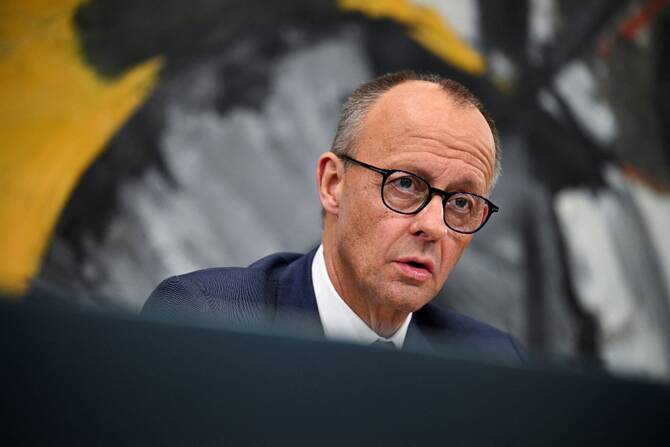
Chancellor Friedrich Merz’s conservatives won February’s national election on a promise to bring down immigration levels, which opinion polls showed many voters regarded as being out of control, although numbers have been falling for over a year.
In an interview with the Welt am Sonntag newspaper published on Saturday, Interior Minister Alexander Dobrindt said the approach of using third countries could work only if there was a Europe-wide consensus.
“We need third countries that are prepared to take migrants who are objectively unable to return to their home countries,” he told the newspaper.
Earlier this month, the EU’s executive Commission proposed a scheme that would let member states reject asylum applications from migrants who passed through a “safe” third country on their way to the bloc. The proposals, criticized by rights groups, have yet to be adopted by national governments or the European Parliament.
“No individual EU member state can create this model on its own: it will have to happen on an EU level,” Dobrindt said. “We are preparing the foundations for that right now.”
Dobrindt’s initial promises to tighten border controls on taking office angered neighbors who protested at plans to return to their territory those migrants found not to have a right to enter Germany.
An Italian plan to process asylum seekers picked up at sea in Albania has stalled amid Italian court challenges.
A scheme by Britain, which is not an EU member, under its previous Conservative government to send asylum seekers who arrived in Britain without permission to Rwanda was scrapped by Prime Minister Keir Starmer when he took office last year.


Germany hopes for EU deal on sending failed asylum seekers to third countries, minister says
https://arab.news/g4tsc
Germany hopes for EU deal on sending failed asylum seekers to third countries, minister says

- The EU’s executive Commission proposed a scheme that would let member states reject asylum applications from migrants who passed through a “safe” third country on their way to the bloc


Putin says developing Russia’s nuclear forces ‘absolute priority’
- Putin vowed to keep “strengthening the army and navy” and draw on military experience from the nearly four-year conflict in Ukraine
MOSCOW: President Vladimir Putin said Sunday that developing Russia’s nuclear forces was now an “absolute priority” following the expiry of its last remaining nuclear treaty with the US.
“The development of the nuclear triad, which guarantees Russia’s security and ensures effective strategic deterrence and a balance of forces in the world, remains an absolute priority,” Putin said in a video message.
His speech came on Russia’s “Defender of the Fatherland Day,” a holiday that is an occasion for military pomp and Kremlin-sponsored patriotism.
Putin vowed to keep “strengthening the army and navy” and draw on military experience from the nearly four-year conflict in Ukraine.
All branches of the armed forces would be improved, he said, including their “combat readiness, their mobility, and their ability to operate in all conditions, even the most difficult.”
Putin’s remarks came just two days before the fourth anniversary of Russia’s assault on Ukraine that sparked a war that has shattered towns, uprooted millions and killed large numbers on both sides.
Moscow and Washington — the world’s two main nuclear powers — are no longer bound by any arms control pact since the New START agreement expired earlier this month.
But Russia said it would continue taking a “responsible” approach to strategic nuclear capability and respecting the limits set on its arsenal.


