




RIYADH: With temperatures expected to soar during Hajj, set to begin on June 4, Saudi Arabia is putting the safety of pilgrims first during the annual event.
The authorities have put a range of measures in place to mitigate the harsh desert weather, which will see maximum temperatures of 40-45 C, including using artificial intelligence and expansion of cooling infrastructures.
Saudi Minister of Hajj and Umrah Tawfiq Al-Rabiah said: “One of the big challenges that we face is the increasing temperature across the different years. This is an issue (to which) we give top priority.”
On Friday, the Saudi Ministry of Health confirmed there had been five cases of heat exhaustion among pilgrims performing Hajj rituals amid rising temperatures at the holy sites.
A statement given to Arab News said: “All individuals affected have received immediate medical attention and are currently in (a) stable condition.”
Health teams remain on high alert and will respond swiftly to similar cases as part of the Kingdom’s broader commitment to safeguarding the health and safety of pilgrims.
The ministry urged pilgrims to stay hydrated, avoid prolonged exposure to direct sunlight and follow official health guidelines such as using shaded walkways, wearing appropriate protective gear and seeking help at the first signs of fatigue. Multilingual awareness campaigns have been launched to reinforce the message.
In a significant step to improved healthcare services for pilgrims, the Ministry of Health has also launched an advanced robotic surgery program at King Abdullah Medical City in Makkah.
The measures are part of Saudi Arabia’s comprehensive strategy to ensure a safe and healthy experience for millions of pilgrims from around the world.
Among the key measures taken to offer relief from the high temperatures are the provision of 50,000 sq. meters of additional shaded areas, more than 400 misting and cooling stations, renovation and extension work around the Grand Mosque, and heat-reflective asphalt on major walkways.
The Saudi Food and Drug Authority has also reviewed its Hajj preparations. CEO Dr. Hisham S. Al-Jadhey has visited the authority’s Makkah office to assess how operational plans are being implemented and confirm the readiness of the services provided.
He emphasized the importance of intensifying efforts to ensure the safety of all food and medicine for pilgrims, adding that the responsibility was a great honor.
He also reviewed the SFDA’s initiatives to apply the highest regulatory standards, leverage modern technologies and utilize artificial intelligence to monitor factories and warehouses, ensuring the quality of products provided during Hajj.
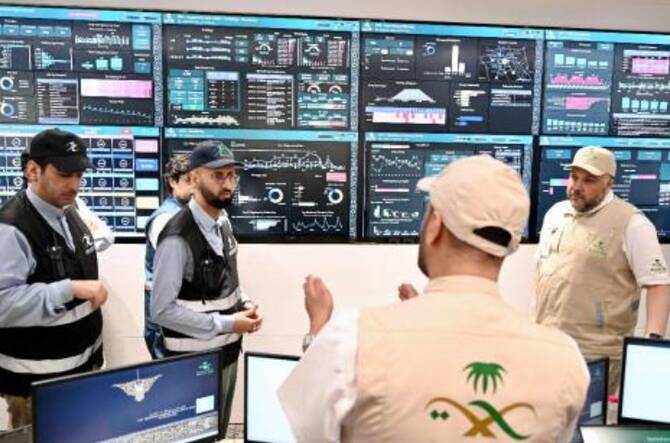
The tour included a visit to the SFDA’s Hajj Operations Center in Makkah, where Al-Jadhey was briefed on ongoing coordination with government entities, performance monitoring mechanisms and support provided to field teams during inspection tours. The tours are enhanced by advanced tools, such as body cameras, used to document field inspection activities.
Al-Jadhey also visited the SFDA site in the regulatory zone within the Holy Sites area, where he reviewed field surveillance plans covering food factories and warehouses. The location serves as a primary base for the deployment of regulatory field teams.
In addition, he visited the emergency hospital in Mina, where he met with Dr. Abdullah bin Rashoud Al-Algwizani, CEO of the Saudi Public Health Authority (Weqaya). The meeting focused on the importance of ongoing collaboration between the two authorities to enhance the health and safety of pilgrims.
The tour also included a visit to the National Health Emergency and Crisis Management Center.
Throughout the visits, the SFDA teams demonstrated smart analytical tools and digital regulatory technologies employed in surveillance and inspection operations. These tools form part of an interactive, AI-powered system designed to enhance operational efficiency and contribute to achieving the authority’s public health and safety goals during Hajj season.
In a high-tech upgrade, the Kingdom is also employing AI to monitor pilgrim movements in real time, with drones relaying live footage to command centers to ensure timely crowd control and detection of any medical emergencies.
“We use advanced AI technologies to do this monitoring and get fast feedback,” said Al-Rabiah, stressing the importance of technology in preventing tragedies.
The crackdown on unauthorized pilgrims by the Ministry of Interior has also intensified. AI-powered systems are monitoring the movement of people entering the holy cities as the majority of last year’s heat-related deaths during Hajj involved those without official permits.


