

No breach reported by any Pakistani government, private agency amid global data leak — official 

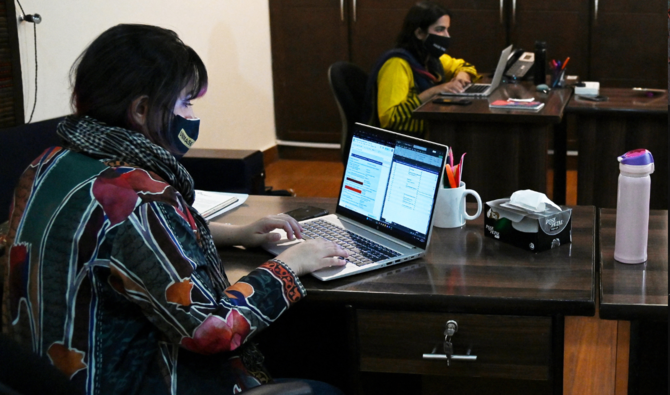
In this photograph taken on October 21, 2024, staff members work at the Digital Rights Foundation (DRF), an NGO aims to strengthen protections for human rights defenders in digital spaces, in Lahore. (AFP)
Short Url
Updated 27 May 2025
Follow

No breach reported by any Pakistani government, private agency amid global data leak — official 

  • Massive data breach has exposed 184 million passwords for Google, Microsoft, Facebook, other platforms
  • NCERT spokesman recommends changing all passwords, especially if they were reused across accounts

ISLAMABAD: A spokesperson for Pakistan’s National Cyber Emergency Response Team (NCERT) said on Tuesday no breach had been reported by any government agency or private company following a data breach affecting 184 million Internet users worldwide.

NCERT released an advisory on May 25 regarding a major global data exposure incident involving a publicly accessible, unencrypted file containing more than 184 million unique account credentials. The breach exposed usernames, passwords, email addresses, and associated URLs linked to services from Google, Microsoft, Apple, Facebook, Instagram, Snapchat, as well as government portals, banking institutions, and health care platforms worldwide.

“As of now, no incidents of data breach have been reported to NCERT by any government or private organization within Pakistan,” Syed Imran Haider, the NCERT spokesperson, told Arab News, adding that his organization’s incident management response team was “vigilant, in contact with all relevant departments, and working around the clock” to monitor the situation.

“We are closely engaged with global CERTs and international cybersecurity platforms.”

NCERT had provided cybersecurity guidelines to all government departments, and each organization had established its own infrastructure for data protection, Haider said. 

The leaked database is believed to have been compiled using infostealer malware, malicious software that extracts sensitive information from compromised systems, with the data then stored in plain text and left completely unprotected, with no encryption or password safeguarding, Haider explained. 

The NCERT advisory had recommended changing all passwords, especially those reused across accounts, and to activate multi-factor authentication on all services, particularly financial, email, and administrative accounts.

“Users are advised to use unique, complex passwords for every online service, avoid storing passwords in emails or unprotected files, consider a password manager to securely handle account credentials,” the NCERT spokesman said. 

Users were also advised to monitor account login activity for any anomalies and use credible online services that can help determine whether their email addresses, phone numbers, or other personal data have been exposed in a data breach.

Commenting on the potential impact of the breach, cybersecurity expert Dr. Shahid Sultan said Pakistani users were at risk of personal account hijacking, identity misuse, and targeted scams due to the leaked login credentials.

“Banking and financial service accounts may be compromised, enabling unauthorized transactions and potential financial loss,” he told Arab News, calling on all users and organizations to remain vigilant, report suspicious activities, and act on the precautionary measures suggested by NCERT.


Islamabad court sentences seven individuals to life imprisonment over ‘digital terrorism’

Updated 6 sec ago
Follow

Islamabad court sentences seven individuals to life imprisonment over ‘digital terrorism’

  • The convicts include Wajahat Saeed Khan, Shaheen Sahbahi, Haider Raza Mehdi, Adil Raja, Moeed Peerzada, Akbar Hussain and Sabir Shakir
  • The cases against them relate to May 9, 2023 riots over ex-PM Imran Khan’s arrest that saw vandalization of government, military installations

ISLAMABAD: An Islamabad anti-terrorism court (ATC) on Friday awarded two life sentences each to seven individuals, including journalists and YouTubers, over “digital terrorism,” in connection with May 9, 2023 riot cases.

The court sentenced Wajahat Saeed Khan, Shaheen Sahbahi, Haider Raza Mehdi, Adil Raja, Moeed Peerzada, Akbar Hussain and Sabir Shakir under various sections of the Anti-Terrorism Act and the Pakistan Penal Code.

The riots had erupted after former prime minister Imran Khan was briefly arrested in Islamabad on corruption charges on May 9, 2023, with his supporters attacking government buildings and military installations in several cities.

ATC judge Tahir Sipra announced the reserved verdict, following a trial in absentia of the above-mentioned individuals who were accused of “digital terrorism against the state on May 9.”

“The punishment awarded will be subject to the confirmation by Hon’ble Islamabad High Court,” the verdict read, referring to each count of punishment awarded to the convicts.

It also imposed multiple fined on the convicted journalists and YouTubers, who many see as being closed to Khan.

The prosecution presented 24 witnesses, while the court had appointed Gulfam Goraya as the counsel of the accused, most of whom happen to be outside Pakistan.

Pakistan’s anti-terrorism laws allow trials in absentia of the accused persons.

Thousands of supporters of Khan’s Pakistan Tehreek-e-Insaf (PTI) party were detained in the days that followed the May 2023 riots and hundreds were charged under anti-terrorism laws in a sweeping crackdown, with several cases transferred to military courts.

The government of PM Shehbaz Sharif accuses Khan’s party of staging violent protests in a bid to incite mutiny in the armed forces and to derail democracy in the country. The PTI denies inciting supporters to violence and says the government used the May 2023 protests as a pretext to victimize the party, a claim denied by the government.

The May 2023 riots took place a little over a year after Khan fell out with Pakistan’s powerful military, blaming the institution for colluding with his rivals to oust him from office in a parliamentary no-trust vote, a charge denied by the military.

Khan, who has been jailed since Aug. 2023 on a slew of charges, has led a campaign of unprecedented defiance against the country’s powerful military. He also accuses the then generals of rigging the Feb. 8, 2024 election in collusion with the election commission and his political rivals to keep him from returning to power. The military, election commission and Khan’s rivals deny the allegation.
