



KARACHI: Pakistan’s stock market is expected to experience a “bumpy ride” in the coming days due to what some analysts on Monday described as a challenging new budget the South Asian nation is set to announce next month in line with recommendations from the International Monetary Fund (IMF).
Prime Minister Shehbaz Sharif’s administration has been in talks with the IMF over its new fiscal plan, though the Fund’s team left Pakistan last week without reaching an agreement on key issues, including higher defense spending and the proposed taxation of agricultural income.
As a result, the benchmark KSE-100 Index remained largely flat in recent days and slipped 0.7% to 118,221 points on Monday, following rumors that the government planned to raise the Capital Gains Tax (CGT) on share trading income.
“Given the new measures that have been IMF-driven and that are impacting sentiment at the stock exchange, we are expecting some bumpy rides and [do] not [expect] a clean ride up like we saw in the prior year,” Ahsan Mehanti, chief executive officer at Arif Habib Commodities, told Arab News in an interview.
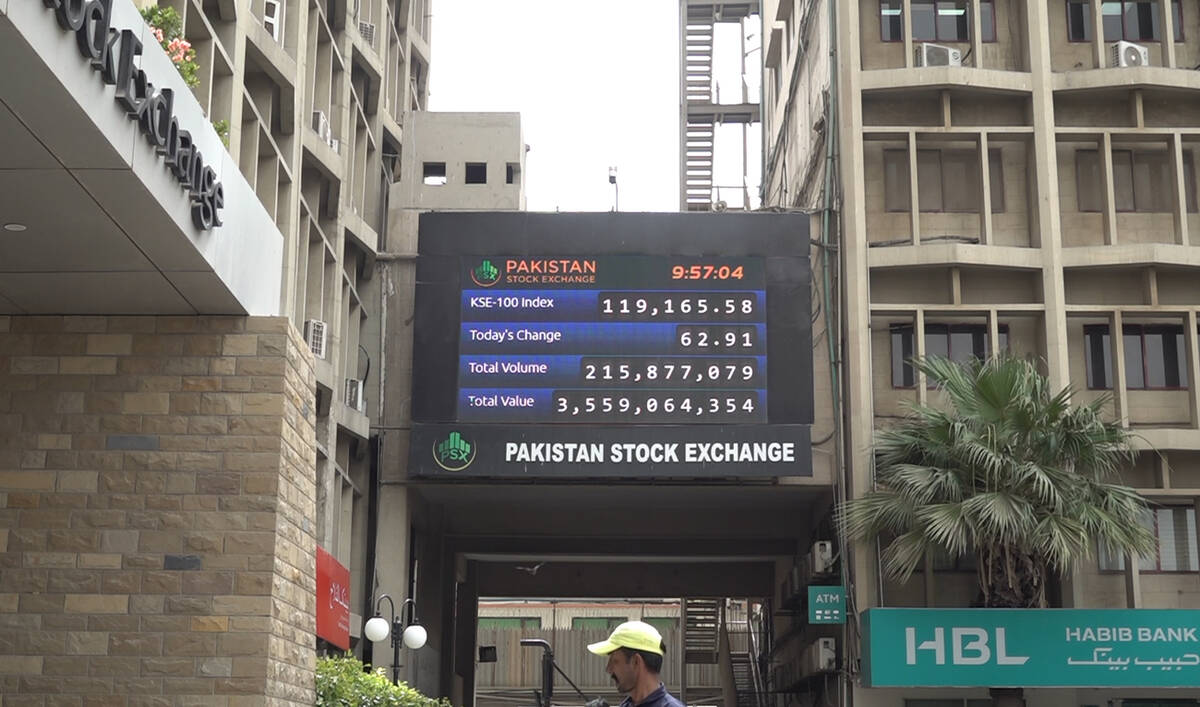
A man walks past Pakistan Stock Exchange building in Karachi on May 26, 2025. (AN Photo)
Finance Minister Muhammad Aurangzeb is expected to present the new budget on June 10 in Pakistan’s National Assembly, the parliament’s lower house, after the government postponed its earlier budget date of May 2 by nearly a week.
SMALL INVESTORS
The prevailing uncertainty has kept small investors like Abdur Rauf and Jawed Khanani from buying stocks, fearing an unfavorable outcome from the ongoing budget talks between the government and the IMF.
“If the budget turns out negative for the market, our money will get stuck,” said Rauf, a 68-year-old retailer, who said his “investment level has come down to 25% due to the budget factor.”
He maintained the government, by taxing bonus shares, was discouraging listed companies from issuing them to shareholders.
“They [the companies] are now giving dividends, which too have been taxed at 15% for tax filers and 30% for non-filers,” he said, adding, “after deducting the dividend tax and members’ [brokers’] commission, the investor is left with little money.”
Due to heavy taxation, small investors, mostly households and retired salaried individuals, have almost disappeared from the equity market, while large investors are also operating under pressure.

Jawed Khanani, Pakistani retail investor, gestures during an interview with Arab News’ business correspondent at the Pakistan Stock Exchange in Karachi, ahead of Pakistan’s upcoming federal budget. (AN Photo)
“The government should exempt dividends [from taxes], reduce the [brokers’] commission and abolish the tax on bonus shares so that investors could get some relief from companies and fresh investments could come to the market,” Rauf told Arab News.
Khanani also expressed concern over rumors of increased tax on dividend income and hoped the new budget would bring down existing tax rates.
“People hope that the [existing] 15% CGT on non-filers [of tax] should be brought down to 12% or 10%,” he said, seated in a small trading booth at the Pakistan Stock Exchange’s main trading hall.
GROWTH-ORIENTED OR CHALLENGING BUDGET?
Meanwhile, big market players like Arif Habib, chairman of the Arif Habib Group, one of Pakistan’s leading business conglomerates, are optimistic the government will unveil a growth-oriented budget after stabilizing the economy over the past year.
“You see, after the [economic] stabilization, the market expectations are that the new policies would be for the growth in the economy,” he told Arab News in an interview.
Regarding high taxes, he said the government was “very much concerned that the taxation rates in Pakistan are high” and would aim to provide maximum relief to investors and the general public if the IMF agrees to its proposals.

Staffers at Arif Habib Commodities Ltd. work inside the Pakistan Stock Exchange in Karachi on May 26, 2025, during Arab News’ special coverage ahead of Pakistan’s upcoming federal budget. (AN Photo)
Habib, who is believed to have close connections in policymaking circles, informed the IMF’s broader conditions hinge on the size of the budget deficit.
“The Pakistani side wants to have some aggressive approach,” he continued. “They wish that we may, in fact, incur some budget deficit, higher budget deficit, but give relief to the investors and to the general public.”
However, he noted this would depend on the IMF’s approval of a fiscal gap figure the Sharif government may be proposing for the next year.
“Now the number in fact being discussed in the market is about 5.1% or 4.9%,” he said.
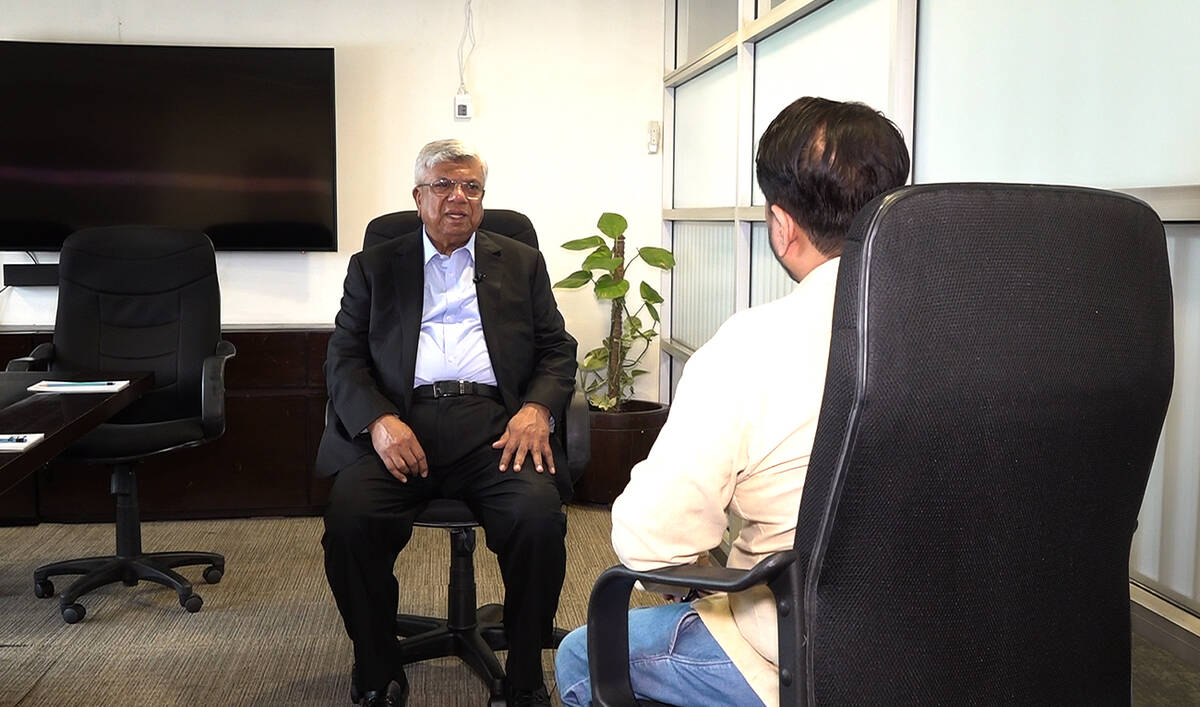
Arif Habib, chairman of Arif Habib Group, speaks during an interview with Arab News’ business correspondent in Karachi, ahead of Pakistan’s upcoming federal budget. (AN Photo)
Habib said he sees no “element of harshness” in the new budget but noted that the key question for the government is how much relief it can offer the market.
“Expectations are high,” he added. “And if those are not met, then the markets would not, in fact, be happy about it.”
Analyst Mehanti offered a contrasting view, saying higher taxes are likely for sectors listed on the PSX.
“It will be a very, you know, challenging budget,” he said. “We are expecting, you know, higher levies for oils, fertilizer, stock market and real estate.”


