

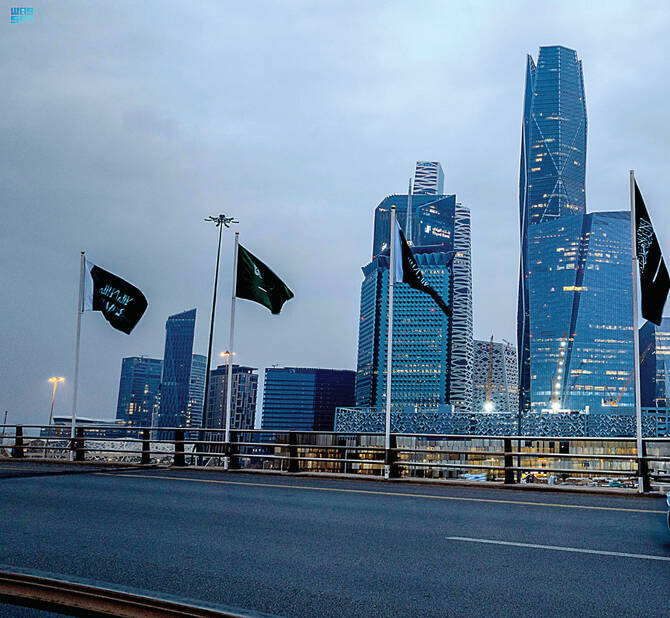

RIYADH: Saudi Arabia is rapidly positioning Riyadh as a global hub for arbitration, leveraging comprehensive legal reforms, technological advancements, and strategic initiatives aligned with its Vision 2030 economic diversification agenda.
The Kingdom’s concerted efforts to modernize its arbitration infrastructure have resulted in a notable increase in the enforcement of arbitral awards.
Since the enactment of the Arbitration Law in 2012, Saudi enforcement courts have processed approximately 35,000 enforcement applications, with the total value of awards exceeding $6.16 billion.
In 2023 alone, the value of locally enforced arbitral awards reached nearly $800 million, with rulings involving foreign stakeholders totaling around $400 million, as noted by Saudi Justice Minister Walid Al-Samaani at the Third Saudi Commercial Arbitration Conference, held last year.
Karim Youssef, founder and executive chairman of Youssef + Partners, emphasized the strategic nature of Riyadh’s emergence as an arbitration hub. Speaking to Arab News, he said: “Riyadh’s rise is closely tied to Saudi Vision 2030, which emphasizes legal reform, transparency, and modernization.”
He added: “The government’s push for a more attractive business environment includes strengthening the rule of law and legal infrastructure, encouraging foreign direct investment, and creating confidence in dispute resolution systems for both local and international investors.”
The Saudi Center for Commercial Arbitration, established in 2016, plays a pivotal role in this transformation. “Saudi’s rise comes through a focused approach, involving strong judicial openness to arbitration and the regulator benchmarking its conduct against international minimum standards,” said Youssef.
He pointed out that the SCCA saw its caseload increase by a factor of 80 by 2021, a testament to the rapid development and effectiveness of the reforms.
The introduction of the 2023 SCCA Arbitration Rules further aligns Saudi Arabia’s arbitration framework with global best practices. These rules incorporate the use of technology to streamline proceedings, enhance speed, control costs, and facilitate more direct communication between parties and the arbitral tribunal.
Notably, they allow parties to attend hearings remotely, particularly for preliminary and procedural hearings, and enable the engagement of foreign lawyers and counsels, reinforcing Saudi Arabia’s commitment to accommodating international legal practices.
Embracing digital tools
Speaking to Arab News, Beirut-based attorney Jihad Chidiac highlighted the significance of these reforms, stating that “notable changes include the 2023 rules of the Saudi Center for Commercial Arbitration, which introduce the use of technology to streamline proceedings, enhance speed, control costs, and facilitate more direct communication between parties and the arbitral tribunal.”
He added that these rules allow arbitrations to be conducted in languages other than Arabic and permit the appointment of multinational arbitrators from any jurisdiction, crucial given Riyadh’s strategic position between Asia, Europe, and Africa.

The Kingdom is positioning itself as a major arbitration hub, attracting global firms and experts seeking a modern, high-tech environment.
Jihad Chidiac, Beirut-based attorney
The Saudi government’s commitment to enhancing the arbitration infrastructure is further evidenced by the modernization of arbitration laws to align with international standards, such as the 2012 Arbitration Law based on the UN Commission on International Trade Law, or UNCITRAL Model Law.
This comprehensive legal infrastructure, along with Alternative Dispute Resolution-friendly courts, makes Riyadh a credible and competitive venue for international dispute resolution, attracting global commercial and investment disputes.
Global partnerships
Chidiac explained that “the establishment of the SCCA and the introduction of the 2023 SCCA Arbitration Rules further align with global best practices, drawing from renowned frameworks like the London Court of International Arbitration and the International Chamber of Commerce.”
These reforms enhance Riyadh’s appeal as a trusted center for arbitration, fostering confidence among international businesses and institutions.
The Kingdom’s dedication to global dispute resolution is also demonstrated by its accession to international treaties like the New York Convention and the formation of strategic partnerships with major arbitration institutions.
In November 2022, the SCCA expanded its operations by opening its first office outside Saudi Arabia at the Dubai International Financial Center, operating under the name “SCCA Dubai” and providing arbitration and mediation services in the UAE, positioning Riyadh as a key player in global dispute resolution services.
Developing local expertise
Looking ahead, continuous and systematic application of key initiatives is essential for Riyadh to solidify its position as a global arbitration hub.
Youssef emphasized the importance of ongoing support from the Ministry of Justice and the government, continued integration and implementation of Vision 2030, and alignment with international legal norms.
He added: “The SCCA is maturing into a competitive institution, with international standard rules and a growing caseload.”
Youssef suggested that this collective uniqueness can transform the region into a global hotspot for arbitration activity, enhancing its appeal and competitiveness on the international stage.
FASTFACTS
Riyadh’s emergence as a leading arbitration hub represents a significant and transformative shift for legal professionals, businesses, and investors across the Middle East.
Since the enactment of the Arbitration Law in 2012, Saudi enforcement courts have processed approximately 35,000 enforcement applications, with the total value of awards exceeding $6.16 billion.
Chidiac pointed out that one of the major trends in international arbitration, which Saudi Arabia has already embraced, is the increasing use of digital tools like online dispute resolution platforms and AI-powered arbitration solutions.
With initiatives like Saudi Vision 2030 driving tech-driven innovation, Chidiac added, “the Kingdom is positioning itself as a major arbitration hub, attracting global firms and experts seeking a modern, high-tech environment.”
Riyadh’s emergence as a leading arbitration hub represents a significant and transformative shift for legal professionals, businesses, and investors across the Middle East.
Youssef justified that with the establishment of the SCCA and the modernization of legislative infrastructure in line with international arbitration practices, Riyadh offers an efficient arbitral institution that incentivizes businesses and investors to select the city as the seat for their disputes.
This, in turn, increases demand for legal practitioners skilled in handling cross-border disputes, creating high-value professional opportunities.
The growing volume of cases, particularly driven by ongoing reforms, reflects an expansion in legal services and professional development, fostering a more predictable and stable legal environment that is attractive to foreign investors.
Chidiac concluded by saying that Saudi Arabia’s hosting of major global events like the Future Investment Initiative and the Global Saudi Investment Forum boosts its international business profile, reinforcing its role as a key hub for arbitration, which ensures efficient and predictable resolution of business disputes.
As Saudi Arabia continues to implement its Vision 2030 objectives, Riyadh’s positioning as a global arbitration hub is expected to strengthen further, offering a robust and modern legal framework that appeals to international investors and legal professionals alike.


