

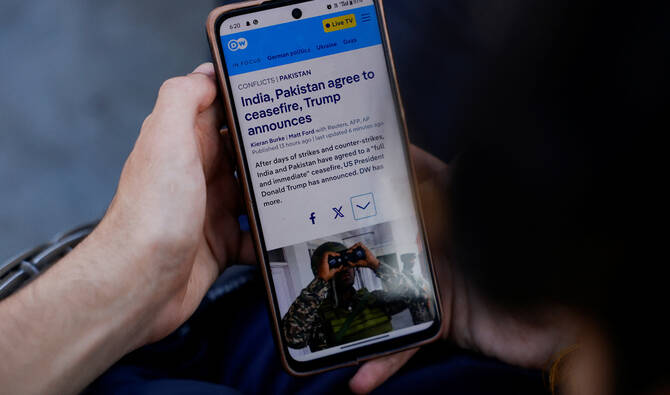

ISLAMABAD: As Indian and Pakistani guns fell silent after trading fire for days this month, the war over facts and fiction is far from over and fierce battle rages on social media as to who won, who distorted the truth, and which version of events should be trusted.
As both states continue to push competing narratives, experts warn that misinformation, censorship and AI-generated propaganda have turned digital platforms into battlegrounds, with real-world consequences for peace, truth and regional stability.
The four-day military standoff, which ended on May 10 with a US-brokered ceasefire, resulted from an attack in Indian-administered Kashmir that killed 26 people last month. India accused Pakistan of backing the assault, a charge Islamabad has consistently denied.
While the truce between the nuclear-armed archfoes has since held, digital rights experts have sounded alarm over the parallel information war, which continues based on disinformation, censorship and propaganda on both sides, threatening the ceasefire between both nations.
Asad Baig, who heads the Media Matters for Democracy not-for-profit that works on media literacy and digital democracy, noted that broadcast media played a central role in spreading falsehoods during the India-Pakistan standoff to cater to an online audience hungry for “sensational content.”
“Disinformation was overwhelmingly spread from the Indian side,” Baig told Arab News. “Media was playing to a polarized, online audience. Conflict became content, and content became currency in the monetization game.”
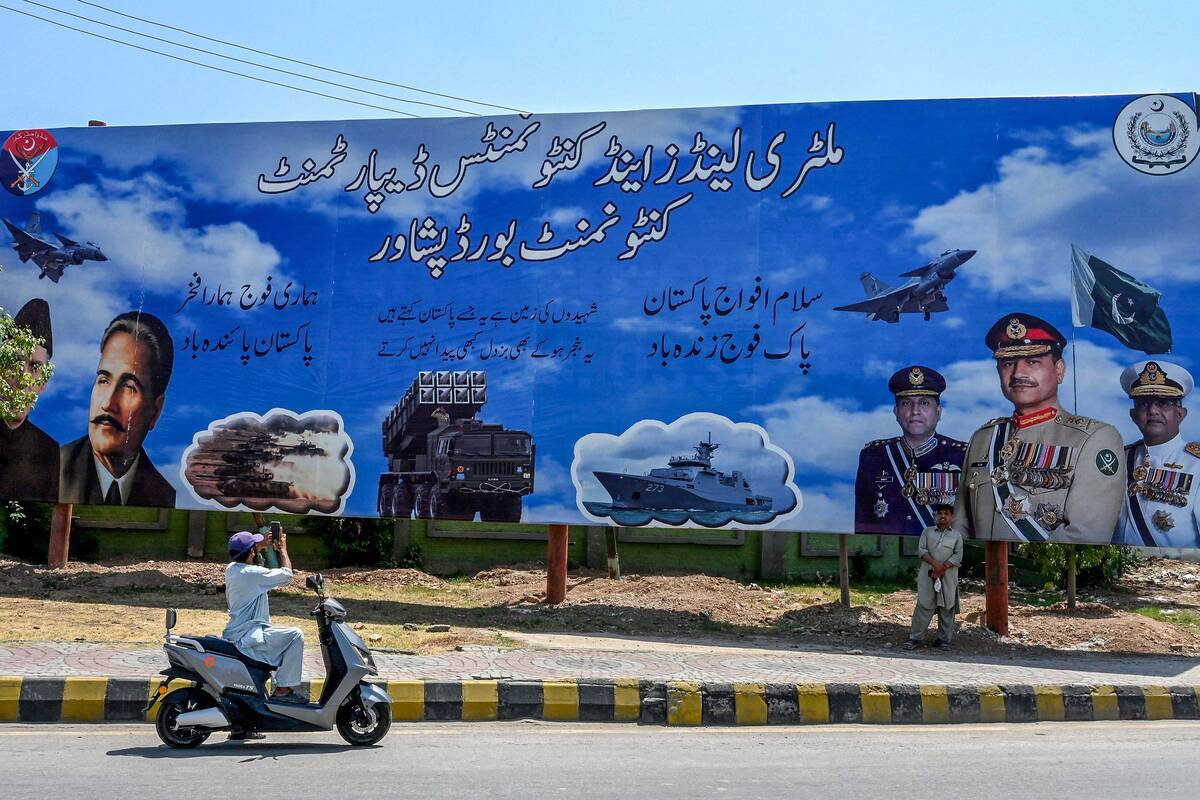
A man clicks a picture of a billboard featuring Pakistan's Army Chief General Syed Asim Munir (C), Naval Chief Admiral Naveed Ashraf (R), and Air Chief Marshal Zaheer Ahmed Babar Sidhu, along a road in Peshawar on May 15, 2025. (AFP/File)
Several mainstream media outlets, mostly in India, flooded the public with fake news, doctored visuals and sensationalist coverage, fueling mass anxiety and misinformation, according to fact-checkers and experts, who say the role of media at this critical geopolitical juncture undermined journalistic integrity and misled citizens.
“I think this is a perfect example of the media becoming a tool of propaganda in the hands of a state,” said prominent digital rights activist Usama Khilji, calling on those at the helm of television and digital media outlets to independently verify state claims using tools like satellite imagery or on-ground sources.
In Pakistan, X, previously known as Twitter, had been banned since February 2024, with digital rights groups and global organizations calling the blockade a “blatant violation” of civic liberties and a threat to democratic freedoms.
But on May 7, as Pakistan’s responded to India’s missile strikes on its territory that began the conflict, the platform was suddenly restored, allowing users to access it without a VPN that allows them to bypass such restrictions by masking their location. The platform has remained accessible since.
“We were [previously] told that X is banned because of national security threats,” Khilji told Arab News, praising the government’s “strategic move” to let the world hear Pakistan’s side of the story during this month’s conflict.
“But when we actually got a major national security threat in terms of literal war, X was unblocked.”
Indian authorities meanwhile blocked more than 8,000 X, YouTube and Instagram accounts belonging to news outlets as well as Pakistani celebrities, journalists and influencers.
“When only one narrative is allowed to dominate, it creates echo chambers that breed confusion, fuel conflict, and dangerously suppress the truth,” Khilji explained.
VIRTUAL WAR
Minutes after India attacked Pakistan with missiles on May 7, Pakistan released a video to journalists via WhatsApp that showed multiple blasts hitting an unknown location purportedly in Pakistan. However, the video later turned out to be of Israeli bombardment of Gaza and was retracted.
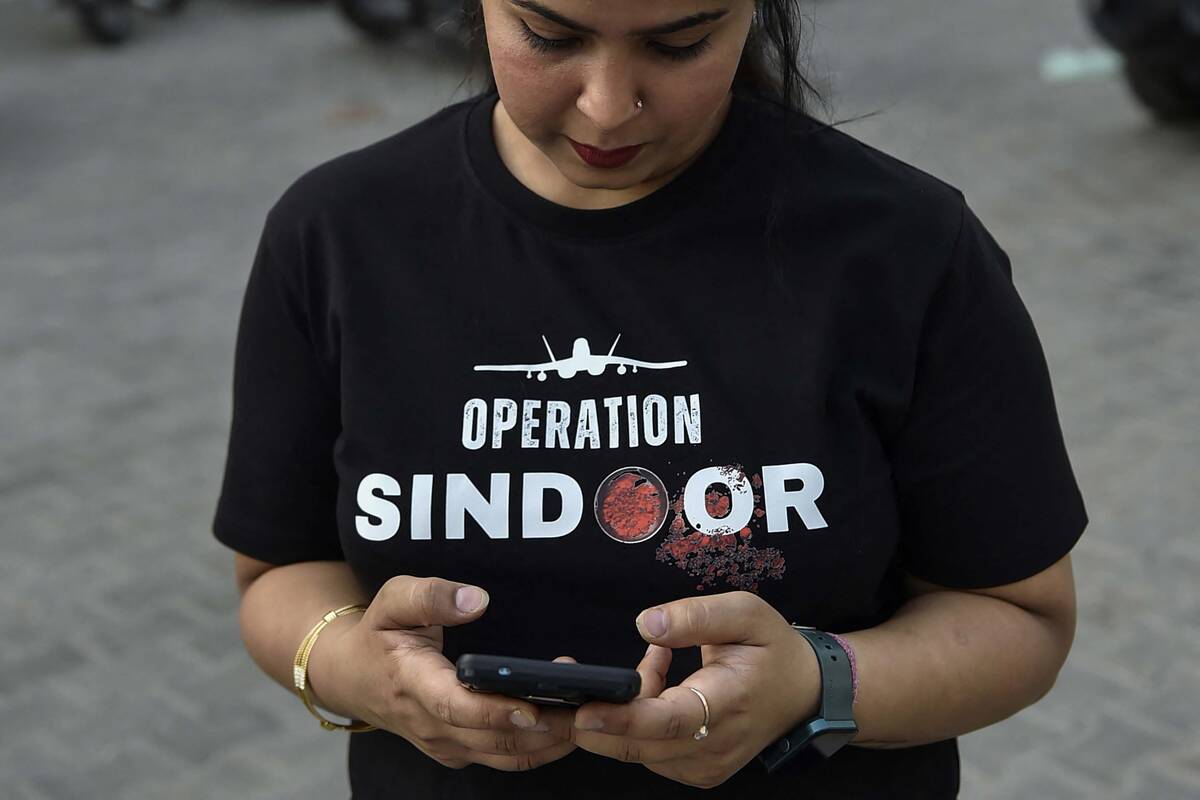
A woman wearing a T-shirt featuring ‘OPERATION SINDOOR’ checks her mobile phone near a market area in Ludhiana on May 17, 2025. (AFP/File)
On May 8, Indian news outlets played a video in which a Pakistani military spokesperson admitted to the downing of two of their Chinese-made JF-17 fighter jets. X users later pointed out that the video was AI-generated.
Throughout the standoff both mainstream and digital media outlets found themselves in the eye of the storm, with many official and verified accounts sharing and then retracting false information. The use of AI-generated videos and even video game simulations misrepresented battlefield scenarios in real time and amplified confusion at a critical moment.
Insights from experts paint a disturbing picture of how information warfare is becoming inseparable from conventional conflict. From deliberate state narratives to irresponsible media and rampant misinformation on social platforms, the truth itself is becoming a casualty of war.
AFP Digital Verification Correspondent Rimal Farrukh describes how false information was often laced with hate speech, targeting vulnerable communities like Muslims in India and Hindus in Pakistan.
“We saw dehumanizing language, misleading visuals, and recycled war footage, often from unrelated conflicts like Russia-Ukraine or Israel-Gaza, used to stoke fear and deepen biases,” she told Arab News.


