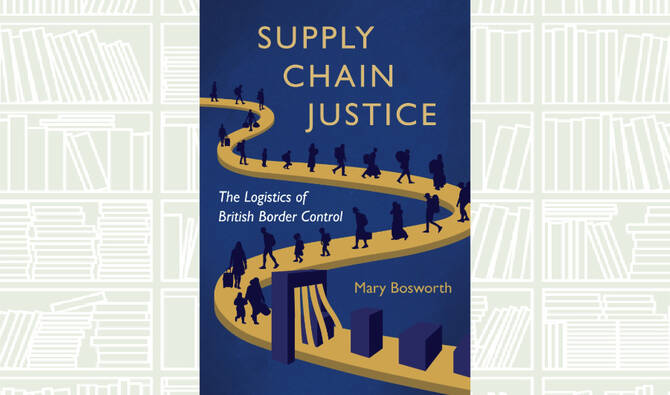
In the UK’s fully outsourced “immigration detainee escorting system,” private sector security employees detain, circulate and deport foreign national citizens. Run and organized like a supply chain, this system dehumanizes those who are detained and deported, treating them as if they were packages to be moved from place to place and relying on poorly paid, minimally trained staff to do so. In “Supply Chain Justice,” Mary Bosworth offers the first empirically grounded, scholarly analysis of the British detention and deportation system. Drawing on four years of extensive ethnographic research, Bosworth examines what keeps the system in place and whether it might be effectively challenged.
Told by a senior manager that “this is a logistics business,” Bosworth documents how the public and private sectors have built a supply chain in which people’s humanity is transformed both symbolically and tangibly through administrative processes and bureaucracy into monetized, measurable units.
Like all logistics, the system has failure built into it.


![]()

What We Are Reading Today: Supply Chain Justice by Mary Bosworth
Short Url
https://arab.news/2wnp2
What We Are Reading Today: Supply Chain Justice by Mary Bosworth


Latest updates


© 2026 SAUDI RESEARCH & PUBLISHING COMPANY, All Rights Reserved And subject to Terms of Use Agreement.