

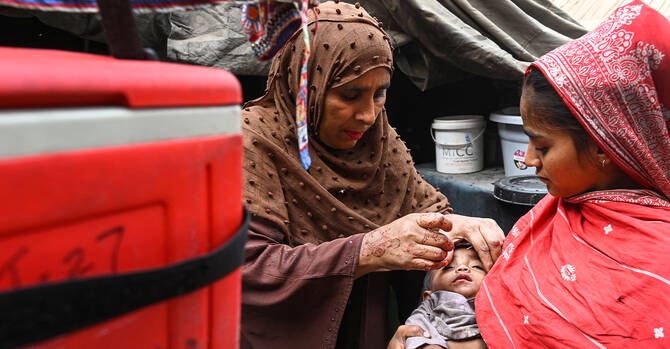

KARACHI: Pakistan’s polio eradication program said on Wednesday two new cases of the wild poliovirus had been detected in the country’s northwestern Khyber Pakhtunkhwa province, bringing the tally of 2025 cases to 10.
The new cases have emerged ahead of the government launching a third nationwide campaign to vaccinate children under the age of five, scheduled from May 26 to June 1. The campaign will target over 45.4 million children across 159 districts, including high-risk areas of southern Khyber Pakhtunkhwa, where the new cases have been detected.
Polio is a paralyzing disease that has no cure. Multiple doses of the oral polio vaccine and completion of the routine vaccination schedule for all children under the age of 5 are essential to provide children high immunity against the disease.
“The Regional Reference Laboratory for Polio Eradication at the National Institute of Health has confirmed two new cases of wild poliovirus in District Lakki Marwat and District Bannu, South Khyber Pakhtunkhwa,” the body said in a statement.
“With these latest detections, the total number of confirmed polio cases in Pakistan in 2025 has risen to 10, five from Khyber Pakhtunkhwa, four from Sindh, and one from Punjab.”
The statement said while polio vaccination campaigns continued nationwide, with two already held in 2025, certain areas, particularly in southern Khyber Pakhtunkhwa, faced challenges such as restricted access and difficulties in conducting house-to-house vaccination drives.
“These access and operational hurdles leave thousands of children, particularly in South KP, at risk of exposure to poliovirus as a result of missed opportunities for vaccination,” the statement said.
Due to ongoing access constraints and community concerns, children in UC Bakhmal Ahmad Zai (Lakki Marwat) missed out on vaccination opportunities during the February and April 2025 immunization campaigns, resulting in immunity gaps.
In UC Saintanga, Tehsil Wazir (Bannu), no comprehensive campaign had been implemented since October 2023. Limited access, shortage of female vaccinators, and gaps in monitoring had contributed to immunity gaps, leaving children at continued risk of poliovirus transmission.
“The Pakistan Polio Eradication Program is actively engaging with all stakeholders to address operational and access challenges and to enhance the effectiveness of vaccination campaigns in these high-risk areas. An intensified vaccination schedule is being implemented to interrupt virus transmission and protect children from lifelong paralysis,” the polio program added.
In the early 1990s, Pakistan reported around 20,000 polio cases annually but in 2018 the number dropped to eight cases. Six cases were reported in 2023 and only one in 2021.
Pakistan and Afghanistan are the last two countries in the world where polio remains endemic.
Pakistan’s polio program began in 1994 but efforts to eradicate the virus have since been undermined by vaccine misinformation and opposition from some religious hard-liners who say immunization is a foreign ploy to sterilize Muslim children or a cover for Western spies.
Militant groups also frequently attack and kill members of polio vaccine teams and security guards protecting them.


