

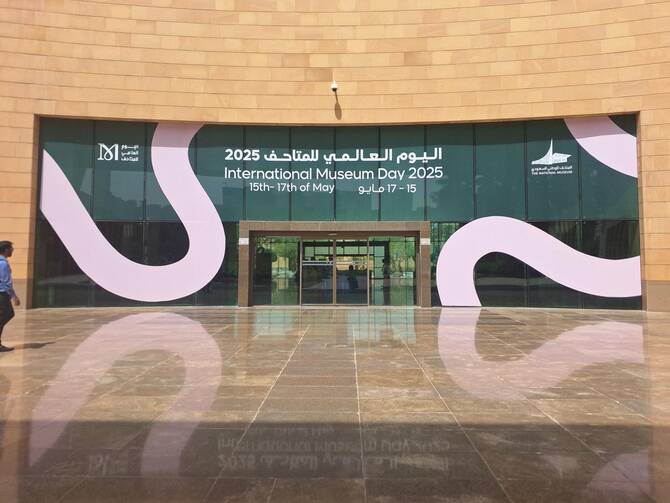

RIYADH: In recognition of International Museum Day, the National Museum of Riyadh hosted, a cultural event under the theme: “The future of museums in rapidly changing societies.”
The event, organized by the Saudi Ministry of Culture’s Museums Commission, ran from May 15 to 17 and highlighted the role of museums in social change, innovation and youth engagement.
The program included workshops, debates, performances and interactive activities, all aligned with the cultural goals of Vision 2030.
A special session took place with Princess Haifa bint Mansour bin Bandar, president of the Saudi National Committee of the International Council of Museums.
During this open discussion, Princess Haifa emphasized the importance of considering the specific situation of museums depending on their location and level of development. While some institutions demonstrate real dynamism, others are struggling to keep up.
“The efforts to modernize and renovate certain museums are clear. However, other museums face challenges in trying to catch up,” she said.
She stressed the need to revise the legislative framework and encourage private investment to support growth in the sector:
“Our museum system is currently being reviewed, and legislation is needed that encourages investment. Supporting the creation of museums in smaller buildings helps to facilitate funding.”
Regarding the frequent criticisms of so-called “traditional” museums, she offered a more nuanced view.
“There are traditional museums that are changing and remain popular, which proves they still serve the public. Sometimes, traditional museums fail to attract the public, even more so than innovative museums.”
She also referred to the significant transformations underway in the Kingdom, supported by a government body dedicated to the museum sector.
“We are in the midst of a radical transformation with a body entirely dedicated to museums, that supports positive change and offers opportunities for progress.”
As the longstanding head of the Saudi ICOM committee, Princess Haifa reminded the audience that Saudi Arabia is actively involved in international dialogue and decision-making:
“This year, we participated in the revision of a code of ethics established in previous years to recognize what constitutes a museum. We are currently translating certain museological references into Arabic.”
Human resources were another key focus of her speech. She identified several obstacles, especially language barriers and the lack of specialized training.
“The first challenge is the language factor. Frankly, we must acknowledge these issues, particularly the importance of the English language,
“We absolutely need specialized schools, partnerships with universities, training opportunities in our field, and specializations such as museum management and exhibition security.”
Despite the challenges, she expressed optimism, welcoming ongoing partnerships with Saudi universities — particularly in the Eastern Province — and the creation of new professional qualifications.
“This is a diploma that is about to become a master’s degree. Museums are not merely storage spaces; they were designed to be places of restoration and rehabilitation. Today, they have become vital centers offering programs for all segments of society.”
In the context of cultural and social transformation, the ongoing reflection on the role of museums in Saudi society reflects a clear ambition: to transform museums into vibrant, inclusive and forward-looking institutions.
Reporting to the Ministry of Culture, the Saudi Museums Commission is a public body whose mission is to develop, modernize, and supervise museums throughout the Kingdom, whether public or private.
It supports the creation of new museums, promotes heritage, encourages innovation — particularly in the digital space — and fosters cultural education.


