


MAKKAH: Along the warm coastal waters of Jazan, the annual Kunnah fishing season has arrived, marking a period eagerly anticipated by local fishermen for its exceptional marine bounty.
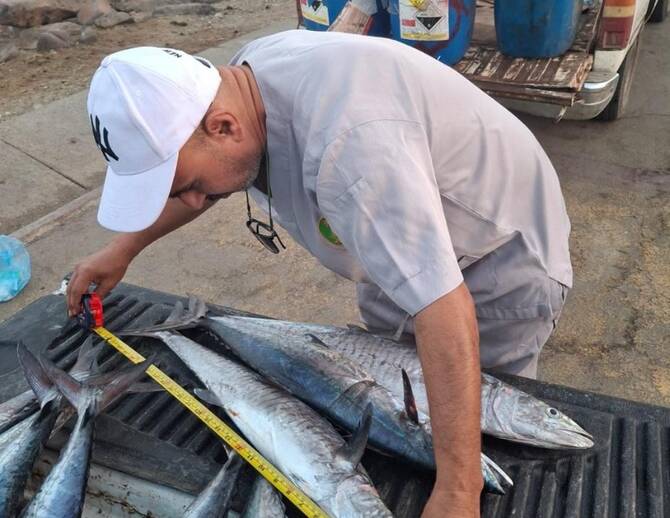
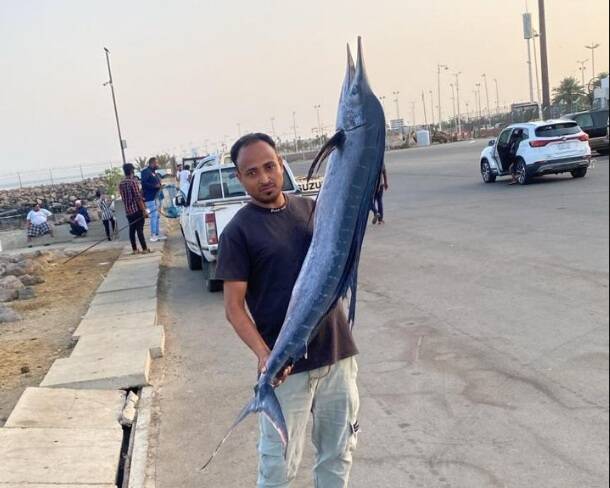
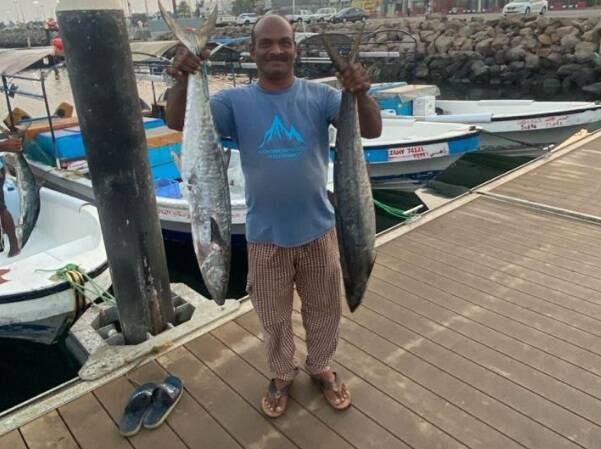
This renowned season, which runs from mid-April to mid-June, is celebrated for the abundance of kingfish, known locally as Al-Dhirak or Tyrak.
In an interview with Arab News, Muhannad bin Abdulaziz Khawaji, director-general of the Fisheries Research Center in Jazan, provided insight into this economically vital season.
“The Kunnah season highlights the valuable marine resources that make Jazan’s coastline so distinctive,” Khawaji explained.
“While officially beginning in late April, we typically see catch volumes increase significantly from mid-April, continuing through mid-June.”
The season is characterized by gradually rising temperatures and initial wind conditions.
“Fishing operations continue uninterrupted except when safety warnings are issued by the National Center for Environmental Compliance or Border Guards,” Khawaji noted.
Market dynamics shift dramatically during this period, with lower prices for kingfish because of the increased supply.
“April through July represents our most diverse and abundant fishing period of the entire year in Jazan,” he said.
Khawaji said anticipation builds in Jazan’s fishing community as the Kunnah season approaches.
The waterfront becomes particularly vibrant as amateur anglers and tourists, permitted to use hook-and-line methods with catch limits, join professional fishermen on the waters.
“The Kunnah season is not a time of scarcity — it is when the sea offers its greatest gifts,” said Mohammed Al-Qurbi, a fisherman from Jazan’s coastal waters.
Al-Qurbi said Kunnah season brings remarkable abundance. The waters teem with prized catches including green snappers, leopard coral groupers, and the coveted kingfish.
“Those who truly understand the rhythms of the sea recognize this as a time of providence, not pause,” Al-Qurbi said, emphasizing the importance of experience to garner the greatest benefit from the season.
Khawaji said the Ministry of Environment, Water and Agriculture responds to this seasonal surge by offering specialized permits, with an accompanying sailor license.
Preparations for the season begin well in advance, with authorities noting significant increases in applications for boat preparation, license renewals, and equipment upgrades.
The ministry facilitates these preparations through coordination with the Transport General Authority and Border Guards.
Khawaji pointed to conservation efforts, including a ban on fishing in spawning and other protected marine areas.
He said the ministry organizes periodic workshops to raise awareness and provides support including fully-equipped boats, loans, and direct financial support of up to SR50,000 ($13,330) annually for every active fisherman.
Ibrahim Qassim, another local fisherman, said: “Kunnah marks the annual migration of kingfish through the Red Sea. They travel our waters searching for feeding grounds and eventually spawning areas.”
He noted that these magnificent fish can reach impressive sizes during this migration, with specimens weighing between 10 to 15 kg regularly appearing in catches.
Fishermen employ specialized techniques during this season, including the Al-Majroor method — a weighted line featuring artificial plastic lures called Al-Azm or Al-Labiah specifically designed to attract kingfish.
Others use strategic lighting systems to draw the fish toward their vessels during nighttime expeditions, Qassim explained.
The economic impact on local communities is significant.
“Most fishermen concentrate their annual efforts during Kunnah season due to the exceptional productivity,” Khawaji explained.
“The abundance of catch, particularly kingfish, directly translates to increased income for fishing families.”
Khawaji said the Kunnah season coincides with spawning periods for some marine species including shrimp. There are also temporary bans on harvesting certain species such as Nagel and Taradi fish.
“These measures are essential for maintaining ecological balance and ensuring sustainable fish stocks for future generations,” Khawaji said.


