

That ‘tourist’ in the forest might be a Russian spy, Latvia warns

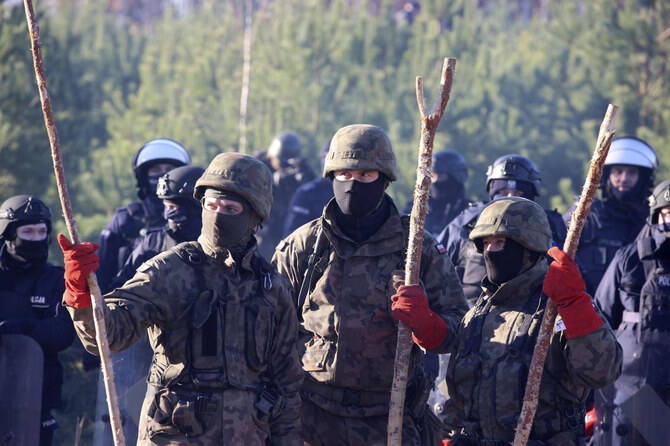
In its annual report, Latvia’s Defence Intelligence and Security Service, known by Latvian acronym MIDD, offered advice on how to identify possible reconnaissance and sabotage operatives. (AP/File)
Short Url
Updated 15 May 2025
Follow

That ‘tourist’ in the forest might be a Russian spy, Latvia warns

  • MIDD offered advice on how to identify possible reconnaissance and sabotage operatives
  • It also warned that Russian saboteurs might also attempt to incite unrest or assassinate “socially significant individuals”

WARSAW: They might look like lost tourists — unkempt and overloaded with gear — or hikers with military haircuts, survival gear and no clue how to behave in the woods.

But Latvia’s intelligence agency said Thursday that they might actually be Russian saboteurs and spies.

In its annual report, Latvia’s Defense Intelligence and Security Service, known by Latvian acronym MIDD, offered advice on how to identify possible reconnaissance and sabotage operatives.

It’s an increasingly relevant concern given regional tensions and a string of arson and other acts of sabotage, which Western governments blame on Russia — allegations that Moscow has repeatedly denied.

The list of telltale signs is striking: slovenly appearance, mismatched military or sportswear, and a knack for asking locals suspicious questions. According to the security service, such groups may linger near military or critical infrastructure sites, pose as humanitarian workers or stay in remote areas without showing any interest in nature.

Some may carry specialized medical kits, maps or radios — items better suited for clandestine operations than camping trips.

The Latvian guidance comes as countries across the region, including new NATO members Sweden and Finland, have been issuing booklets with advice on how to survive war or a natural disaster.

Nearby Poland is now preparing its guidelines, while Norway recently published a book with advice on how to survive for one week.

“We live in an increasingly turbulent world,” it says. “Even though in Norway most things generally function as they normally would, we must remain aware that extreme weather, pandemics, accidents, sabotage — and in the worst case acts of war — can impact us.”

MIDD, one of Latvia’s three security services, alongside the State Security Service and the Constitution Protection Bureau, warned that Russian saboteurs might also attempt to incite unrest or assassinate “socially significant individuals.”

Their activities might also be focused on “studying the position of the target country’s society and inciting unrest directed against the existing government.”

The agency cautioned that appearances can deceive.

“The Ukrainian experience shows that Russian special services are able to adapt,” the report says. Not all spies will fit the mold, and suspicions must be judged in context.

It also warns that if a sabotage group is spotted, leave the James Bond heroics to the professionals.

“If you do think you might have spotted a sabotage group on Latvian soil, MIDD does not recommend tackling them yourself,” it said. “Instead report your suspicions to the State Police, special services, or the nearest armed forces unit.”


‘Cake not hate’ campaign spreads love amid far-right rhetoric in UK

Updated 6 sec ago
Follow

‘Cake not hate’ campaign spreads love amid far-right rhetoric in UK

  • Joshua Harris, 12, who is autistic, hands out cakes at mosques
  • His father, Dan, tells Arab News they are welcomed by Muslims

LONDON: A 12-year-old boy, who is autistic and non-speaking, is visiting mosques across the country and handing out cakes to promote love and solidarity amid the rise of far-right rhetoric in the UK.

Joshua Harris, or “Joshie-Man” as he is known to his social media fans, has handed out hundreds of his baked treats to congregations in London, Leicester, Luton, Birmingham, and his home city of Peterborough.

The “Cake not hate” campaign came to life after an Islamophobic attack on a mosque in Peterborough in October this year.

The perpetrator, Alexander Hooper, 57, entered Masjid Darassalaam and abused worshipers preparing for the Fajr prayer, and physically assaulted a female police officer who arrived on the scene. Hooper later pleaded guilty to aggravated harassment and assaulting an emergency worker.

Harris’ father, Dan, is the founder of global charity Neurodiversity in Business, and told Arab News that soon after the attack, they both visited the mosque with cakes that Joshie-Man had baked and distributed them to worshipers.

“We gave them to the imam and said we want you to know that this guy (Hooper) doesn’t represent Peterborough nor the great British public,” Harris said.

“So they really warmly received that and then they gave us contact details for the other five or six mosques in Peterborough.”

Harris said he received backlash and threats from far-right individuals after posting videos of Joshie-Man handing out his cakes. And this prompted him to think of how their racism is affecting Muslims.  

“If me as a white middle-class guy in a nice part of the world could get this kind of hate from the far right, how bad must it be for a Muslim, a female Muslim, an immigrant Muslim, or a Muslim who doesn’t have English as their first language?

“They must be incredibly intimidated,” he said.

Harris said the Muslims he met told him that they do not go out at night or let their children walk home from school alone for fear of being attacked. They are scared of abuse if they wear traditional dress or speak a foreign language.

“This is not the Britain I want to bequeath to my child. I don’t want him growing up in a Britain which is really divided and I’ve always been proud of Britain being a really tolerant place which is very respectful,” he said.

Harris and his son also visited a mosque in Luton, the town where far-right activist and anti-Islam campaigner Tommy Robinson grew up.

He said it was “really profound” to meet Muslim children who said they had been attacked and shouted at by racists and Islamophobes.

Harris and his son are due to embark on a northern tour later this month to visit 12 mosques in three days. On Christmas Day, they will help cook meals for people who are lonely or need help at a Peterborough mosque, which will open its doors as a part of an outreach event.

Harris said the Muslims he met have “conducted themselves with a lot of humility and kindness. That message has been lost because the far right are now saying that Islam is something to be feared.”

He added that Joshie-Man loves baking and distributing his cakes: “You only have to look at the video to see how he’s jumping with joy when he goes into these places.”

Harris is no stranger to far-right hate and had previously received abuse after speaking out against groups painting St. George’s cross and Union Jack flags on zebra crossings and roundabouts across the UK over the summer after anti-migrant protests.

“I put a post out on social media around how the far right in the UK need to stop painting over zebra crossings.

“Because there are a number of people in our community, the visually impaired, learning disabled, non-speaking autistic or even the colorblind, who find it harder to use zebra crossings if they have the England flags painted on them.

“Joshie certainly did,” Harris said.

“The post was innocuous but the far right went a bit crazy on me and then started targeting me, calling Joshie a retard, talking about eugenics, and saying that the government is wasting money on his education.”

Harris said the comments were “quite hurtful” and he found it “absolutely abhorrent that Reform UK are targeting disabled children.”

“They are some of the most vulnerable in our society. The far right are going after them and they are whipping up a fury in people who think the disabled kids are here for the perks.

“Families that I’ve met and who live in councils controlled by Reform UK are telling me that since they’ve come to power, their interactions have been all around how do we remove your legally enshrined rights.”

Supporting children with neurodiversity is a cause close to Harris’ heart.

After seeing how using a computer with augmentative and alternative communication software transformed the way his son was able to communicate, Harris has led a campaign that raises money to provide these aids to families who cannot afford them.

He has been to several countries, including Mexico, the US, and Brazil, giving away computers to children who are autistic and non-speaking. The next stop for father and son is Dubai, where they will be giving away 100 computers in January.

“We accept the fact that this is a drop in the ocean given how many kids need them, but if we create a bit of noise and get this on the radar that that’s a big win that people can continue with locally,” he said.

“The Middle East is such an important part of our world and over the next 50 to 100 years, it’s going to be absolutely key. Some of the countries, governments, and royal families have actually got a really forward-looking and innovative outlook on this topic.

“So I felt like this is our first chance to put a footprint in the Middle East and God willing, we will achieve some success in new relationships and go to other countries later on.”