Swiss state secretary explores cooperation on ‘science mission’ to Saudi Arabia

1 / 8
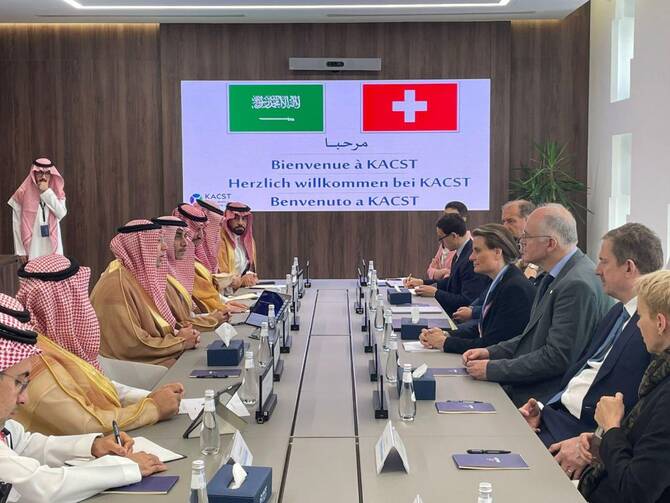
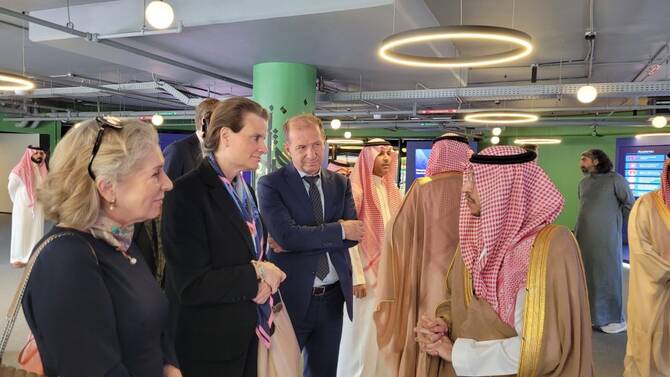
State Secretary for Education, Research and Innovation Martina Hirayama led the Swiss delegation in Saudi Arabia. (Supplied)
2 / 8
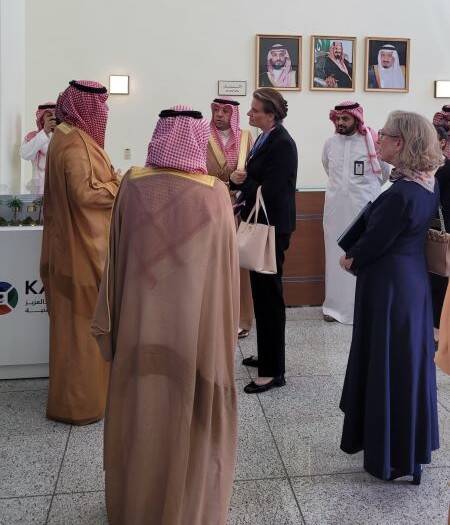
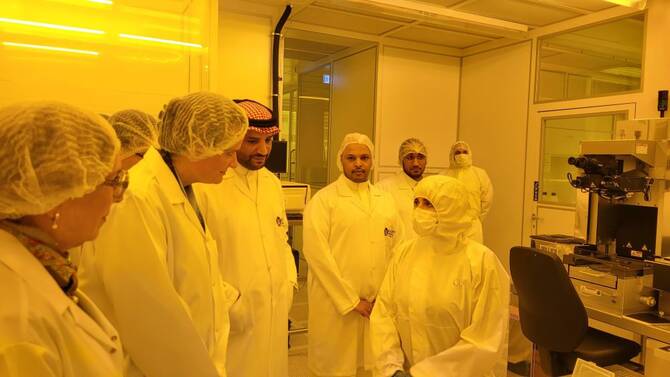
State Secretary for Education, Research and Innovation Martina Hirayama led the Swiss delegation in Saudi Arabia. (Supplied)
3 / 8
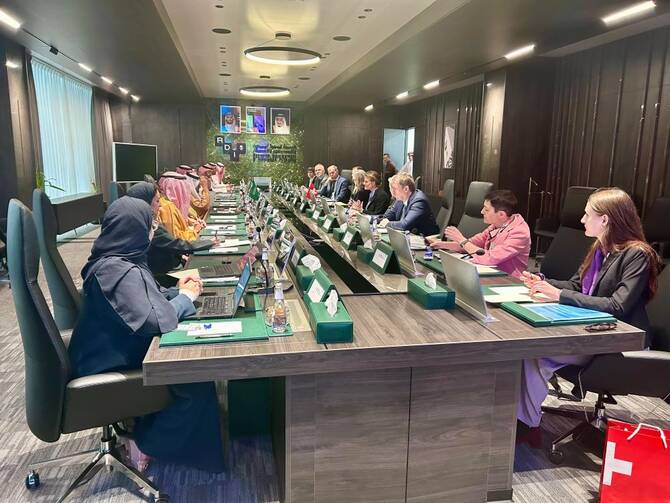
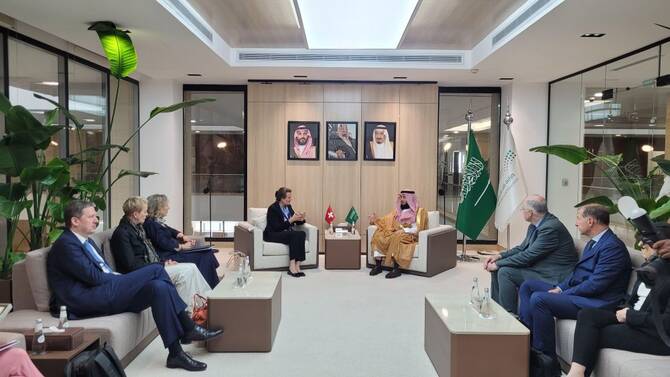
State Secretary for Education, Research and Innovation Martina Hirayama led the Swiss delegation in Saudi Arabia. (Supplied)
4 / 8
State Secretary for Education, Research and Innovation Martina Hirayama led the Swiss delegation in Saudi Arabia. (Supplied)
5 / 8
State Secretary for Education, Research and Innovation Martina Hirayama led the Swiss delegation in Saudi Arabia. (Supplied)
6 / 8
State Secretary for Education, Research and Innovation Martina Hirayama led the Swiss delegation in Saudi Arabia. (Supplied)
7 / 8
State Secretary for Education, Research and Innovation Martina Hirayama led the Swiss delegation in Saudi Arabia. (Supplied)
8 / 8
State Secretary for Education, Research and Innovation Martina Hirayama led the Swiss delegation in Saudi Arabia. (Supplied)
Short Url
Updated 15 May 2025
Follow

Swiss state secretary explores cooperation on ‘science mission’ to Saudi Arabia

  • Martina Hirayama: ‘The mission to Saudi Arabia aims to explore potential areas of cooperation between Swiss and Saudi researchers’
  • Hirayama: ‘The Swiss government supports Swiss-Saudi joint research projects through its Leading House for the MENA region, the University of Applied Sciences of Western Switzerland’

RIYADH: Swiss State Secretary for Education, Research and Innovation Martina Hirayama was in Saudi Arabia leading a science mission to strengthen partnerships and explore opportunities for further collaboration in innovation.

The Swiss delegation met Murhaf bin Mohammed Al-Madani, assistant minister of education for development and transformation; Pierre Magistretti, vice president for research at KAUST; Dr. Munir bin Mahmoud El-Desouki, KACST president; Dr. Mohammed Al-Otaibi, general supervisor at the Saudi Research Development and Innovation Authority; Axel Pierru, vice president of knowledge and analysis, KAPSARC; and a team from the King Faisal Specialist Hospital and Research Center, according to the Swiss Embassy in Riyadh.

In an interview with Arab News, Hirayama said: “The Gulf states, including Saudi Arabia, are investing heavily in artificial intelligence, nanotechnology, biotechnology, digitalization, fintech and renewable energies — areas in which Switzerland is also conducting cutting-edge research.

“The mission to Saudi Arabia aims to explore potential areas of cooperation between Swiss and Saudi researchers,” she added.

Hirayama added that in Switzerland, a bottom-up approach, autonomy of actors, a focus on excellence and competition, and international openness are basic principles of research and innovation policy. The federal government sees itself as an enabler, she said. This also applies to international cooperation, where it falls on actors to use the instruments available to them to set up transnational research projects and networks.

Commenting on existing instruments for international cooperation between both scientific communities, Hirayama said: “The Swiss government supports Swiss-Saudi joint research projects through its Leading House for the Middle East and North Africa region, the University of Applied Sciences of Western Switzerland.

“Under the Leading House model, the Swiss government mandates selected Swiss higher education institutions to establish strategic cooperation instruments that provide seed funding and support innovative pilot projects with regions with a significant scientific and technological potential,” she added.

Between 2019 and 2024, the Swiss National Science Foundation provided funding for projects led by Swiss researchers that included collaboration with Saudi Arabia, she said.

Switzerland’s education, research and innovation landscape is internationally known for its excellence and unique characteristics, the state secretary added. The system offers two strong educational pathways: Vocational education and training, and academic studies. Two-thirds of young people in Switzerland choose vocational education and training as their next step after completing compulsory education.

There are about 250 VET programs to choose from, enabling people to enter the labor market as skilled workers with a range of career prospects. VET also makes a significant contribution to Switzerland’s innovation capacity. The close link to the labor market creates a workforce that is highly skilled and adaptable to the ever-changing demands of the global economy.

On the other hand, Switzerland’s universities offer a broad range of study programs and research activities. Swiss institutions are often at the forefront of global research and innovation. They offer world-class infrastructure and enable cutting-edge research.

The importance that Switzerland attaches to research and innovation is reflected in an investment of more than 3 percent of its gross domestic product in R&D, amounting to about 25 billion Swiss francs ($29.8 billion) annually.

The high-level scientific delegation led by Hirayama included Torsten Schwede, president of the National Research Council, Laure Ognois, head of international cooperation at the Swiss National Science Foundation; Dr. Virginia Richter, rector of the University of Bern; and Yasmine Chatila Zwahlen, Swiss ambassador to Saudi Arabia.


‘Cake not hate’ campaign becomes ‘Dates not hate’ in Madinah

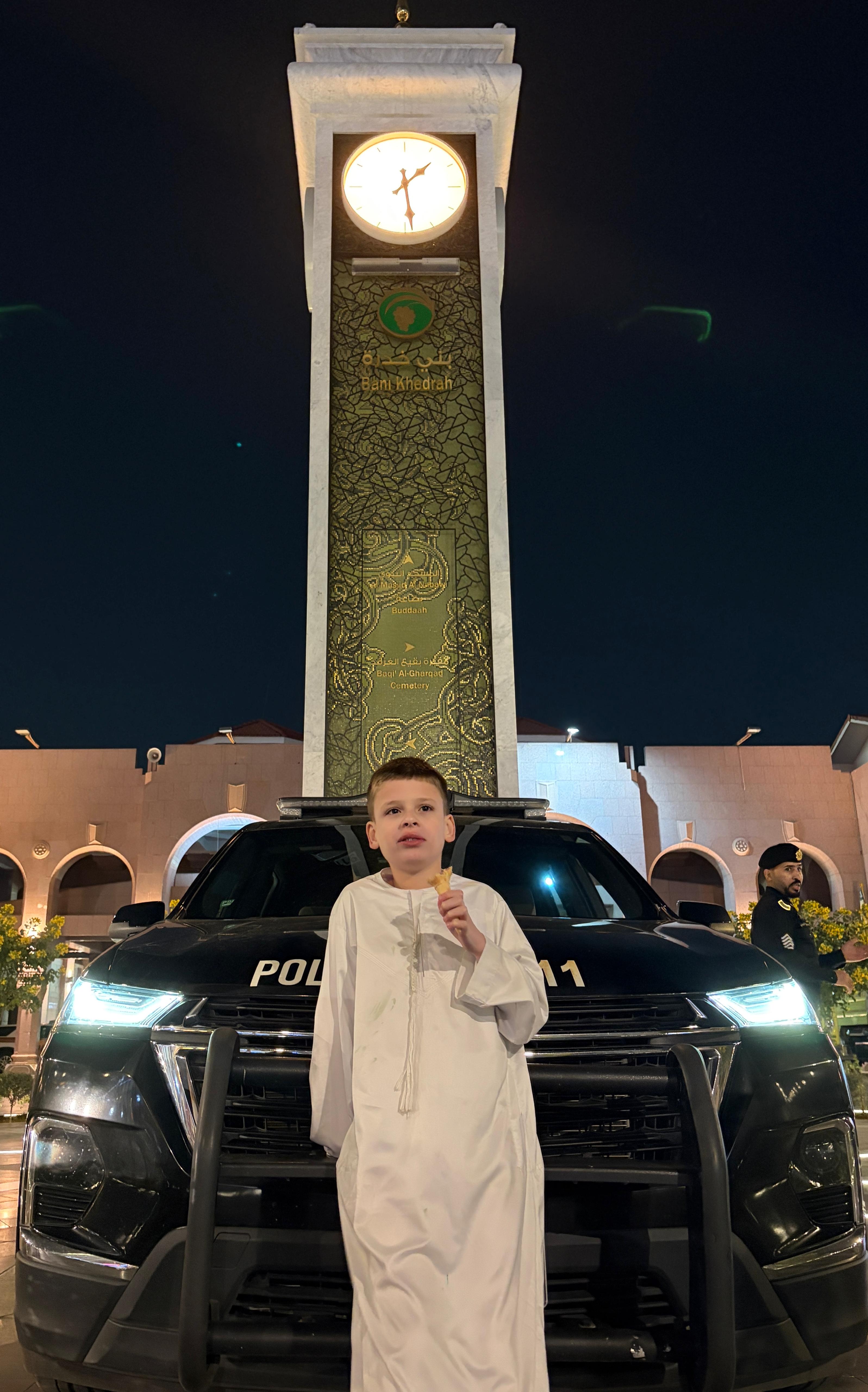
“The Joshie-Man” and his father Dan Harris in the courtyard of the Prophet’s Mosque in Madinah. (Supplied)
Updated 02 February 2026
Follow

‘Cake not hate’ campaign becomes ‘Dates not hate’ in Madinah

  • Dan said he was very impressed by Saudi hospitality and that his family was warmly welcomed
  • He said being in Madinah exposed him to the true diversity of Islam

LONDON: A British autistic and non-verbal boy who has been visiting UK mosques and distributing cakes to promote solidarity amid an increase in far-right support in the country has taken his message of love to Madinah.

Joshua Harris, or “The Joshie-Man” as the 12-year-old is known to his social media fans, has handed out hundreds of his baked goods to worshipers at mosques in major British cities over the last few months.

The “Cake not hate” campaign came about after an Islamophobic attack on a mosque in his home city of Peterborough in October 2025.

Harris and his father visited Masjid Darassalaam, the mosque that was targeted, with cakes that the boy had baked and distributed them to the congregation soon after the attack. Since then, Harris has visited dozens of mosques in the UK.

On a recent trip to the Middle East, he and his father visited Madinah. In a local twist that pays tribute to the holy city’s famous date varieties including ajwa and ambar, Harris handed out dates to people in the courtyard of the Prophet’s Mosque. The “Cake not hate” campaign became “Dates not hate” for Saudi Arabia.

“He was greeted really, really warmly. There were some really touching moments where people were kissing his hands and his head. It was really lovely,” his father, Dan Harris, said.

Dan, the founder of global charity Neurodiversity in Business, said being in Madinah exposed him to the true diversity of Islam.

“We met people from all around the world. It was amazing. It’s like the United Nations there, you get people from different countries and it just goes to show you that the Muslim community, or the Ummah more generally, is not a homogeneous group,” he said.

“We saw people from Tajikistan and Uzbekistan and it was really interesting for us.”

Dan said his visit to Madinah, considered the second holiest city in Islam after Makkah for Muslims, was “profound and life-changing.”

He added: “I would say it’s my favourite city in the world due to the peace and tranquillity I felt there.”

Dan added that he was very impressed by Saudi hospitality: “Everywhere we went, people were taking down my number and insisting that we come for dinner, insisting they pick us up from the location. They were extremely attentive to Joshie as well, making sure his needs were met. We felt a great sense of welcome, something Saudi Arabia is known for.”