

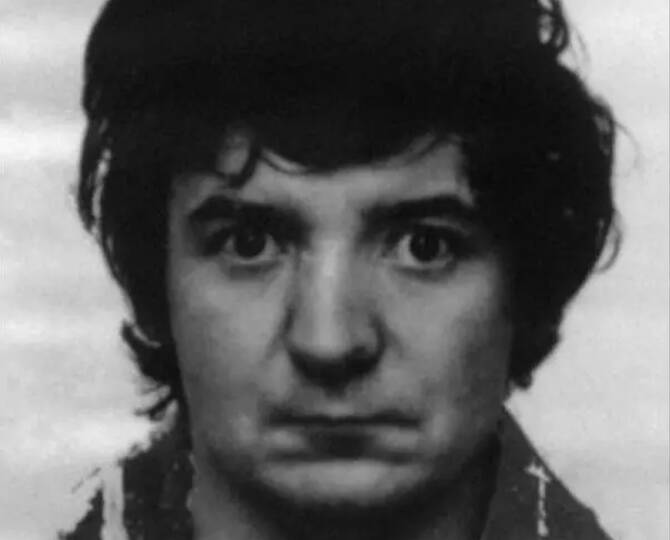
Man in jail for nearly four decades for murder acquitted by London court

Peter Sullivan who has spent nearly 40 years in jail for murder had his conviction overturned by a London court on Tuesday after advancements in DNA testing techniques cast doubt on his guilt. (X/@Positively4thS)
Short Url
Updated 13 May 2025
Follow

Man in jail for nearly four decades for murder acquitted by London court

  • Peter Sullivan was sentenced to life in 1987 for the murder of 21-year-old Diane Sindall
  • “Our client Peter Sullivan is the longest-serving victim of a miscarriage of justice in the UK,” said his lawyer

LONDON: A man who has spent nearly 40 years in jail for murder had his conviction overturned by a London court on Tuesday after advancements in DNA testing techniques cast doubt on his guilt.

Peter Sullivan, believed to be the victim of the longest miscarriage of justice in Britain, was sentenced to life in 1987 for the murder of 21-year-old Diane Sindall, who was found dead after leaving her place of work in the northwest England town of Bebington, close to Liverpool, the previous year.

He applied to the Criminal Cases Review Commission — an independent body that investigates potential miscarriages of justice — in 2021, raising concerns about his police interviews, bite-mark evidence presented in his trial, and what was said to be the murder weapon, the commission said in a statement.

The commission then obtained DNA information from samples taken at the time of the offense and found that the profile did not match that of Sullivan. His case was then sent to London’s Court of Appeal, which quashed the conviction on Tuesday based on the new evidence.

“This is an unprecedented and historic moment. Our client Peter Sullivan is the longest-serving victim of a miscarriage of justice in the UK,” his lawyer told reporters outside the court.

Reading a message from Sullivan, the lawyer said: “What happened to me was very wrong, but it does not detract or minimize that all of this happened off the back of a heinous and most terrible loss of life.”

Sullivan had applied to the CCRC questioning DNA evidence in 2008, but forensic experts advised at the time that any further testing would be very unlikely to produce a DNA profile.

The techniques used in the testing that led to his case being referred were not available at the time of his first application, the CCRC said.

Merseyside Police, which reopened the investigation in 2023, said there was no match for the DNA identified on the national DNA database, adding that they were committed to doing “everything within our power” to find to whom it belonged.

“The truth shall set you free ... As we advance toward resolving the wrongs done to me, I am not angry, I am not bitter,” Sullivan said in his message.


Archbishop of York says he was ‘intimidated’ by Israeli militias during West Bank visit

Archbishop of York Stephen Cottrell poses for a photograph with York Minster’s Advent Wreath.
Updated 26 December 2025
Follow

Archbishop of York says he was ‘intimidated’ by Israeli militias during West Bank visit

  • “We were … intimidated by Israeli militias who told us that we couldn’t visit Palestinian families in the occupied West Bank,” the archbishop said

LONDON: The Archbishop of York has revealed that he felt “intimidated” by Israeli militias during a visit to the Holy Land this year.

“We were stopped at various checkpoints and intimidated by Israeli militias who told us that we couldn’t visit Palestinian families in the occupied West Bank,” the Rev. Stephen Cottrell told his Christmas Day congregation at York Minster.

The archbishop added: “We have become — and really, I can think of no other way of putting it — we have become fearful of each other, and especially fearful of strangers, or just people who aren’t quite like us.

“We don’t seem to be able to see ourselves in them, and therefore we spurn our common humanity.”

He recounted how YMCA charity representatives in Bethlehem, who work with persecuted Palestinian communities in the West Bank, gave him an olive wood Nativity scene carving.

The carving depicted a “large gray wall” blocking the three kings from getting to the stable to see Mary, Joseph and Jesus, he said.

He said it was sobering for him to see the wall in real life during his visit.

He continued: “But this Christmas morning here in York, as well as thinking about the walls that divide and separate the Holy Land, I’m also thinking of all the walls and barriers we erect across the whole of the world and, perhaps most alarming, the ones we build around ourselves, the ones we construct in our hearts and minds, and of how our fearful shielding of ourselves from strangers — the strangers we encounter in the homeless on our streets, refugees seeking asylum, young people starved of opportunity and growing up without hope for the future — means that we are in danger of failing to welcome Christ when he comes.”