


ISLAMABAD: Islamabad said on Tuesday it was committed to a recent ceasefire deal with New Delhi and taking necessary steps toward de-escalation, after Indian Prime Minister Narendra Modi warned he would target “terrorist hideouts” across the border if there were fresh attacks on India.
Modi, who also said India would not be deterred by what he called Islamabad’s “nuclear blackmail,” was speaking two days after the nuclear-armed neighbors agreed to a ceasefire, reached after four days of intense exchanges of fire as the old enemies targeted each other’s military installations with missiles and drones, killing dozens of civilians.
The military confrontation began on Wednesday, when India said it launched strikes on nine “terrorist infrastructure” sites in Pakistan and Azad Kashmir, with Pakistan retaliating by downing five Indian fighter jets. The escalation was triggered by tensions over an attack on Hindu tourists by militants in Indian-administered Kashmir last month that New Delhi has said Pakistan was involved in. Islamabad has denied any links to the attack and called for a neutral investigation.
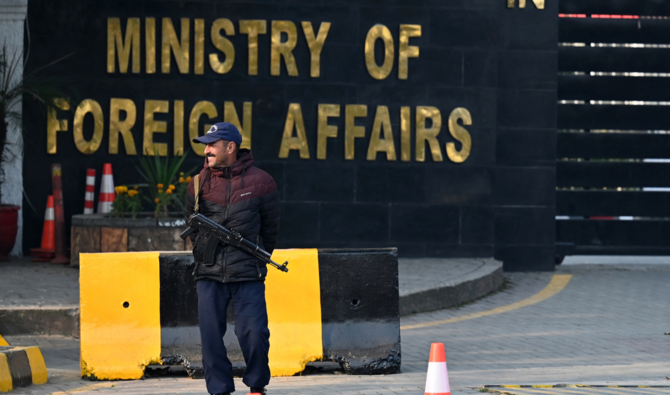
In a statement released by the foreign office, Pakistan rejected the “provocative and inflammatory assertions” made by Modi, saying they signaled a “dangerous escalation rooted in misinformation, political opportunism, and a blatant disregard for international law.”
“This statement also reflects a propensity to fabricate misleading narratives to justify aggression,” the foreign office said.
“Pakistan remains committed to the recent ceasefire understanding and taking necessary steps toward de-escalation and regional stability.”
The FO said the ceasefire was achieved through the mediation of several friendly countries and the portrayal of Pakistan as seeking a ceasefire in “despair and frustration is yet another blatant lie.”
On Tuesday morning, the Pakistan army put out figures for deaths in the latest confrontation, saying 11 armed forces personnel and 41 civilians, including women and children, had been killed.
“Indian actions set a dangerous precedent for aggression, dragging the entire region to the brink of disaster. This reflects the mindset of a revisionist actor that seeks to upend strategic stability in South Asia without regard for consequences,” the foreign office added.
“Moreover, India is justifying the cold-blooded murder of innocent civilians, mostly women and children, as well as its highly irresponsible brinkmanship as the new normal for the region.
“Make no mistake, we will closely monitor India’s actions and behavior in this regard in the coming days. We also urge the international community to do the same.”
The statement ended by saying any future aggression would be met with “full resolve” and called on India to prioritize regional stability and the well-being of its citizens “over narrow, politically motivated jingoism.”
Bitter rivals India and Pakistan have fought two of their three wars over Kashmir, a region split between them, since gaining independence from British colonial rule in 1947. Both nations are nuclear-armed, raising global alarm every time an armed conflict breaks out between them.
“If there is a terrorist attack on India, a fitting reply will be given... on our terms,” Modi had said in Monday’s speech in Hindi in a televised address. “In the coming days, we will measure every step of Pakistan... what kind of attitude Pakistan will adopt.”
“India will strike precisely and decisively at the terrorist hideouts developing under the cover of nuclear blackmail,” he said, and listed New Delhi’s conditions for holding talks with Islamabad and lifting curbs imposed after the Kashmir attack.
“India’s position is clear: terror and talks cannot go together, terror and trade cannot go together and water and blood cannot flow together,” he said, referring to a water sharing pact between the two countries New Delhi unilaterally suspended after the April 22 militant attack.
- With inputs from Reuters


