

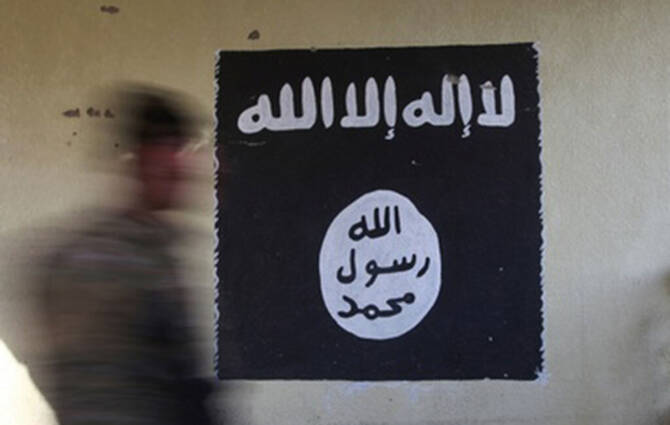
Hundreds of ex-Daesh fighters face no prosecution in UK

More than 400 former Daesh fighters have returned to Britain without facing prosecution, a group of MPs and peers has warned. (File/AFP)
Short Url
Updated 13 May 2025
Follow

Hundreds of ex-Daesh fighters face no prosecution in UK

  • Parliamentary committee calls for urgent action to ensure they face justice
  • ‘To date, no Daesh fighters have been prosecuted for international crimes in the UK and we find this unacceptable’

LONDON: More than 400 former Daesh fighters have returned to Britain without facing prosecution, a group of MPs and peers has warned, calling for legal changes to ensure those guilty of war crimes and genocide face justice in the UK.

Hundreds of British nationals over the past decade traveled to join Daesh, which once held vast swathes of territory across Syria and Iraq.

The terror group committed campaigns of murder and rape against minority groups such as the Yazidis.

Yet of the more than 400 former members of the group who have since returned to the UK, none have been prosecuted for their crimes, the Daily Telegraph reported on Tuesday.

The parliamentary joint committee on human rights raised the alarm over the lack of justice and called on the government to take urgent measures to address the issue.

Former Daesh fighters must face justice in the UK rather than in Syria and Iraq, the committee said.

Government ministers have previously argued that Daesh members should be investigated and prosecuted under local laws in Middle Eastern countries. But the committee said this is unlikely to happen in the countries where Daesh held territory.

“Where the UK has jurisdiction over international crimes, the UK should seek to investigate and prosecute such crimes,” a report by the committee said.

However, British courts face a “key barrier” when trying to deal with cases of war crimes and genocide because the accused must be UK nationals, residents or “subject to service personnel laws.”

This can be resolved by amending the Crime and Policing Bill now making its way through Parliament, the committee said.

Lord Alton, the committee’s chairman, said: “This is not something the UK can simply wash its hands of because it happened overseas. We know that British nationals committed the most horrendous crimes in Iraq and Syria under the Daesh regime and we have a duty to see them brought to justice.

“To date, no Daesh fighters have been successfully prosecuted for international crimes in the UK and we find this unacceptable.”

As well as prosecuting former Daesh fighters, the committee called for greater government transparency over the deprivation of citizenship.

The UK on a number of occasions has stripped British nationals of their citizenship because of ties to Daesh.

The case of Shamima Begum, who traveled to join Daesh aged 15, is the most prominent example.

More must also be done to repatriate children from camps in northeast Syria, the committee said.

Lord Alton highlighted the “deplorable” conditions in the camps, where the families of former Daesh fighters are detained.

“It is in the UK’s interest to ensure they do not become a new generation of the radicalized and they must be brought home,” he added.


Poland withdraws from treaty banning antipersonnel mines and will use them to defend against Russia

Updated 4 sec ago
Follow

Poland withdraws from treaty banning antipersonnel mines and will use them to defend against Russia

  • 1997 Anti-Personnel Mine Ban Treaty prohibits signatories from keeping or using antipersonnel mines
  • Poland will begin domestic production of both antipersonnel and anti-tank land mines
WARSAW: Poland will use antipersonnel as well as anti-tank land mines to defend its eastern border against the growing threat from Russia, Poland’s deputy defense minister said on Friday as the country officially left an international convention banning the use of the controversial weapons.
The 1997 Anti-Personnel Mine Ban Treaty, also known as the Ottawa Convention, prohibits signatories from keeping or using antipersonnel mines, which can last for years and are known for having caused large-scale suffering among civilians in former conflict zones in countries including Cambodia, Angola and Bosnia and Herzegovina.
Poland, which ratified the document in 2012 and completed the destruction of its domestic anti-personnel mine stockpile in 2016, withdrew from the treaty on Friday and says it plans to renew manufacturing weapons.
“These mines are one of the most important elements of the defense structure we are constructing on the eastern flank of NATO, in Poland, on the border with Russia in the north and with Belarus in the east,” Paweł Zalewski, Poland’s deputy defense minister, said.
He said Poland needed to defend itself against Russia, a country which “has very aggressive intentions vis a vis its neighbors” and which itself never committed to the international land mine ban treaty.
Since Russia’s full-scale invasion of Ukraine, nearby countries have been reassessing their participation in the international treaty. Last year, Warsaw joined Finland, the three Baltic states of Estonia, Latvia and Lithuania, and Ukraine to announce it would leave the treaty.
Russia is one of nearly three dozen countries that have never acceded to the Ottawa treaty, alongside the United States.
Poland vows to make its own mines
Zalewski said that Poland will begin domestic production of both antipersonnel and anti-tank land mines, adding that the government would cooperate with Polish producers. He said Poland was aiming for self-sufficiency.
Land mines are an explosive weapon that’s placed on or just under the ground and blows up when a person or a vehicle crosses over them. Anti-tank mines, which are designed not to be triggered by a person’s weight, are not forbidden by the Ottawa Convention.
Speaking on Thursday after attending a demonstration of Bluszcz, an unmanned vehicle designed to distribute anti-tank mines produced by Polish company Belma SA and a military research institute, Polish Prime Minister Donald Tusk said Poland would “soon” have the ability to mine its eastern borders within 48 hours in case of a threat.
Given the length of the country’s eastern borders, he said, “a lot” of land mines will be needed.
Poland says it will only use mines in case of ‘realistic threat of Russian aggression’
Poland plans to prepare mine stockpiles as part of the so-called Eastern Shield, a system of enhanced fortifications Poland has been building on its borders with Belarus and Russia since 2024, Zalewski said.
But he said that Poland would only deploy the mines along its borders “when there is a realistic threat of Russian aggression.”
“We very much respect our territory and we don’t want to exclude it from day to day use for the Polish citizens,” Zalewski said.
Human rights groups have condemned moves to withdraw from the Ottawa Convention, arguing that anti-personnel mines are too dangerous to civilians.
But Zalewski responded that the country is striking a balance by keeping the mines in reserve unless the country faces attack.
“We are not an aggressive country,” he said, “but we have to use all means to deter Russia.”