

Saudi Arabia, US explore ways to build next generation of AI

1 / 2
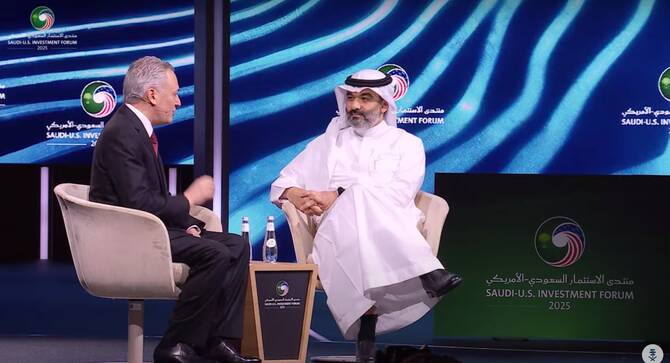
Saudi Minister of Information and Communications Technology Abdullah Alswaha and David Sacks, a Silicon Valley veteran (Screengrab)
2 / 2
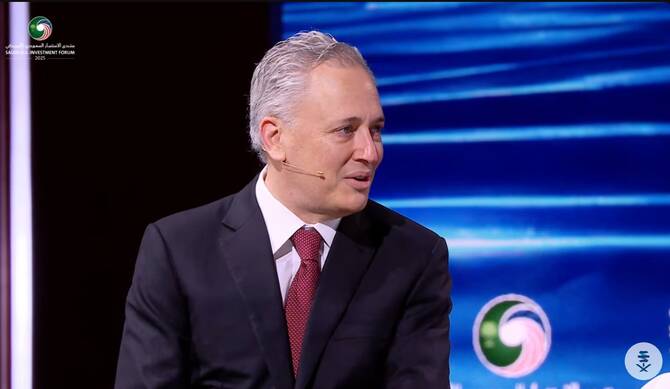
Sacks said he was impressed, during his tour of some technology companies, that founders and entrepreneurs in Saudi Arabia. (Screengrab)
Short Url
Updated 13 May 2025
Follow

Saudi Arabia, US explore ways to build next generation of AI

  • Partnerships key, says David Sacks, Silicon Valley veteran
  • Google’s Ruth Porat outlines her firm’s work in Kingdom

RIYADH: Saudi Arabia and US officials discussed ways to further collaborate on artificial intelligence at the Saudi-US Investment Forum here on Tuesday.

The discussions took place during two sessions titled “Pioneering Digital Futures: Joint Leadership in AI and Emerging Technologies,” and “Digital Foundations: Building the Next Generation of AI and Infrastructure.”

In the first session, the speakers were Saudi Minister of Information and Communications Technology Abdullah Alswaha and David Sacks, a Silicon Valley veteran who is helping the administration of President Donald Trump develop the crypto industry.

Sacks said he was impressed, during his tour of some technology companies, that founders and entrepreneurs in Saudi Arabia “are really on the cutting edge of what’s happening with AI.”

“The thing that that I’ve learned in Silicon Valley for the past 25 years is that every successful company in Silicon Valley gets to be that way by creating an ecosystem, and the biggest, the most powerful companies … are the ones that create the biggest ecosystem.”

“In fact, they do that by creating a standard. They want everyone to build on top of them. They create app stores, things like that. In fact, they’re able to build these ecosystems without even having any lawyers involved.

“There’s no need for a contract. You just publish an API (Application Programming Interface) and people will build. And I think in a similar way, the United States needs to encourage the world to build on our text that.

He spoke about how Trump challenged them to be at the forefront of the AI race. “He said, we have to win the AI race. The United States has to win the AI race,” Sacks said.

“And the answer is that we have to build the biggest partner ecosystem. We need our friends like the Kingdom of Saudi Arabia and other strategic partners and allies to want to build on our cap.”

Sacks also criticized what has become known as former US President Joe Biden’s diffusion rule.

This restricted access to mainstream computing applications and set caps on the number of advanced chips that could be exported to most countries.

“Over the past few years, that’s been the opposite of the approach in Washington,” said Sacks.

“The Trump administration just announced that (it) would be rescinding what’s known as the Biden diffusion rule, which was a rule that came out in January.”

Using iPhones as an example, Sacks said that if Trump had created a rule for these products, the technology backing it would not have spread throughout the world.

He said that the diffusion of iPhones was “a very good thing” for the US.

“I think in a similar way, we want our technology to diffuse or to spread. We want people to use it. We want to become the standard.

“And I think that in Washington, that mentality is, I think that sorely lacked over the past few years, but we’re gonna bring it back.”

In the later session CEOs and tech innovators discussed growth in this sector globally, and developments in the Kingdom.

Ruth Porat, president and chief investment officer of Alphabet and Google, outlined her company’s work in Saudi Arabia.

“Google is now building data centers, bringing graphic processing units, tensor processing units, and developing the most advanced version of our AI software Gemini which is now available in 16 Arabic dialects,” said Porat.


National program identifies 165 native plants for afforestation efforts in Asir

Updated 29 December 2025
Follow

National program identifies 165 native plants for afforestation efforts in Asir

  • The survey is part of broader plans focused on restoring degraded land, using native vegetation 

JEDDAH: Saudi Arabia’s National Afforestation Program has identified more than 165 species of native plants suitable for afforestation in the Asir region, highlighting the ecological diversity of one of the Kingdom’s most environmentally varied areas, the Saudi Press Agency reported.

The findings form part of broader national efforts to expand vegetation cover, address land degradation, and support sustainability goals linked to the Saudi Green Initiative and Vision 2030.

According to the program, the identified species are distributed across a wide range of natural environments in Asir, including mountainous terrain, highlands, slopes, valleys, plains, rocky landscapes, and coastal areas stretching from the Red Sea to Tihama.

The species belong to numerous plant families, including Fabaceae, Anacardiaceae, Burseraceae, Capparaceae, Ebenaceae, Euphorbiaceae, Malvaceae, Myrtaceae, Oleaceae, and Primulaceae, among others.

Plants suitable for afforestation range from large and small trees to perennial and annual shrubs, herbs, succulents, bulbs, and climbing plants. 

Among the most notable species identified are the grey mangrove, mastic tree, mooring or ben tree, juniper, sycamore fig, wild olive, henna, wild jasmine, hawthorn, and arak.

The Saudi Arabian Botanical Society described the announcement as an important step in protecting plant diversity and strengthening the ecosystem conservation in the Kingdom. 

Munirah bin Hamad Al-Hazani, founder and president of the society, said that prioritizing native species is central to sustainable afforestation.

“Focusing on the cultivation of native plants adapted to diverse environments forms the cornerstone of sustainable afforestation projects, as it plays a pivotal role in enhancing vegetation cover, combating land degradation, and conserving natural and financial resources,” she told Arab News.

Al-Hazani added that long-term success depends on cooperation between government bodies and the nonprofit sector, alongside community involvement and environmental awareness programs.

The National Afforestation Program has increasingly emphasized community participation, working with government agencies, private companies, and nonprofit organizations to support planting initiatives and environmental education. Its approach includes promoting volunteerism and discouraging harmful environmental practices, while focusing on the use of native plants adapted to local conditions.

Parallel efforts are underway in other regions of the Kingdom to support vegetation restoration through research and infrastructure development. In Jouf, often referred to as the Kingdom’s food basket, the King Salman bin Abdulaziz Royal Reserve Development Authority has established a Central Nursery and a Wild Seeds Research and Production Station to address the growing demand for reliable sources of native seeds and seedlings.

The project was launched in 2023 under the directive of Prince Abdulaziz bin Saud bin Naif, the minister of interior and chairman of the authority’s board of directors. 

Since then, the facilities has become a key component of vegetation restoration efforts within the reserve.

The authority has focused on building operational capacity by recruiting and training specialists to manage cultivation and research activities. The research and production station includes 14 mother-seed production fields containing over 400,000 trees and shrubs. 

Planting began in late 2024, with more than 30 native plant species represented, selected for their role in the reserve’s natural ecosystem. 

The facility also includes two seed storage units with a combined capacity of 3,000 kilograms. Seeds are collected annually from multiple sites within the reserve and used for seedling production habitat rehabilitation.

The Central Nursery spans 6,000 square meters and includes 30 greenhouses spanning 1,500 square meters, as well as two shade houses used during summer months. A plant hardening facility, designed to prepare seedlings for natural environmental conditions, covers 10,000 square meters and is divided into seven sections. The nursery’s annual production capacity reaches 1.5 million seedlings, representing more than 15 native plant species. 

Together, these initiatives underscore the growing role of native plant research and propagation in Saudi Arabia’s afforestation strategy, particularly as the Kingdom works to balance environmental restoration with long-term sustainability goals.