

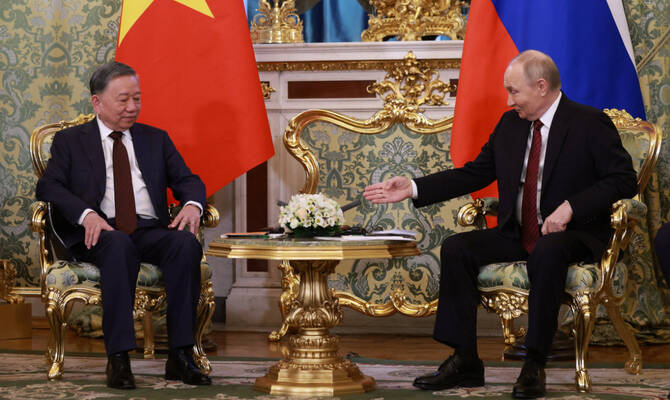
Vietnam, Russia agree to quickly sign nuclear power plant deal
Updated 12 May 2025
Reuters
HANOI: Vietnam and Russia have agreed to quickly negotiate and sign agreements on building nuclear power plants in Vietnam, the two countries said in a joint statement.
“The development of the plants with advanced technology will strictly be compliant with nuclear and radiation safety regulations and for the benefit of socio-economic development,” they said in the statement, which was dated Sunday and followed a visit to Moscow by Vietnamese leader To Lam.
Modi ally proposes social media ban for India’s teens as global debate grows
India is the world’s second-biggest smartphone market with 750 million devices and a billion Internet users
South Asian nation is a key growth market for social media apps and does not set a minimum age for access
Updated 3 sec ago
Reuters
NEW DELHI: An ally of Indian Prime Minister Narendra Modi has proposed a bill to ban social media for children, as the world’s biggest market for Meta and YouTube joins a global debate on the impact of social media on young people’s health and safety. “Not only are our children becoming addicted to social media, but India is also one of the world’s largest producers of data for foreign platforms,” lawmaker L.S.K. Devarayalu said on Friday. “Based on this data, these companies are creating advanced AI systems, effectively turning Indian users into unpaid data providers, while the strategic and economic benefits are reaped elsewhere,” he said. Australia last month became the first country to ban social media for children under 16, blocking access in a move welcomed by many parents and child advocates but criticized by major technology companies and free-speech advocates. France’s National Assembly this week backed legislation to ban children under 15 from social media, while Britain, Denmark and Greece are studying the issue. Facebook operator Meta, YouTube-parent Alphabet and X did not respond on Saturday to emails seeking comment on the Indian legislation. Meta has said it backs laws for parental oversight but that “governments considering bans should be careful not to push teens toward less safe, unregulated sites.” India’s IT ministry did not respond to a request for comment. India, the world’s second-biggest smartphone market with 750 million devices and a billion Internet users, is a key growth market for social media apps and does not set a minimum age for access. Devarayalu’s 15-page Social Media (Age Restrictions and Online Safety) Bill, which is not public but was seen by Reuters, says no one under 16 “shall be permitted to create, maintain, or hold” a social media account and those found to have one should have them disabled. “We are asking that the entire onus of ensuring users’ age be placed on the social media platforms,” Devarayalu said. The government’s chief economic adviser attracted attention on Thursday by saying India should draft policies on age-based access limits to tackle “digital addiction.” Devarayalu’s legislation is a private member’s bill — not proposed to parliament by a federal minister — but such bills often trigger debates in parliament and influence lawmaking. He is from the Telugu Desam Party, which governs the southern state Andhra Pradesh and is vital to Modi’s coalition government.